Ministry, battery makers join forces to fight EV slump
전체 맥락을 이해하기 위해서는 본문 보기를 권장합니다.
"In addition to the industrial stagnation, Korean companies are likely to face challenges as the second Donald Trump administration hints at broader protectionist trade policies," an industry source said on condition of anonymity. "While we can't anticipate state support like China's hefty subsidies for its battery producers, we hope the (Korean) government will consider providing larger financial incentives."
Another industry source said, "The government tends to avoid providing large sums of funding to major corporations, as they have a greater capacity for investments compared to startups and small firms. But compared to China, it is evident that the overall industry lacks sufficient state funding."
이 글자크기로 변경됩니다.
(예시) 가장 빠른 뉴스가 있고 다양한 정보, 쌍방향 소통이 숨쉬는 다음뉴스를 만나보세요. 다음뉴스는 국내외 주요이슈와 실시간 속보, 문화생활 및 다양한 분야의 뉴스를 입체적으로 전달하고 있습니다.
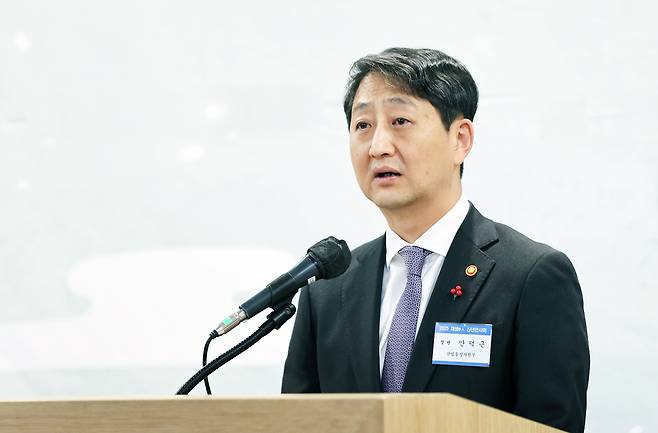
South Korean government and battery manufacturing companies have launched a task force to navigate the challenges posed by slowing demand for electric vehicles.
According to sources Monday, the Ministry of Trade, Industry and Energy and the Korea Battery Industry Association -- a non-profit organization overseen by the Industry Ministry -- recently attended a task force meeting with manufacturers in the sector. They included Korea's big three battery makers -- LG Energy Solution, Samsung SDI, SK On -- and materials producers, including LG Chem, Lotte Energy Materials and EcoPro.
The meeting focused on strategies to strengthen the industry’s competitive edge and addressed the global supply chain and demand for key minerals such as lithium and nickel. The task force also plans to discuss government support measures for companies within the eco-friendly vehicles and rechargeable battery sectors, which are grappling with deepening uncertainties due to a prolonged slump in EV sales.
“In addition to the industrial stagnation, Korean companies are likely to face challenges as the second Donald Trump administration hints at broader protectionist trade policies,” an industry source said on condition of anonymity. “While we can’t anticipate state support like China’s hefty subsidies for its battery producers, we hope the (Korean) government will consider providing larger financial incentives.”
Industry insiders say the government’s subsidies fall significantly short of what the Korean battery manufacturers are investing in research and development. According to earnings reports, LG Energy Solution, Samsung SDI and SK On collectively spent 2.9 trillion won ($2 billion) on R&D from January to September last year, marking a 10.7 percent increase compared to 2023.
During this period, LG Energy Solution and Samsung SDI secured 53 million won and 67 million won from the Industry Ministry and Environment Ministry, respectively. In contrast, CATL, the world’s No.1 battery powerhouse based in China, stated in its earnings that it received 5.1 billion yuan ($692.9 million) from its government.
Another industry source said, “The government tends to avoid providing large sums of funding to major corporations, as they have a greater capacity for investments compared to startups and small firms. But compared to China, it is evident that the overall industry lacks sufficient state funding.”
Copyright © 코리아헤럴드. 무단전재 및 재배포 금지.