Chinese military-like events under fire amid growing anti-China sentiment
전체 맥락을 이해하기 위해서는 본문 보기를 권장합니다.
The foundation issued an apology on Monday, saying, "We deeply apologize for causing concern and discomfort to citizens through part of the Korea-China cultural exchange performance."
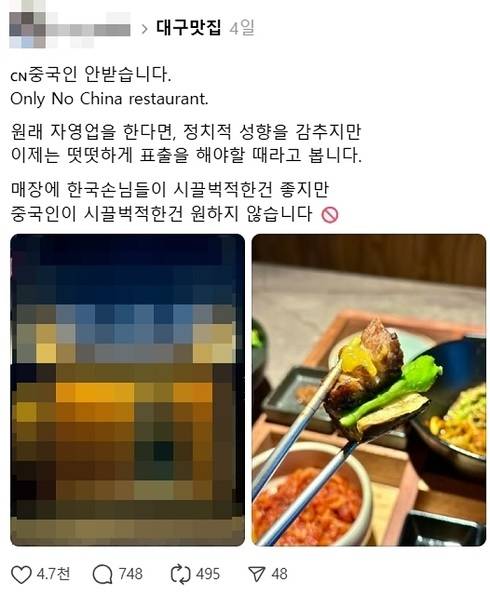
In Daegu, a barbecue restaurant also posted a notice online banning Chinese patrons, saying they were "too noisy."
이 글자크기로 변경됩니다.
(예시) 가장 빠른 뉴스가 있고 다양한 정보, 쌍방향 소통이 숨쉬는 다음뉴스를 만나보세요. 다음뉴스는 국내외 주요이슈와 실시간 속보, 문화생활 및 다양한 분야의 뉴스를 입체적으로 전달하고 있습니다.
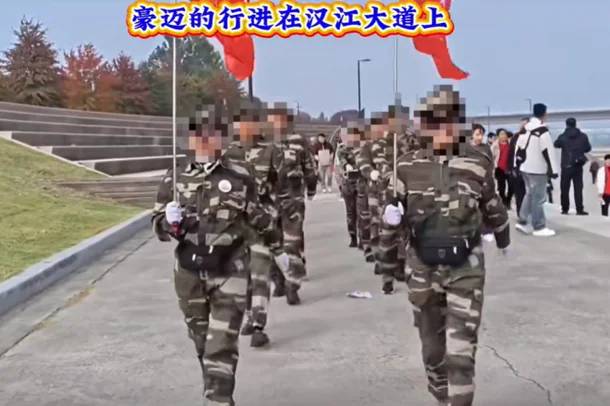
A series of local events reminiscent of the Chinese military is fanning ire online, amid rising anti-China sentiment following South Korea’s recent visa-free entry program for Chinese tourist groups.
Videos and photos of a group of Chinese nationals marching in formation at Yeouido Hangang Park, Seoul, while wearing military-style uniforms spread across online communities and social media Friday, prompting a wave of criticism from Korean users.
In one video shared on X, dozens of Chinese nationals dressed in matching uniforms march in rows and columns, waving bright red flags resembling China’s national flag.
“How can such a communist-style rally take place in a democratic country like Korea?” one user wrote in the comments. “I thought it was AI-generated. It feels like our country has been occupied by China,” another commented.
The controversial march at Yeouido Hangang Park was part of the “International Walking Exchange” event, jointly organized by the Korea Cultural Exchange Promotion Agency and the China Health Walking Association, according to news reports. The event drew about 100 Chinese participants, mostly tourists.
The KCEP responded to the mounting criticism, saying "The event involved Chinese tourists who simply enjoy walking, and their outfits were group uniforms, not military attire," in an interview with a local news outlet.
Established in 2011, the nonprofit has promoted cultural and artistic exchanges between Korea and other Asian nations.
A similar Chinese cultural event in Yeoju, Gyeonggi Province, also came under fire for staging performances evoking images of the Chinese military.
The performance took place on the final day of the "2025 Yeoju Ogok Naru Festival," organized by the Yeoju Sejong Culture & Tourism Foundation, from Oct. 31 to Sunday, which featured cultural exchange performances by Korean and Chinese participants.
During the Chinese team’s performance, a large screen displayed footage of Chinese military parades, while performers wearing Chinese uniforms marched onstage holding red flags symbolizing the armed forces of China.
Videos of the performance quickly spread on social media, prompting criticism that it was inappropriate for a local festival intended to promote the city's agricultural products and farming heritage.
The foundation issued an apology on Monday, saying, “We deeply apologize for causing concern and discomfort to citizens through part of the Korea-China cultural exchange performance.”
Anti-China sentiment in South Korea, rooted in past diplomatic and cultural disputes such as China’s retaliation over the THAAD missile defense system, has deepened in recent months, fueled by protests following Seoul’s decision to grant visa-free entry to Chinese group tourists in September.
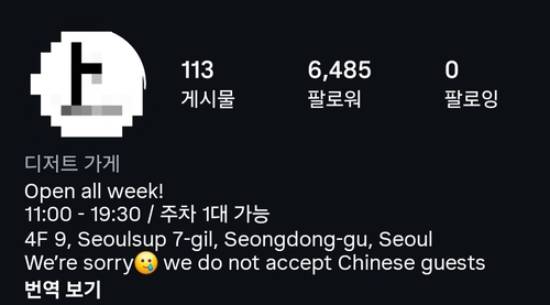
A cafe in Seongsu-dong, Seoul, recently sparked controversy after announcing on Instagram that it would not serve Chinese customers. Seongsu-dong is known for its trendy eateries and pop-up stores and is especialy popular among overseas tourists.
After the National Human Rights Commission of Korea investigated the case and interviewed the cafe owner, the cafe withdrew the policy earlier this week, news reports said.
In Daegu, a barbecue restaurant also posted a notice online banning Chinese patrons, saying they were “too noisy.”
Since Sept. 29, Chinese tour groups of three or more people have been allowed to travel visa-free within South Korea for up to 15 days until June 30 next year.
According to a report by the Korea Tourism Organization, the number of Chinese tourists visiting Korea reached 4.6 million last year. With the visa-free policy in place, the organization expects around 1 million additional Chinese visitors in the first half of next year.
Copyright © 코리아헤럴드. 무단전재 및 재배포 금지.