Gomtang is the new Michelin sensation
이 글자크기로 변경됩니다.
(예시) 가장 빠른 뉴스가 있고 다양한 정보, 쌍방향 소통이 숨쉬는 다음뉴스를 만나보세요. 다음뉴스는 국내외 주요이슈와 실시간 속보, 문화생활 및 다양한 분야의 뉴스를 입체적으로 전달하고 있습니다.
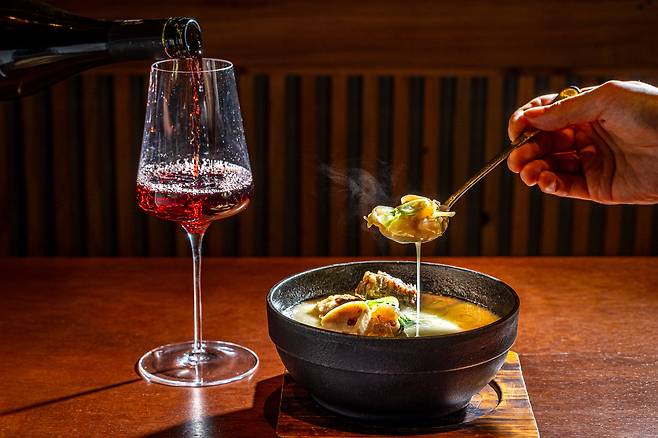
South Korea’s “gomtang,” or beef bone soup, is garnering love from Michelin-starred chefs, Culinary Class Wars contestants on Netflix, fine dining chefs abroad, and young rising chefs. Chefs specializing in French cuisine or vegan courses are embracing this Korean dish, and some places even offer wine instead of soju. All of this goes to show that gomtang didn’t become a classic comfort food without the love of local people—and is now advancing further with its global expansion.
Gomtang uses time to build deeper flavor. Chef Yim Jung-sik, who opened Gomtang LAB in Sinsa-dong last year, has adopted the same philosophy for his dishes. He has five Michelin stars under his belt and is well known as the owner of three-star Michelin Jungsik New York and two-star Michelin Jungsik Seoul. Chef Yim firmly believes gomtang is South Koreans’ favorite dish. “I drew inspiration from Hadongkwan and Mapo-ok—places that feel like cultural heritage sites.” As a fine dining chef, he focused on refining 10 different cuts of beef.
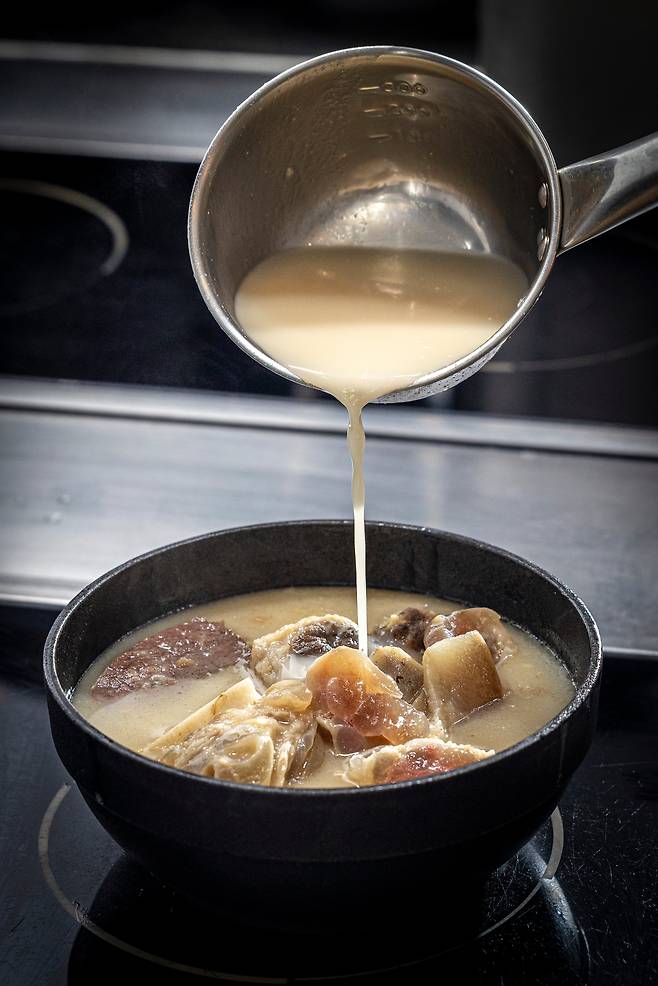
The signature menu item at his restaurant is the collagen beef bone soup, which uses beef trotters, oxtail, and beef bones. A sip of the thick soup clings to the throat as it goes down. Limited to 20 bowls daily, Gomtang LAB has been awarded the Michelin Guide’s Bib Gourmand (for food of good value).
At Gomtang LAB, wine pairing is available. When paired with Burgundy wine, the delicate and subtle flavor cuts through the oily broth of the gomtang. In hotter weather, chilled sparkling wine is also a good option.
Near Seoul Station, a Culinary Class Wars chef has opened a new restaurant: Seoul Station Gomtang. Unlike the traditional use of beef, this restaurant uses pork. Seoul Station Gomtang was founded by Chef Park Cheol and Chef Hong Chang-beom, who spent time in France and the United Kingdom (U.K.), respectively. Chef Park said, “Thanks to making jus, French-style gravy, it’s become second nature to cook meat optimally.” Avid lovers of pork broth can now choose from a variety of places, from Jongno’s Gwanghwamun Gukbap to Mapo’s Okdongsik.
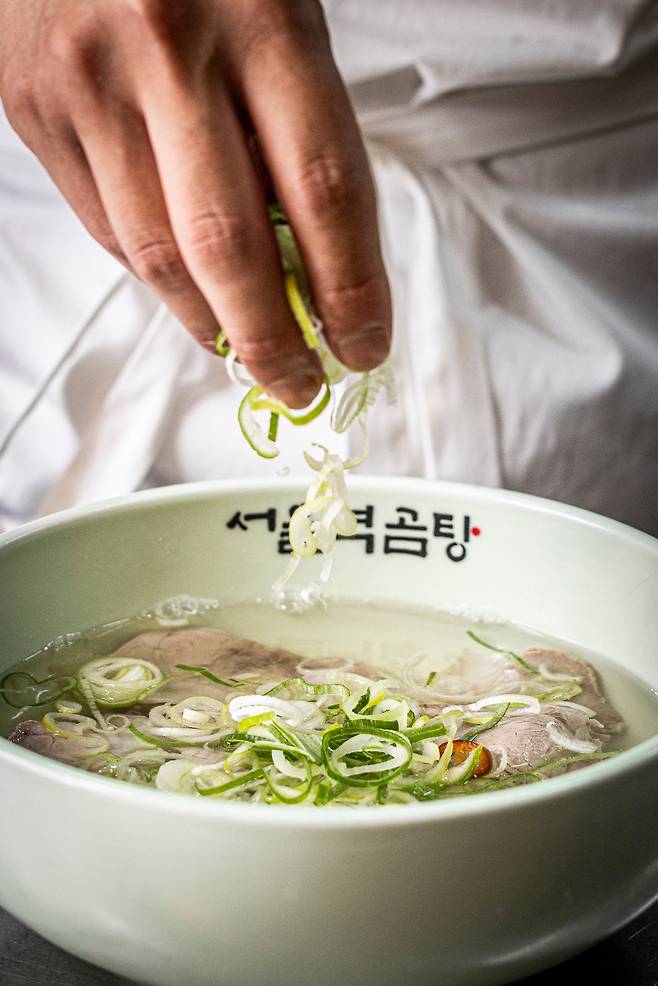
Chef Park uses snow crab shells and Japanese halfbeaks, caught by his fisherman father in Uljin, North Gyeongsang, to eliminate the pork smell. The broth achieves a balanced lightness and umami when simmered with pork shoulder and an assortment of root vegetables. It has a high salinity, so some people opt for the unsalted broth and adjust the seasoning themselves.
On July 14, Busan’s popular gomtang restaurant, Geodae (Giant) Gomtang, opened its first Gangnam Station branch. Their signature menu item, “a rich and deeper beef bone soup,” is comparable to the broth served at Gomtang LAB. The difference is that Geodae Gomtang’s soup tastes cleaner, while Gomtang LAB’s is thicker and more intense.
Seoul’s Geodae Gomtang is managed by Chef Yoon Kang-san, who studied culinary arts in the U.K. and China. Until 2024, he served as head chef of Jamsil’s vegan fine dining restaurant, Forest Kitchen. His ability to select quality vegetables helped him create a complementary ground garlic purée for the gomtang. Chef Yoon says that the standout part of their dish is the “Busan-style kimchi made under specific instructions.”
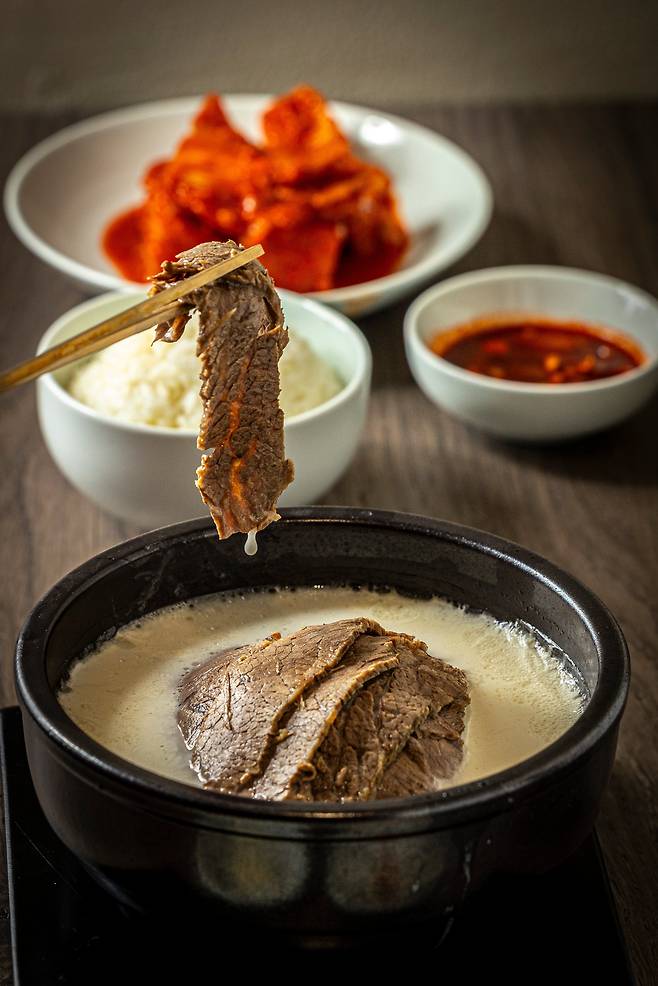
Existing gomtang spots continue to see high demand. Traditional restaurants like Hadongkwan in Jongno and modern spots like Okdongsik and Neungdong Minari in Yongsan remain packed, with long lines and early “open runs.”
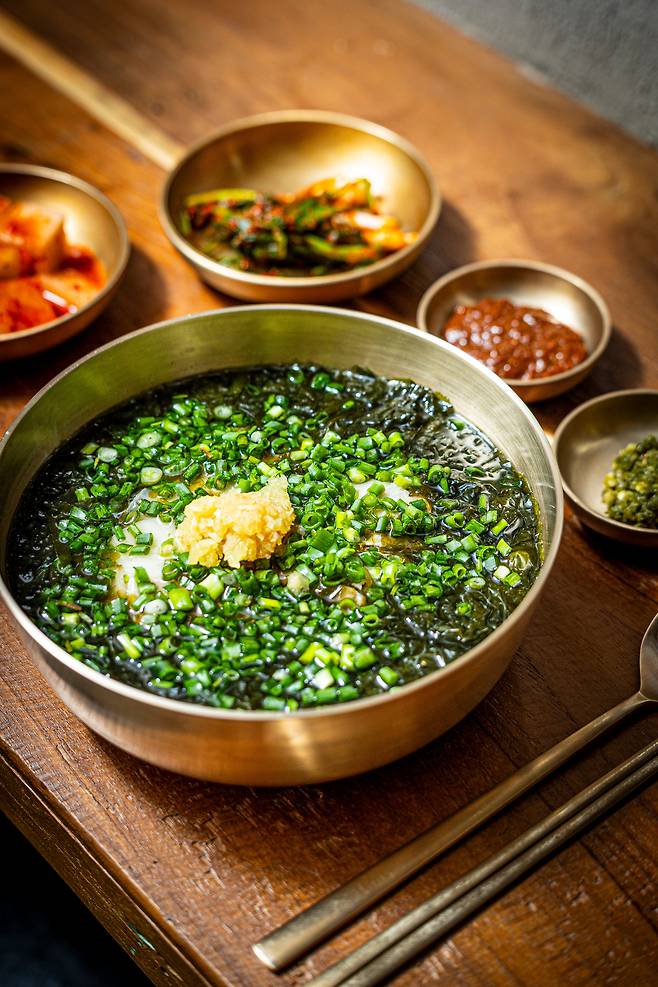
As gomtang’s popularity grows, more distinctive restaurants are emerging. In Seoul’s food street Yongridan-gil, a new place called Torom Gomtang recently opened, offering seaweed gomtang. Though it initially resembles traditional seaweed soup, it is actually pork-based and contains fresh seaweed from the South Sea. The thinner strips make it easier to eat. The dish—reminiscent of traditional seaweed soup—along with sides like marinated crab soy sauce for dipping meat, shows a clear influence from Southern coastal cuisine.
Copyright © 조선일보. 무단전재 및 재배포 금지.
- 발레와 국악으로 빚은 ‘대나무 숲’에 초대합니다
- 빅데이터를 예술로… ‘보이지 않는 위기’ 드러내
- 전 세계에 다시 ‘빗 잇’ 열풍이 분다
- [일사일언] 어떤 사람으로 기억될 것인가
- [신문은 선생님] [산 이야기] 조선 문인 김시습이 10년 넘게 숨어살던 산, 왜 ‘반역산’이라고 불
- [신문은 선생님] [꼭 읽어야하는 고전] ‘하늘 천 따 지~’ 한자 1000자로 만든 책, 마지막 8자는 문
- [신문은 선생님] [세계 미술관 산책] 나치가 박해했던 현대미술, 30년 뒤 베를린에 모였어요
- [제31회 LG배 조선일보 기왕전] 적극책
- [TV조선] 권영경의 건강 습관
- 1분기 서울 임대차 거래 10건 중 7건이 월세였다