Tajik Embassy in Seoul celebrates Nowruz with cultural forum
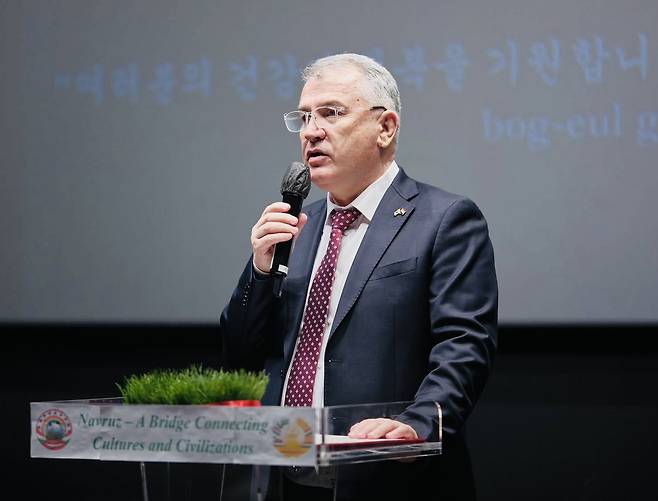
The Embassy of Tajikistan marked Nowruz, the ancient spring festival symbolizing renewal and new beginnings, with a cultural forum Tuesday.
Observed on March 21, the vernal equinox, Nowruz — meaning “New Day” — dates back more than 6,000 years. Rooted in Silk Road traditions, the festival is widely celebrated across Central Asia, South Asia and the Middle East, representing hope, renewal and the start of a new cycle.
To commemorate the occasion, the embassy hosted a forum titled “Nowruz Bridge: Connecting Cultures and Celebrations,” aimed at strengthening cultural ties between Tajikistan and South Korea. The event featured traditional Tajik food and music and brought together diplomats, members of Central Asia-related associations, the Korea–Central Asia Cooperation Forum Secretariat, cultural representatives and community members.
Tajik Ambassador to Korea Salohiddin Kirom highlighted the spirit of renewal embodied by Nowruz.
“Just as the earth awakens with renewed fertility, may our cooperation flourish with new achievements and an abundance of peace and mutual understanding,” he said.
According to the embassy, Nowruz has gained greater prominence in Tajikistan since the country’s independence in 1991 under President Emomali Rahmon, with celebrations expanding in scale and cultural richness.
While the festival is often linked to the Persian mythical king Jamshid, who is said to have established it following a miraculous chariot flight, some historians believe its origins may be even earlier.
“While legends attribute Nowruz’s establishment to King Jamshid of ancient Persia, historical evidence suggests it may be even older,” Kirom said, noting that the United Nations designated March 21 as the International Day of Nowruz in 2010 and that the tradition is inscribed on UNESCO’s Intangible Cultural Heritage list.
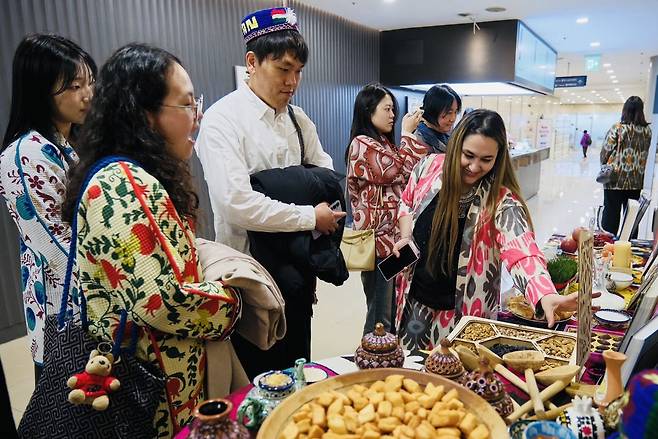
Similar narratives appear across Indian, Turkish and Central Asian cultures. In Iranian and Central Asian folklore, Amu Nowruz, or “Uncle Nowruz,” is a beloved figure believed to bring gifts to children during the festive season.
Kim Deok-soon, director at UNESCO’s International Information and Networking Center for Intangible Cultural Heritage in the Asia-Pacific Region, emphasized the role of shared heritage in fostering global cooperation.
Navruz, jointly recognized by 13 countries, “demonstrates how cultural heritage can serve as a powerful foundation for cooperation among nations,” Kim said.
Lee Ok Ryeon, chairman of the Korea-Central Asia Friendship Association, also underscored the universal values reflected in the festival.
“It is a precious cultural heritage that symbolizes a new beginning and hope. … These are universal human values that transcend borders, cultures and time,” she said, adding that Nowruz helps strengthen friendship and mutual understanding between Korea and Central Asian countries.
The forum formed part of a broader series of Nowruz-related events held across Korea, including festivals in Seoul and Gwangju.
Speakers described Nowruz as a festival celebrated by more than 300 million people, emphasizing peace, renewal and harmony across cultures. They also pointed to similarities with Korea’s Seollal, noting that both holidays reflect themes of balance — akin to the concept of Yin and Yang — through the spring equinox, when day and night are of equal length, symbolizing new beginnings and reinforcing family and community bonds.
The concept of Yin and Yang represents the balance and harmony of opposing forces in nature and life in Korean philosophy.
The event was attended by Central Asian ambassadors, members of the diplomatic corps, professors, scholars, Korea Foundation officials, NGO representatives, members of the Tajik community and media.
Copyright © 코리아헤럴드. 무단전재 및 재배포 금지.