Fate sealed: South Korea removes Yoon Suk Yeol from office
-New presidential election must be held by June 3
-Yoon, already on trial for insurrection, could now face charges of corruption and abuse of power
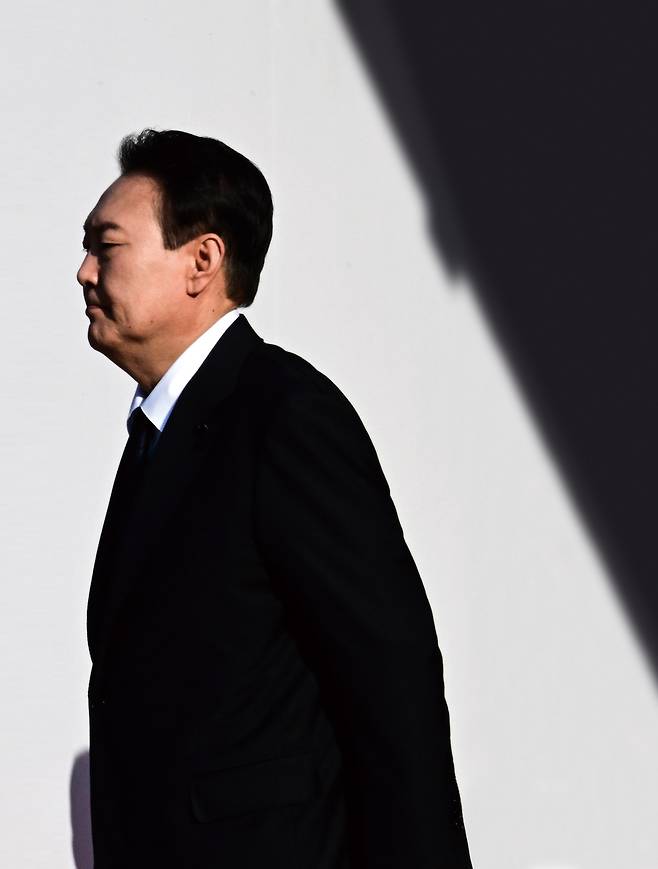
The Constitutional Court of Korea ruled Friday to remove President Yoon Suk Yeol from office, concluding that his declaration of martial law last year was a political decision that severely undermined the rule of law, constitutional order and public trust.
In a unanimous verdict, all eight justices voted in favor of Yoon’s ouster from the presidency, which is final and unchallengeable. Yoon has become the second sitting president removed by the Constitutional Court.
The ruling ends months of controversy over Yoon’s abrupt declaration of martial law on Dec. 3, which set off the worst political turmoil in decades. The court upheld all charges, ruling that Yoon failed to meet constitutional requirements for martial law, which is allowed only in times of war or equivalent national emergencies.
Acting Chief Justice Moon Hyung-bae said in the nationally televised ruling that Yoon’s actions had “disrupted constitutional order,” adding that his abuse of power also “undermined public trust in the presidency.”
“Given the significant negative impact and wide-reaching consequences for constitutional order, the benefit of upholding the Constitution by removing the respondent far outweighs the national cost of dismissal,” said Moon. Noting the time of the verdict at 11:22 a.m., he announced, “The court unanimously rules to remove the defendant from office.”
The decision marked the longest impeachment deliberation in the country’s history -- 38 days -- underscoring its complexity and the severity of the charges. The trial ended in 111 days from the day the impeachment motion was submitted to the court on Dec. 14. Yoon did not appear at the court for his verdict.
The court upheld all five grounds for impeachment, including the unlawful declaration of martial law; emergency decrees that restricted legislative and political activity; an attempted military blockade of the National Assembly; orders to track the whereabouts of legal professionals, including lawmakers; and efforts to undermine the independence of the National Election Commission.
All eight justices agreed Yoon’s actions violated both constitutional and legal boundaries, and that these breaches were sufficiently “grave” to justify impeachment.
“By declaring martial law in violation of the Constitution and law, the defendant revived a dark history of emergency power abuse, shocking the public and causing chaos across politics, the economy, diplomacy and society,” he added.
The ruling also draws comparison to the 2017 impeachment of former President Park Geun-hye, where the court cited her betrayal of public trust and failure to abide by the Constitution.
In a similar vein, the court’s ruling on Friday emphasized that Yoon, as the head of state vested with power, had a duty to unite the nation but abandoned it by exercising his power beyond the Constitution’s boundaries.
“By deploying military and police forces to undermine constitutional institutions and infringe on the basic rights of the people, the defendant betrayed the trust of the people who are the true source of power in a democratic state and failed in his constitutional duty to protect the Constitution,” Moon read.
The justices also viewed that the confrontation between Yoon and the National Assembly is “a political issue that must be resolved within the bounds of democracy.”
“(Yoon) should have respected the National Assembly, the representative of the people, as a subject for cooperation,” he said, adding that he should have sought a resolution through political, institutional and judicial means, not by deploying armed forces.
On Yoon’s argument that the main opposition-led Assembly paralyzed state affairs with its repeated impeachments of officials and attempts to cut the state budget, the judges ruled that the legislature's use of its powers “did not, in itself, create a severe crisis situation at the time justifying the declaration of martial law.” The Assembly, for its part, should have respected minority voices and made efforts to reach compromises through dialogue based on tolerance and self-restraint, according to the ruling.
With the historic ruling delivered, South Korea is heading into another political transition period. By law, South Korea must hold a presidential election within 60 days if a president is removed by the Constitutional Court or in the event of death. The special election is likely to be held June 3. Until then, Prime Minister Han Duck-soo will continue to serve as acting president.
The ruling eliminates uncertainty over Yoon’s teetering presidency, but political chaos is likely to continue. The ruling came 122 days after Yoon declared martial law — the first such declaration in 44 years — and ordered armed forces to storm the National Assembly. Likely to be remembered as one of the most challenging cases in South Korea’s constitutional history, Yoon’s legal battle in the nation’s top court against the National Assembly deeply divided the nation for the past four months, sparking intense street rallies, political confrontations, and a leadership void at a time when the country faces global trade disruptions and a stagnant economy.
Public opinion has been more divided than during the Park impeachment, with a Gallup Korea poll on March 28 showing a 60 percent versus 34 percent split in favor of Yoon’s removal. Now that Yoon has been ousted, some observers believe this polarization may lead to heightened political instability in the weeks ahead.
“As a society, we’ve witnessed the chaos and division such ideological battles create, and have come to realize the heavy social cost they impose. It is clear that if we are to move forward into the future, resolving this ideological divide is essential,” professor Koo Jeong-woo of sociology at Sungkyunkwan University told the Korea Herald.
“Accepting the outcome is critical. We must respect the results of democratic judicial procedures that we ourselves have established. Creating a culture of acceptance and democratic maturity is the responsibility of both ruling and opposition parties. The government must also respond firmly to fake news and online misinformation that fuels social unrest,” he added.
Yoon’s presidency was originally set to end on May 9, 2027. His removal means he now loses all presidential privileges, including his pension and legal immunity. He also faces a criminal trial on charges of insurrection, which will start on April 14. Most officials involved in the Dec. 3 martial law declaration, including ex-Defense Minister and Yoon ally Kim Yong-hyun, have already been indicted.
In addition to insurrection charges, the now-civilian Yoon faces other allegations, including a scandal involving self-proclaimed political broker Myung Tae-kyun. Prosecutors could push for investigations into other charges as he no longer has immunity. Based on Korean law, individuals charged with insurrection, particularly ringleaders, can face the death penalty or life imprisonment.
Copyright © 코리아헤럴드. 무단전재 및 재배포 금지.