Samsung Electronics becomes first in Korea to break W1000tr market cap
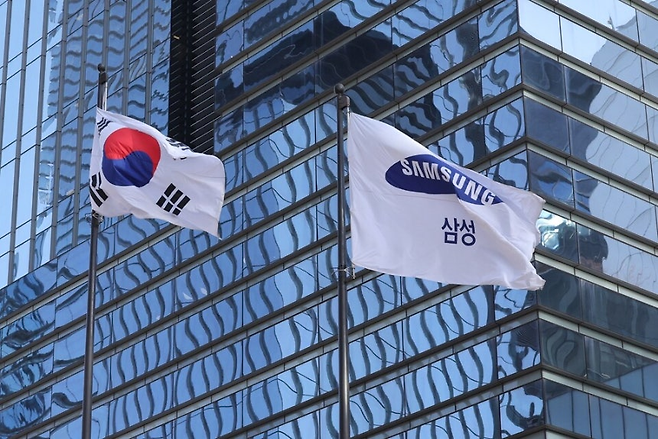
Samsung Electronics on Wednesday became the first company in South Korean history to surpass a market capitalization of 1,000 trillion won ($689 billion), as a sharp rally fueled by the global artificial intelligence boom pushed its shares to record highs.
Samsung shares closed up 0.96 percent at 169,100 won, after touching an intraday high of 169,400 won. The gains pushed the company’s market value to above 1 trillion won at the close, according to exchange data.
The surge in Samsung shares also helped lift the country's benchmark Kospi, which closed at a record of 5,371.10 on Wednesday, up 1.57 percent from the previous session. It marked the first time the index has finished above the 5,300 level, after touching an intraday high of 5,376.92.
The tech-heavy Kosdaq index also rose, ending the session up 0.45 percent, at 1,149.43.
Samsung Electronics accounted for 22.56 percent of the Kospi's total market capitalization of 4,437.3 trillion won. Based on Wednesday's closing price and adjusted for stock splits, the company's shares have risen roughly 1,430-fold since it was first listed in June 1975.
The stock surged 125 percent in 2025, and is up about 41 percent so far this year, extending a rally largely attributed to an acceleration in global AI infrastructure investment and chips since the second half of last year.
Rising deployment of AI servers has driven up demand for high-performance memory and supported a rebound in prices, benefiting large-scale producers such as Samsung, analysts say. The company’s extensive manufacturing capacity has positioned it to capitalize on the upswing as memory pricing improves.
The stock rally has been accompanied by sharply improving earnings expectations. Samsung reported consolidated revenue of 333.6 trillion won and operating profit of 43.6 trillion won in 2025.
This year, some forecast the company’s operating profit could reach as high as 170 trillion won this year if the memory price upcycle continues.
Expectations are also building around Samsung’s technological recovery in high-bandwidth memory, an area where the company has lagged its crosstown rival SK hynix in recent years.
Samsung announced that it is set to start mass producing the next-generation HBM4 this month, further raising prospects for market share gains, reinforcing expectations that the earnings recovery could extend over the medium to long term.
The chip giant set a domestic record in the fourth quarter of 2025 by posting quarterly operating profit exceeding 20 trillion won.
“Samsung’s rise above a 1,000 trillion won market capitalization shows that structural shifts centered on AI and semiconductors are beginning to be reflected in corporate valuations,” said Shin Joong-ho, head of research at LS Securities.
International credit rating agency S&P Global Ratings said Wednesday that expanding chip demand is likely to strengthen Samsung’s credit metrics.
“Samsung is expected to deliver solid earnings over the next 1-2 years, and strong demand in the memory chip segment, which is high-margin, high-growth business, is likely to underpin a sharp improvement in profitability,” the agency said in a press release.
Heungkuk Securities raised its target price on Samsung to 230,000 won.
“Samsung is expected to generate substantial profits in 2026-2027, supported by rising prices for commodity DRAM and NAND chips, as well as its launch of HBM4,” said Son In-joon, an analyst at Heungkuk Securities.
“Strong industry conditions and a broader recovery in competitiveness and increased scope of shareholder returns are likely to sustain the stock’s upward momentum in the near term.”
Shares of SK hynix, another major beneficiary of the AI-driven memory upcycle, ended the session down 0.77 percent at 900,000 won, after sharp gains in recent months.
Market analysts say the sector’s momentum remains underpinned by strong orders for AI-related chips, though valuations have risen rapidly amid sustained investor enthusiasm.
Copyright © 코리아헤럴드. 무단전재 및 재배포 금지.