Wake, caffeinate, rave: Seoul’s early-morning coffee parties are in
이 글자크기로 변경됩니다.
(예시) 가장 빠른 뉴스가 있고 다양한 정보, 쌍방향 소통이 숨쉬는 다음뉴스를 만나보세요. 다음뉴스는 국내외 주요이슈와 실시간 속보, 문화생활 및 다양한 분야의 뉴스를 입체적으로 전달하고 있습니다.
Caffeine can hit harder than alcohol.
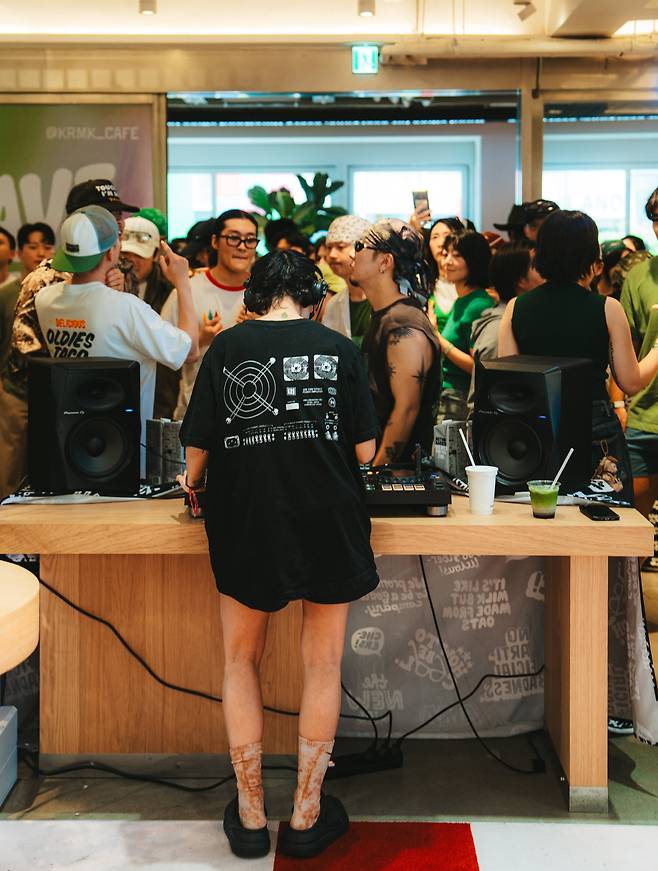
At 7 a.m. in a café tucked into Seoul’s Hannam-dong neighborhood, the atmosphere flipped. Club beats thumped through the speakers, tables vanished, and a DJ launched into The Trammps’ “Disco Inferno.” About 300 early risers, clad in sunglasses and colorful headscarves, clustered near the turntables—iced Americanos and matcha lattes in hand—ready to dance. It was Saturday morning.
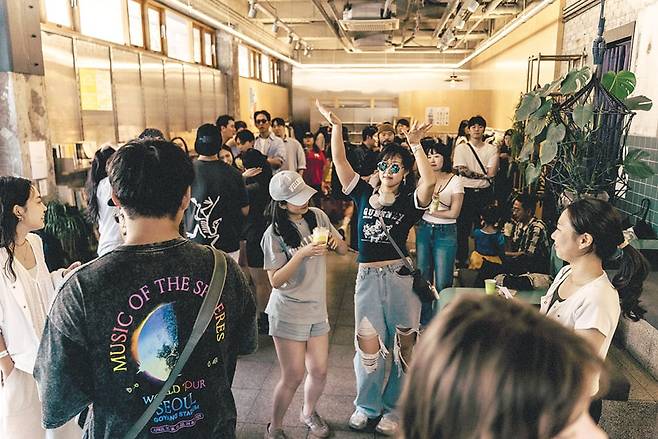
This was a “coffee rave”—a caffeine-fueled, alcohol-free party organized by Seoul Morning Coffee Club on May 31. Another event on June 21 in Sinsa-dong sold out all 300 spots within two hours of opening online registration.
Seoul Morning Coffee Club founder Park Jae-hyun, 36, the two-hour parties attract working professionals in their 20s to 40s looking for a jolt of energy, efficiency—and fun. “We honestly weren’t sure anyone would show up at 7 a.m.,” Park said. “But they did. So now we’re planning to hold them monthly.”
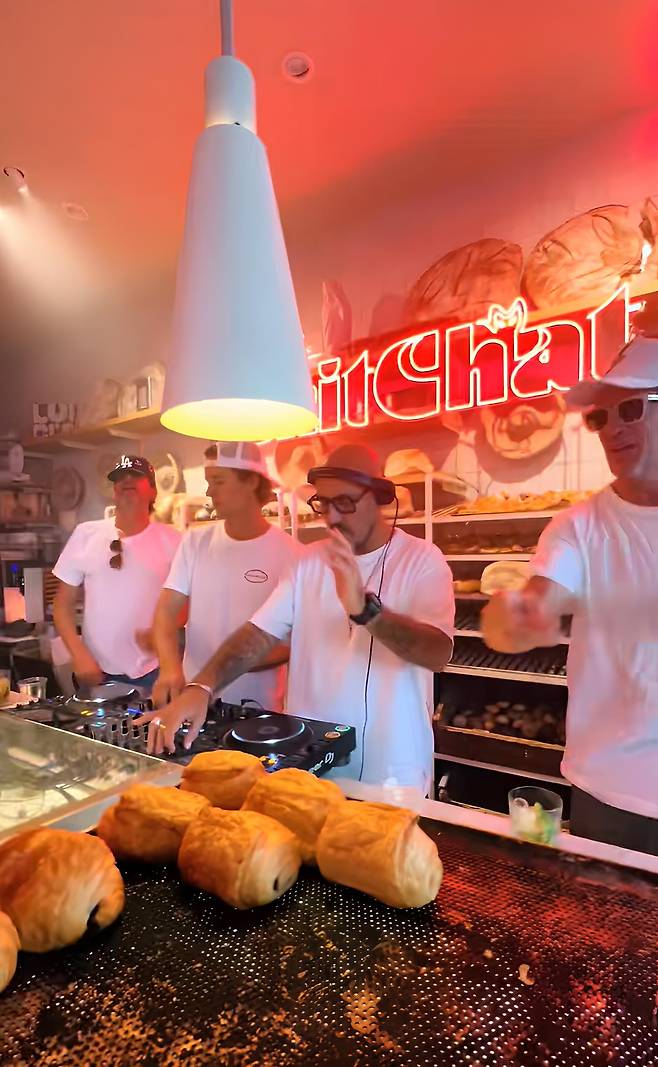
The movement began in Australia and the U.S. last year, where even bakeries transformed into early-morning dance spaces. AFP recently reported on the growing wave of “alcohol-free, Gen Z–driven events gaining traction in Singapore and elsewhere.” Now, it’s sweeping through Korea.
The cultural shift is rooted in the “sober curious” movement—a growing interest in enjoying life without intoxication. “Dancing used to mean drinking and going to clubs at night,” said college student Song Dong-joo, 22, who discovered the trend while on exchange in the U.S. “This breaks that stereotype.”
Many participants say mornings bring a different kind of buzz. “I used to go to bed at 2 or 3 a.m.,” said Shin Ga-eun, 37, who’s now been to two coffee raves. “But I wanted to change. Starting the day with movement and people—it fills up the whole day.”
Others view the phenomenon as a reimagining of nightlife. “Coffee raves are about carving out new venues and time slots for joy,” said Lee Ho-jun, 27, an office worker. “And both cafés and mornings are efficient settings for that—great energy, great value.”
Part of the rave’s appeal also lies in how waking up early has become aspirational. Much of that can be credited to Ashton Hall, a 30-year-old American influencer with 4 million YouTube subscribers. His “miracle morning” routines—waking at 3:50 a.m., washing his face in ice water, reading, exercising, eating mindfully—have gone viral, inspiring thousands of copycats and even a reported wave of 4 a.m. wake-up trends among U.S. professionals, according to The Wall Street Journal.
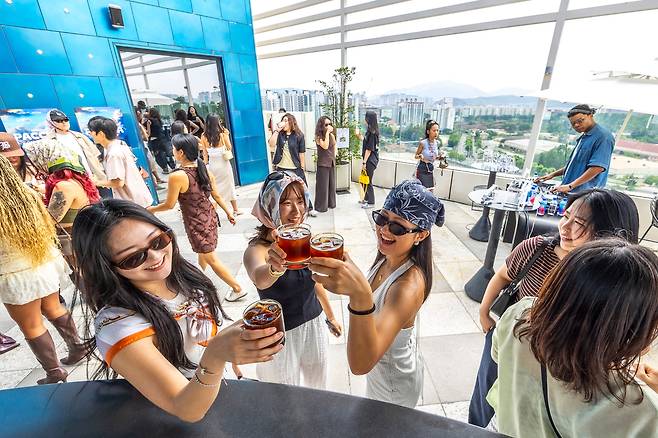
The vibe scaled upward on July 5, when 700 guests gathered for a “rooftop coffee party” at a five-star hotel in Itaewon. Beneath summer sun and breezes, people in full festival fashion sipped espresso and danced to house music. The event, staged by production company BNA, combined caffeine with a touch of glamor.
Back on April 27, at BNA’s first coffee party in Hannam-dong, the international DJ Morten, 43, headlined, and celebrities like actor Yeo Jin-goo and rapper E Sens made appearances. “Now that we’ve seen the response, we plan to collaborate with luxury hotels and scale this into a full festival,” a BNA spokesperson said. “We’re also working with coffee brands to build it out.”
Of course, not everyone’s convinced. Some skeptics dismiss the scene as little more than a social media backdrop: “Is a coffee-only party even fun?” they ask. “Isn’t this just for photos?”
But that hasn’t stopped its expansion. One lounge bar in Apgujeong that typically serves alcohol by night—Soho Lounge—has now begun hosting Sunday afternoon coffee raves.
“Music festivals are usually late-night, and there’s always alcohol involved,” said Lee Si-nae, 32, another office worker. “It never quite fit into my life. But this? This is the answer.”
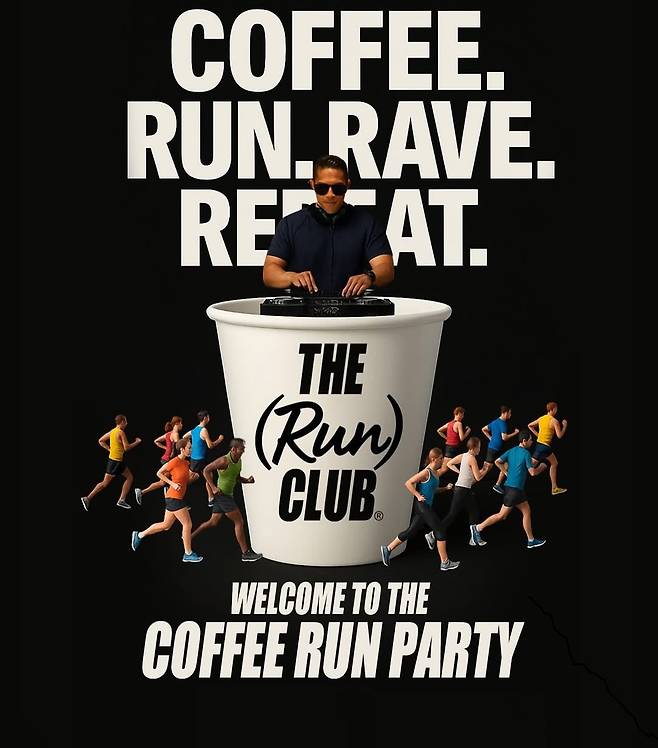
In a creative twist, the format recently evolved again. On June 1, Seoul held its first “run rave”—200 runners jogged a 6-kilometer route along the Han River before heading straight to a coffee rave. The event blended cardio and caffeine in a celebration of what organizers call “healthy pleasure.”
“Running crews are everywhere now, but running alone felt a little flat,” said Kim Rok, 42, creative director of The Zero Club. “We wanted to take that dopamine high and roll it right into a party.”
At the second run rave on June 22, more than 300 people showed up. Major beverage, fashion, and supplement brands signed on as sponsors. New additions included a cold plunge zone for muscle recovery and bonus endorphins.
The third edition is set for July 26, promising more daylight, more dancing, and more caffeine-fueled joy—no hangover required.
Copyright © 조선일보. 무단전재 및 재배포 금지.
- “이란을 석기시대로” 또 뒤집은 트럼프
- 李 “소나기 아닌 폭풍우 위기… 추경은 국민 삶 지킬 방파제”
- 인류, 다시 ‘달의 문’을 열다
- 호르무즈 톨게이트… 이란 “위안화·코인으로 배럴당 1달러 징수”
- 트럼프 연설 직전 5500 뚫은 코스피, 45분 만에 5300선 무너졌다
- 나토 나가겠다는 美, 실제 탈퇴는 어려워… 병력 줄여서 흔드나
- 트럼프 “한국, 호르무즈 문제 도움 안 줘”… 무역·안보 청구서 가능성
- 이란 군부 “더 파괴적 보복”… 트럼프의 ‘석기시대 위협’ 일축
- 군사 국가로 재편되는 이란… 더 위험한 ‘중동의 북한’ 되나
- 감사원 국장급 물갈이… 文정부 감사한 간부들, 좌천되거나 외부 파견