Chip stocks stumble: Has AI peaked, or is Big Tech hogging the gains?
A sharp pullback in AI chip stocks has split global investment banks over whether the rally is finally losing steam.
The U.S. Philadelphia Semiconductor Index has fallen about 14 percent from its recent high, and Samsung Electronics and SK hynix have each dropped more than 20 percent from their peaks, even as earnings expectations stay strong.
Almost none of the investment banks believe the AI investment cycle itself is over. The debate is over how much future growth is already priced into chip stocks, and whether the main beneficiaries of AI spending will remain the chipmakers or shift toward Big Tech and the hyperscalers, the big cloud firms that build AI infrastructure.
Morgan Stanley set off the argument.
"The broadening trade is back, and it's gaining momentum partly because one of the most crowded areas of the market — semiconductors — is finally starting to lose some of its own," said Michael Wilson, the bank's chief U.S. equity strategist.
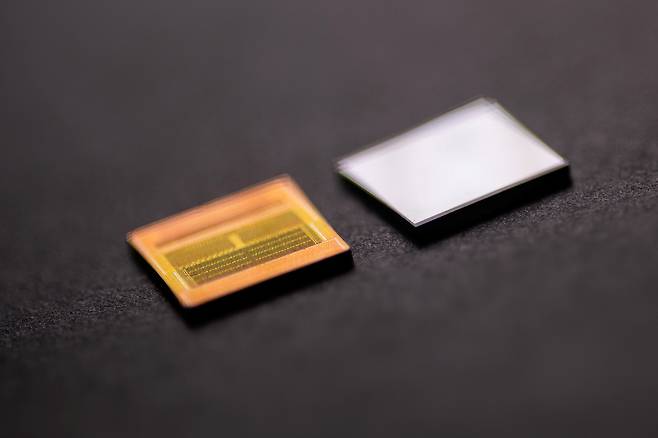
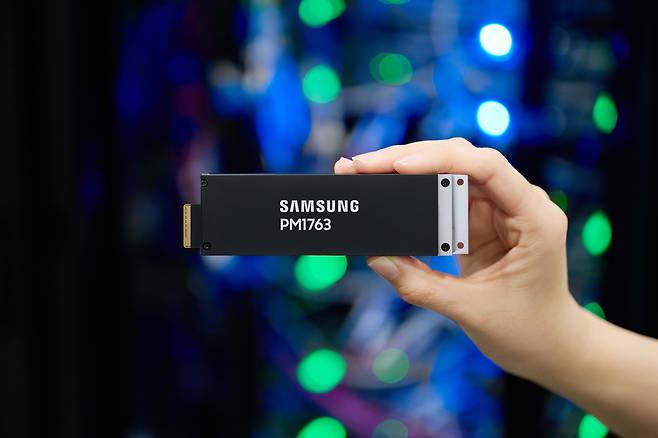
His team recommended cutting exposure to memory-chip makers, which includes Micron and the Korean makers Samsung Electronics and SK hynix, on the view that much of the direct benefit from AI infrastructure spending had already flowed through the chip supply chain.
Morgan Stanley said there could be "more capex discipline in the near-term" from the hyperscalers, which could pull down chipmakers' earnings expectations, and it pointed to Meta's plan to begin selling spare computing capacity to outside customers, which Wilson said "doesn't kill the AI buildout, but it does change the market's perception of how linear that buildout will be."
The advice is to look again at Big Tech itself, rather than the now-pricey chip supply chain.
"We believe hyperscalers look downright cheap," Lisa Shalett, chief investment officer at Morgan Stanley Wealth Management, wrote this week and suggested gradually cutting chip exposure in favor of Big Tech names with an AI edge. Shalett cited the valuation premium on the Magnificent Seven megacaps, which she said had fallen to its lowest in more than a decade.
Companies would probably beat estimates again this season, he said, but expectations were already so high that results alone would struggle to reignite the rally. Guidance and management commentary, he added, would matter more than the headline earnings.
In short, the season's biggest question would be when and how companies turn their AI spending into profit. The gap between earnings and share prices underscored the point: Micron, the memory bellwether, surged 239 percent last year and 229 percent this year, a second straight triple-digit gain, before its climb stalled.
JPMorgan, by contrast, called the pullback a buying opportunity. In a recent client note, strategist Mislav Matejka ranked the bank's technology preferences as "semis over hyperscalers over AI at risk plays."
Korean brokerages are also leaning optimistic.
"The Kospi's forward price-to-earnings ratio has fallen to 6.25, below the 6.27 low recorded during the 2008 global financial crisis," said Han Ji-young, an analyst at Kiwoom Securities. "The recent plunge suggests the market has likely reached bottom territory."
She noted that past Kospi drops of more than 20 percent from a peak had coincided with major shocks such as the financial crisis, the European debt crisis, the Covid-19 pandemic and aggressive tightening by the U.S. Federal Reserve, but said no comparable systemic risk had emerged this time.
For now, attention turns to the second-quarter earnings season for Big Tech, which begins late this month.
"The key variable for gauging the strength of the AI industry going forward will be the U.S. Big Tech earnings reports and their AI investment plans due late this month," said Byun Jun-ho, an analyst at IBK Investment & Securities. "If they show a willingness to expand AI investment and strike a positive tone, chip stocks and foreign buying of the Kospi could revive."
BY PARK YU-MI [cho.yongjun1@joongang.co.kr]
Copyright © 코리아중앙데일리. 무단전재 및 재배포 금지.