HMM accelerates global terminal push to strengthen shipping network
이 글자크기로 변경됩니다.
(예시) 가장 빠른 뉴스가 있고 다양한 정보, 쌍방향 소통이 숨쉬는 다음뉴스를 만나보세요. 다음뉴스는 국내외 주요이슈와 실시간 속보, 문화생활 및 다양한 분야의 뉴스를 입체적으로 전달하고 있습니다.
HMM Co., South Korea’s largest container shipping company, is accelerating efforts to expand its global port terminal footprint.
The strategy involves either acquiring terminals outright or leasing them for 20 to 30 years, generating revenue through vessel traffic control, cargo handling and storage, and integrated logistics operations. The company views terminal investments as a strategic extension of its core shipping business and is prioritizing opportunities tied to newly constructed terminals or sites with available operating rights.
According to industry sources on July 22, HMM plans to participate in the bidding for the Tecon 10 terminal project at the Port of Santos in Brazil. The Brazilian government aims to build a mega-container terminal on a 620,000-square-meter site near the current port, with a planned annual capacity of 3.5 million twenty-foot equivalent units (TEUs). The project is designed to relieve congestion and increase throughput at Latin America’s busiest port.
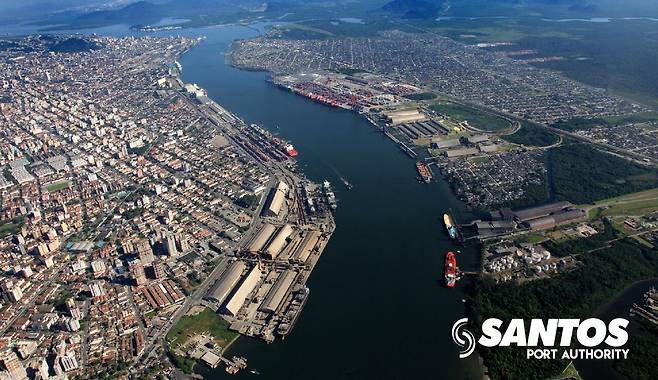
The Port of Santos currently processes about 6 million TEUs annually. With container volumes surging between countries like Brazil and Mexico, the port has experienced frequent bottlenecks. The port comprises 58 terminals, all operated by private entities. Once completed, Tecon 10 is expected to boost the port’s total handling capacity by approximately 50%.
As a major trade hub, the Port of Santos is expected to draw intense competition among global shipping lines and terminal operators seeking long-term concessions. Securing operational rights allows carriers to speed up container processing and improve profitability. Concessions are typically granted for 20 to 30 years and may be extended depending on performance and negotiations.
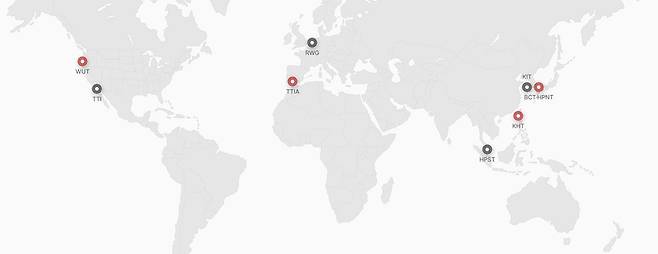
HMM is also expanding its existing terminal in Algeciras, Spain. The company plans to invest €35 million (approximately $40 million) to increase the terminal’s footprint from 300,000 square meters to 460,000 square meters and raise its annual capacity from 1.6 million TEUs to 2.1 million TEUs. In connection with the expansion, HMM’s lease will be extended from 2043 to 2065.
The company currently operates eight terminals in six countries. Although HMM ranks eighth globally in container shipping capacity, it operates fewer terminals than other carriers of similar scale. In the first quarter, revenue from terminal operations and other non-shipping business units amounted to 53.4 billion won ($35 million), accounting for just 1.87% of total sales.
By comparison, Mediterranean Shipping Company (MSC), the world’s largest container carrier, operates 67 terminals in 34 countries, while A.P. Moller–Maersk runs 59 terminals across 35 countries. Leading carriers have built extensive global terminal networks and often manage them through spun-off subsidiaries. Despite high upfront costs, terminal investments are widely regarded as essential to enhancing long-term competitiveness in the shipping industry.
Choi Won-hyok, who was appointed CEO of HMM earlier this year, has repeatedly emphasized his commitment to expanding the company’s terminal operations. Choi, who previously served as CEO of LX Pantos and held senior roles at CJ Logistics, has more than 40 years of experience in the logistics industry. He has often cited past challenges related to transshipment delays stemming from HMM’s lack of overseas terminals.
Copyright © 조선일보. 무단전재 및 재배포 금지.
- 트럼프 “이란에 지옥문 열릴 때까지 48시간 남았다”
- 美·이스라엘 공습 확대... 이란 원전 또 때렸다
- ‘마약왕’ 박왕열, 금단 증상?... 강렬한 눈빛 어디가고 ‘퀭’
- 신유빈, 세계 3위 꺾었다... 사상 첫 女탁구 월드컵 단식 4강
- ‘무서운 공룡’ NC, 파죽의 5연승 공동 선두 질주... 최하위 KIA는 4연패
- 日 유조선, 또 호르무즈 통과… 한국 선박 26척은?
- “이란, 생필품 실은 이란행 배는 호르무즈 통과 허용”
- KLPGA 국내 개막전서 하루에 홀인원 3명 나왔다
- 현대캐피탈, 5세트 막판 “레오 서브 아웃” 비디오 판독에 불복... 연맹에 공식 이의제기
- 尹 탄핵 1년… 서울 도심 곳곳 대규모 집회 열려