April-like days continue, with a few seasonal drawbacks
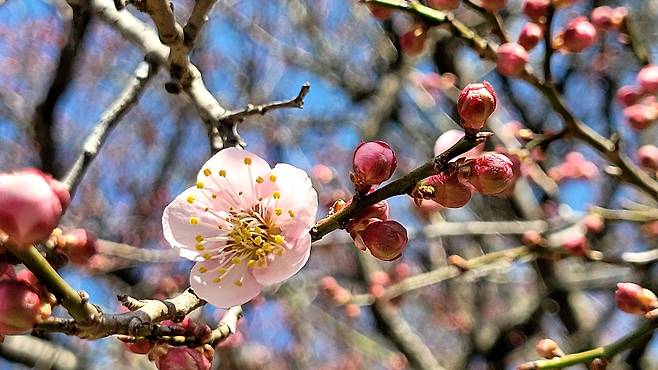
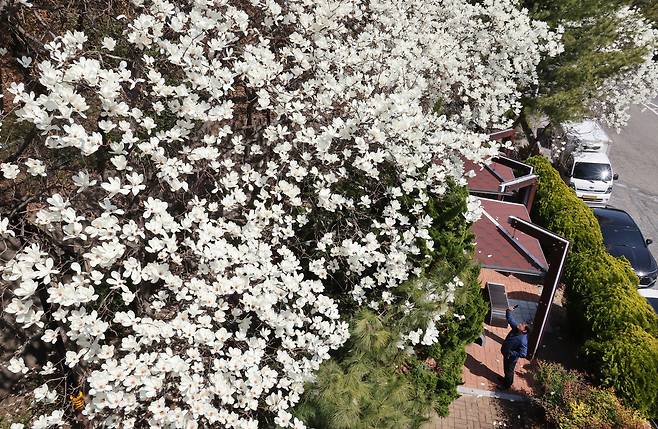
With temperatures climbing to as high as 20 degrees Celsius for a second consecutive day, South Korea is entering full spring mode, along with the typical seasonal drawbacks: sharp day-night temperature swings, poor air quality and dry conditions that raise risks of wildfire.
According to the Korea Meteorological Administration, daytime highs on Tuesday are expected to range between 13 and 19 degrees Celsius across the country, above the seasonal average of 11 to 15 degrees.
The state weather agency forecast that daytime highs will remain well above average throughout the week, with temperatures comparable to those of mid-April.
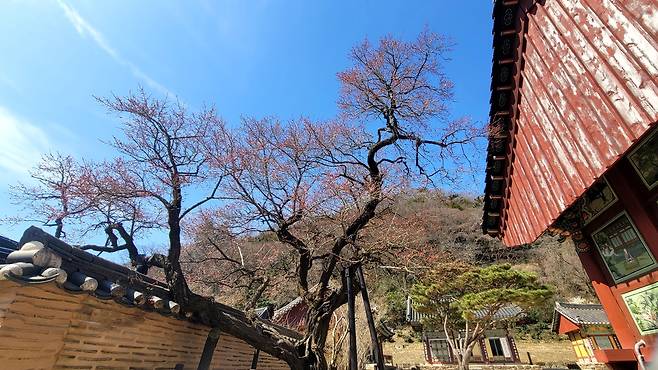
Heralding the arrival of spring, a red plum blossom tree at Baekyangsa, a temple in Jangseong, South Jeolla Province, has come into bloom.
Designated Natural Monument No. 486 in 2007, the tree, known as "Gobulmae," is considered one of Korea’s four famed plum trees, alongside Yulgokmae in Gangneung, Gangwon Province, Hwaeommae in Gurye, South Jeolla Province, and Seonammae in Suncheon.
However, with day-night temperature gaps of 15 to 20 degrees Celsius, wearing a warm outer layer is recommended when outdoors, the state weather agency emphasized.
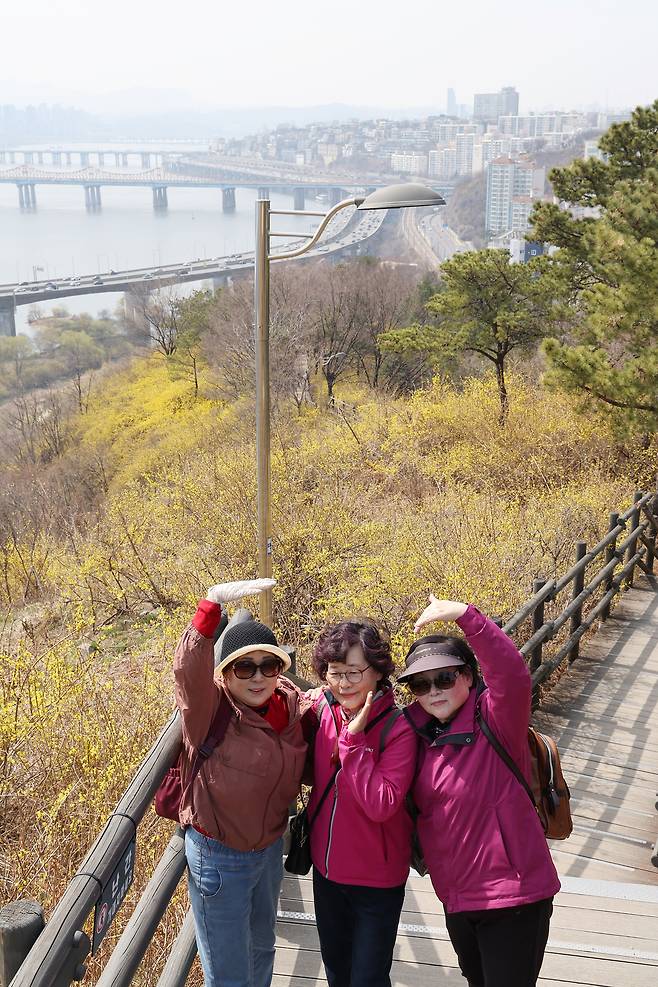
Despite mild weather drawing people outdoors, air quality remains at poor levels. Concentrations of fine particulate matter are rated "bad" across most parts of the country, including Seoul and Gyeonggi Province, as well as Gangwon and the North and South Chungcheong provinces and major cities including Busan, Daegu and Ulsan.
Fine dust levels of PM 2.5 above 35 micrograms per cubic meter are classified as "bad," while levels above 75 micrograms are "very bad."
Dry conditions are also raising concerns over wildfires. Dry weather advisories are in effect for the capital region, mountainous regions of Jeju Island and Yeongdong in Gangwon Province.
A dry weather advisory is issued when effective humidity is expected to remain below 35 percent for more than two days.
Rain was expected to begin on Jeju Island on Tuesday afternoon and extend to the southern coast through Wednesday morning, while other inland regions are to remain clear.
Copyright © 코리아헤럴드. 무단전재 및 재배포 금지.