As N. Korean defector arrivals drop, Seoul opts to merge Hanawon resettlement centers
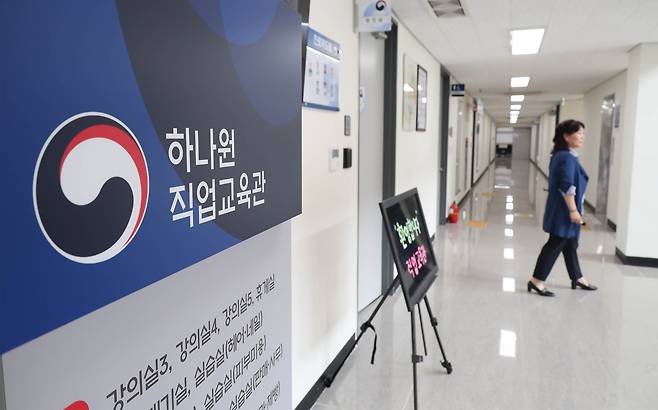
The Unification Ministry has decided to consolidate its government-run resettlement centers for North Korean defectors into a single facility, as new arrivals have fallen sharply in recent years to well below pre-COVID-19 levels.
The ministry said it is reviewing an expedited merger of the main Hanawon resettlement center in Anseong, Gyeonggi Province, and its branch in Hwacheon County, Gangwon Province.
“We are reviewing a plan to integrate Hanawon in Anseong and the branch facility in Hwacheon reflecting the current declining trend in the number of North Korean defectors entering South Korea,” Chang Yoon-jeong, deputy spokesperson of the Unification Ministry, told Friday’s briefing.
“We plan to implement (the changes) at an early date, examining integration measures for efficient operation, plans for personnel reallocation and other matters.”
However, the ministry is still reviewing which of the two centers will be closed, with more weight placed on consolidating operations at the more recently established facility in Hwacheon.
Hanawon opened in July 1999 in Anseong. The ministry opened a second facility in Hwacheon in December 2012 specifically for male defectors, as arrivals of North Korean defectors rapidly rose and demand grew for more advanced training beyond initial settlement.
The number of North Korean defectors arriving in South Korea has yet to return to pre-pandemic levels. Annual arrivals hovered around 1,000 between 2012 and 2019, after reaching a record high of 2,914 in 2009, according to a database provided by the Unification Ministry.
The number of North Korean defectors has plummeted from 1,047 in 2019 to 229 in 2020 and 63 in 2021. Annual arrivals totaled 67 in 2022, rose to 196 in 2023 and reached 236 in 2024.
As of November this year, the figure is tentatively estimated at around 202, according to the Unification Ministry.
In a briefing on the ministry’s key plans for 2026 on Dec. 19, the Unification Ministry said it would push for a sweeping overhaul of Hanawon facilities and education programs from the perspective of beneficiaries.
Defectors are required to stay at Hanawon — formally known as the Settlement Support Center for North Korean Refugees — for three months to receive basic training for integration into South Korean society. Their placement there follows a month-long investigation by the National Intelligence Service, South Korea’s intelligence agency.
Copyright © 코리아헤럴드. 무단전재 및 재배포 금지.