Gallery Hyundai shows how traditional Korean painting lives on in contemporary art
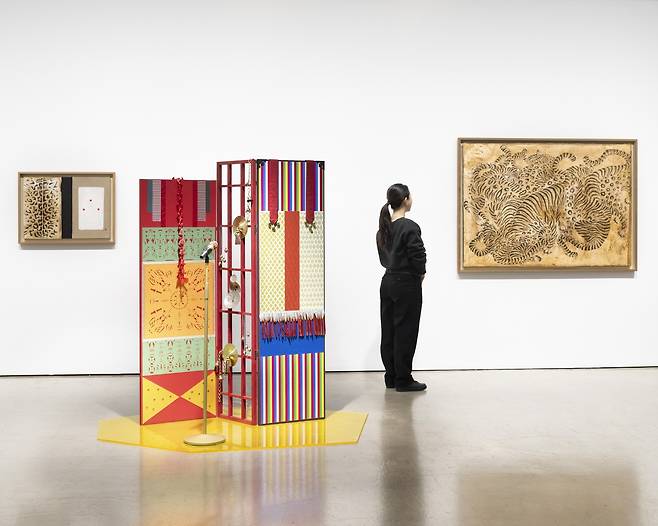
Traditional Korean paintings continuously evolve, reinterpreted by contemporary artists. Two parallel exhibitions at Gallery Hyundai in Samcheong-dong, southern Seoul — "Magnificence and Creativity: Variations in Korean Folk Painting" and "The Way of Painting" — offer a rare opportunity to see at a glance how Korea's painting traditions have been carried into the present.
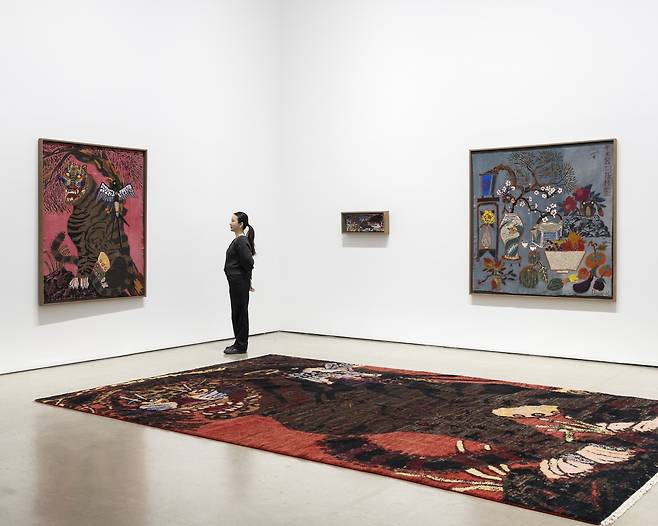
While the first exhibition at the main space sheds light on the aesthetic values of court and folk painting in the Joseon era (1392-1910), the latter at the gallery's new space brings together six contemporary artists whose works draw inspiration from Korea's cultural legacy.
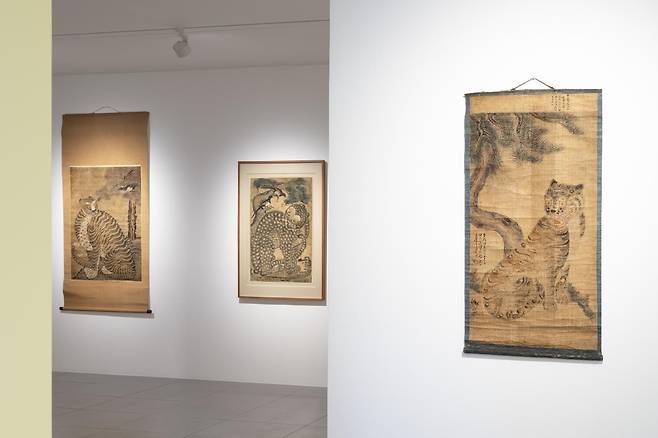
The exhibitions mark the gallery's first major presentation of traditional Korean painting in four years, at a time when folk paintings such as those featuring the iconic magpie and tiger have gained renewed popularity.
Among works on view are folding screen painting "Two Dragons and Pearl" from the 19th century, depicting two dragons facing each other across "yeouiju," a wish-granting jewel, symbolizing the legitimacy of royal authority.
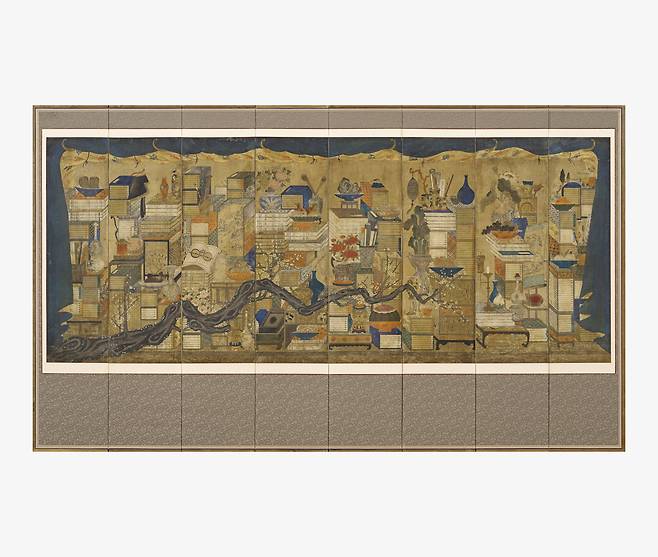
Another folding screen, "Chaekgeori and Plum Tree," also from the 19th century, shows a plum tree with books and fruits that symbolize wealth and prosperity.
Moving on to the contemporary art exhibition at the separate space, one can see how artists engage with Korean painting traditions in different ways. The exhibition features works by Kim Nam-Kyoung, Kim Ji-pyeong, Park Bang-young, Ahn Seong-min, Lee Doo-won and Jae Jung.
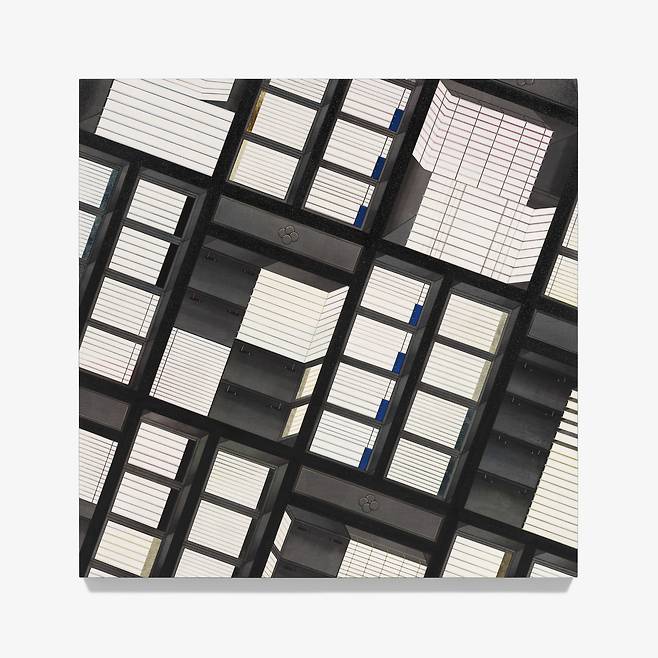
Kim Nam-Kyoung draws on "chaekgeori" — paintings of books and scholars' objects from the Joseon era — to express personal memories and inner worlds on fabric and metal leaf. Kim Ji-pyeong reworks traditional genres including chaekgeori and folding screen paintings, offering a critical reinterpretation of traditional ways of understanding the world.
Park Bang-young turns calligraphic brushstrokes and movement into bold abstract paintings, while Ahn Seong-min re-creates traditional folk painting images, using everyday objects and modern colors, creating surreal scenes that mix personal stories with shared memories.
Lee Doo-won uses natural materials collected during his travels, combining them with Korean ink to explore the basics of painting with seeming spontaneity. Drawing on the traditional compositions and materials of folk and court painting, Jae Jung investigates the contemporary possibilities of Korean painting through restrained colors and layered brush strokes.
"The exhibition at the main space presents 27 carefully selected museum-quality works showcasing the beauty of Joseon-era folk and court paintings," Do Hyung-teh, vice president of Gallery Hyundai, told the press on Wednesday. "Building on this tradition, we felt the time was right to introduce contemporary artists who reinterpret these classical forms in a modern context, which led us to organize this new year exhibition."
The exhibitions run through Feb. 28.
Copyright © 코리아헤럴드. 무단전재 및 재배포 금지.