S. Korean exporting SMEs face double blow from US tariffs, tax hike
이 글자크기로 변경됩니다.
(예시) 가장 빠른 뉴스가 있고 다양한 정보, 쌍방향 소통이 숨쉬는 다음뉴스를 만나보세요. 다음뉴스는 국내외 주요이슈와 실시간 속보, 문화생활 및 다양한 분야의 뉴스를 입체적으로 전달하고 있습니다.
South Korean small and medium-sized companies targeting the U.S. market now face a double burden from new tariffs and higher corporate taxes.
The United States is a major export destination for these firms, but the recent agreement to impose a 15% tariff, along with an increase in corporate tax rates, is expected to limit their business activities.
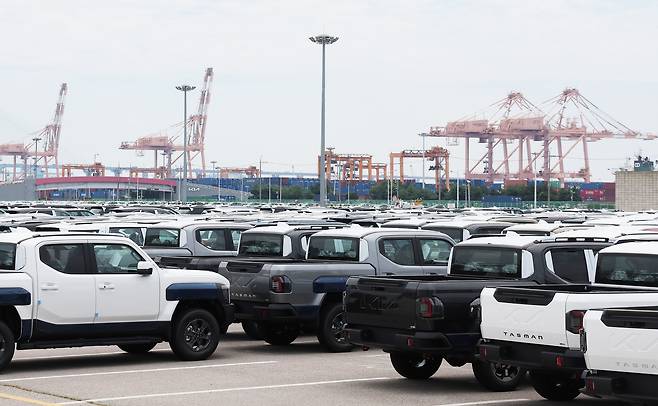
According to SME industry sources on Aug. 4, South Korean small and medium-sized enterprises in sectors such as auto parts, electronics, and medical devices have been expanding their supply chains in the U.S. market.
Last year, about 95,900 small exporters operated in South Korea, with the U.S. as their top market. Companies in industries like automotive parts, electronics, and medical devices have been expanding their supply chains there. However, the tariff agreement and tax hike could reduce both profits and investment capacity.
Under the deal, U.S. President Donald Trump set tariffs on Korean goods at 15%, on the condition that South Korea invest $350 billion in the United States.
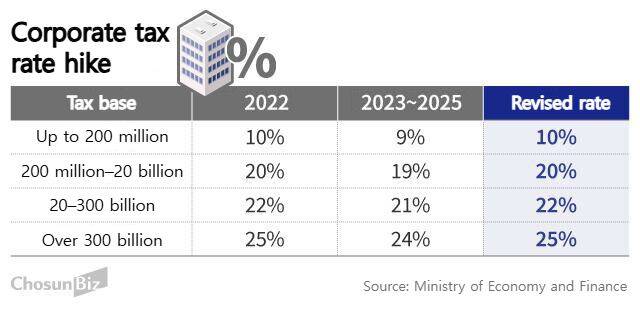
On top of that, the South Korean government raised corporate tax rates by one percentage point across four income brackets: from 9% to 10% for income up to 200 million won ($145,000), 19% to 20% for 200 million to 20 billion won, 21% to 22% for 20 billion to 300 billion won, and 24% to 25% for income exceeding 300 billion won.
The Finance Ministry estimates that out of the 35.6 trillion won expected from tax reforms, about 6.5 trillion won will come from small and medium enterprises.
The automotive parts sector, which relies heavily on the North American market, is especially concerned. Tariffs could reduce finished car exports, which would hurt parts suppliers connected to those exports. Last year, South Korean auto parts exports totaled about $2.3 billion, with 34% coming from the U.S.
An official at an auto parts company in South Gyeongsang Province said, “Since the U.S. is imposing tariffs on other countries as well, we need to wait and see. But the tax burden has definitely increased, considering the corporate tax hike and local income tax.”
The official added, “Some companies didn’t pay corporate tax last year due to losses, but even if they return to profit, the higher taxes could limit both investment capacity and cash flow.”
The government has introduced measures to ease the burden on SMEs, including a 4.6 trillion won policy fund to support exporters affected by U.S. tariffs and an extension of the special corporate tax credit for eligible small businesses until 2028. However, critics argue that these efforts are not enough.
A machinery business owner in Gyeonggi Province said extending tax credits helped ease the burden, but overall business conditions have worsened. He added that it might have been better to delay the corporate tax hike until after seeing how the industry responds to tariffs.
Kim Woo-cheol, a tax professor at the University of Seoul, said, “Exporting SMEs are taking a heavy hit.” He explained that while a 1% corporate tax increase is not large, many SMEs are already short on cash and liquidity due to the weak economy. “South Korea’s exporters once had a tariff advantage over Europe and Japan, but the new South Korea-U.S. deal removes that edge. Combined with higher taxes, SMEs are facing greater challenges,” Kim said.
Copyright © 조선일보. 무단전재 및 재배포 금지.
- 박왕열, “넌 남자도 아녀” 꼿꼿하더니 이틀 뒤엔 ‘퀭’…금단 현상?
- 신유빈, 韓 여자 탁구 선수 사상 첫 월드컵 단식 4강 쾌거
- ‘무서운 공룡’ NC, 파죽의 5연승 공동 선두 질주...최하위 KIA는 4연패
- 日 유조선, 또 호르무즈 통과… 한국 선박 26척은?
- “이란, 생필품 실은 이란행 배는 호르무즈 통과 허용”
- KLPGA 국내 개막전서 하루에 홀인원 3개 나와... KLPGA 투어 최다 타이
- 현대캐피탈, 5세트 막판 “레오 서브 아웃” 비디오 판독에 불복... 연맹에 공식 이의제기
- 尹 탄핵 1년… 서울 도심 곳곳 대규모 집회 열려
- 美 정보당국 “이란, 당분간 호르무즈 해협 봉쇄 안 풀 듯”
- 제주 4·3 사건의 시작? 3·1 발포 사건의 진실 [호준석의 역사전쟁]