Samsung chief acquitted, ending nine-year legal ordeal
이 글자크기로 변경됩니다.
(예시) 가장 빠른 뉴스가 있고 다양한 정보, 쌍방향 소통이 숨쉬는 다음뉴스를 만나보세요. 다음뉴스는 국내외 주요이슈와 실시간 속보, 문화생활 및 다양한 분야의 뉴스를 입체적으로 전달하고 있습니다.
Samsung Electronics executive chair Lee Jae-yong has been acquitted by South Korea’s Supreme Court in a high-profile case over alleged accounting fraud at Samsung Biologics, formally concluding a legal saga that has shadowed the country’s most powerful business figure for nearly a decade.
On July 17, the Supreme Court’s third division dismissed the prosecution’s final appeal and upheld a lower court ruling that found Lee not guilty of violating the Financial Investment Services and Capital Markets Act, along with 18 other related charges.
Lee, first indicted in 2017 in connection with the political corruption scandal that led to the impeachment of former President Park Geun-hye, has now seen the final legal cloud lift over his leadership of the Samsung group.
Former top executives Choi Gee-sung and Jang Choong-ki — Lee’s closest aides in Samsung’s now-dissolved Future Strategy Office — were also acquitted.
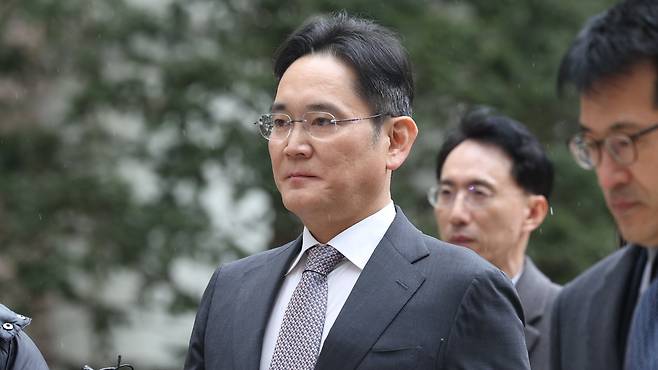
In its ruling, the court found no legal error or omission in the previous verdict and concluded there was insufficient evidence to support charges of capital markets violations, breaches of the external audit law, or embezzlement.
Prosecutors had accused Lee of orchestrating the controversial 2015 merger between Cheil Industries and Samsung C&T to consolidate his control over the group. They also alleged he was involved in artificially inflating the valuation of Samsung Biologics — a Cheil subsidiary at the time — through fraudulent accounting.
The case gained national attention in December 2016, when the civic group People’s Solidarity for Participatory Democracy raised concerns over Samsung Biologics’ accounting practices. A special prosecutor’s team initially took up the case as part of the broader Park Geun-hye investigation but left it unresolved.
In 2018, the Securities and Futures Commission formally referred the matter to prosecutors, prompting a deeper probe by the Seoul Central District Prosecutors’ Office.
By June 2020, prosecutors had sought arrest warrants for Lee and two former executives, though a court rejected the request. An independent citizens’ review panel voted 10–3 to recommend against indictment. Still, the prosecution pressed ahead and formally charged Lee in October that year.
However, both trial courts ultimately found there was insufficient evidence to conclude the merger was driven solely by succession planning, or that Samsung Biologics’ accounting had been fraudulently manipulated. In February, the Seoul High Court stated: “One cannot assign criminal liability based on speculation, scenarios, or assumptions in a case with such broad implications.”
The Supreme Court concurred, reaching its final decision five months later. It also upheld the appellate court’s decision to exclude key pieces of evidence — including a company server, text messages from Jang, and an external hard drive — on the grounds of inadmissibility.
The verdict removes the last major legal risk facing Lee and brings to a close nearly nine years of uncertainty for Samsung’s leadership.
In a statement, Lee’s legal team welcomed the decision: “The Supreme Court’s final judgment confirms that the Samsung C&T merger and the Samsung Biologics accounting treatment were both lawful. We are deeply grateful to the court for its careful and thorough review over the past five years.”
Copyright © 조선일보. 무단전재 및 재배포 금지.
- 소총 들고 바위 샅샅이 뒤진 이란 부족민… ‘적진 고립’ 조종사, 이란 포위망서 생존
- 36시간 사투… 美 또 한명의 ‘라이언 일병’ 구하다
- 이란 전쟁 여파 식탁까지 덮쳐
- 마약범 65만명인데, 중독 치료 병상은 341개뿐
- 우주에서 본 지구는 이리도 평온한데…
- 한국인 멤버·한글 가사 없어도… LA 연습생들 “우린 K팝 아이돌”
- “호르무즈 봉쇄 장기화”… 각국 선박, 눈치껏 각자도생
- 중동 요소가격 1년만에 172% 폭등… 국내 요소 비료 절반가량이 중동산
- 트럼프 “화요일은 발전소의 날… 미친 X들아, 해협 열어라”
- “불법 전화방 운영” 與, 광양시장 경선 박성현 자격 박탈