BYD struggles to gain traction in S. Korea 6 months after launch
이 글자크기로 변경됩니다.
(예시) 가장 빠른 뉴스가 있고 다양한 정보, 쌍방향 소통이 숨쉬는 다음뉴스를 만나보세요. 다음뉴스는 국내외 주요이슈와 실시간 속보, 문화생활 및 다양한 분야의 뉴스를 입체적으로 전달하고 있습니다.
Chinese electric vehicle maker BYD has failed to make a significant impact in the South Korean market six months after its entry. Low consumer trust in Chinese cars and a continuing slowdown in electric vehicle demand are cited as the main reasons for its lackluster performance.
According to market tracker Carisyou on July 13, BYD sold 1,337 units in South Korea during the first half of this year, ranking 14th among all imported car brands. Among volume sellers excluding ultra-luxury brands, BYD ranked near the bottom with Honda and Peugeot.
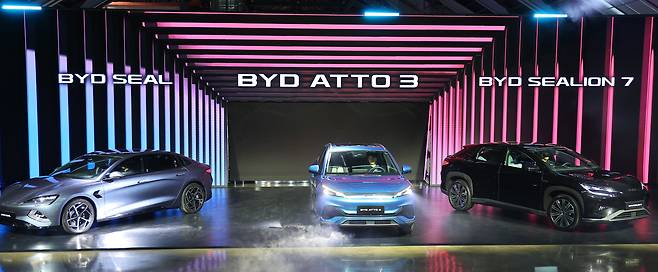
Although BYD officially entered the market in January, delays in subsidy approvals by the Ministry of Environment postponed actual customer deliveries until April. In April, BYD sold 543 units, marking the highest sales for a single-trim imported car, but sales plunged to 220 units in June.
The industry expected BYD to disrupt the local market, as it surpassed Tesla to become the world’s largest EV maker and is recognized for advanced battery technology. Though not officially announced, BYD reportedly aims to sell over 10,000 units domestically this year.
Experts say BYD’s weak sales stem from offering only one model and strong distrust of Chinese cars among South Korean buyers. In the first six months of the year, BYD sold only the compact SUV Atto 3 domestically. This was insufficient to drive a breakthrough, as demand in South Korea is stronger for mid-sized sedans and SUVs.
Despite being priced about 10 million won lower than domestic rivals like the Hyundai Kona Electric and Kia EV models, the Atto 3’s value advantage was overshadowed by aggressive discounts from Hyundai and Kia.
The prolonged slump in the EV market also contributed to BYD’s poor sales. Hyundai’s flagship electric model Ioniq 5 saw a 3.6% drop in first-half sales year-on-year, with June sales down 18.8%. Due to continued weak demand, Hyundai temporarily halted production of the Ioniq 5 and Kona Electric at its Ulsan plant.
Some expect BYD’s sales to improve in the second half, as upcoming models will include mid-sized sedans and SUVs, segments with higher demand in South Korea. However, others warn that unless BYD offers a significant price advantage over Hyundai and Kia, it will struggle to establish itself.
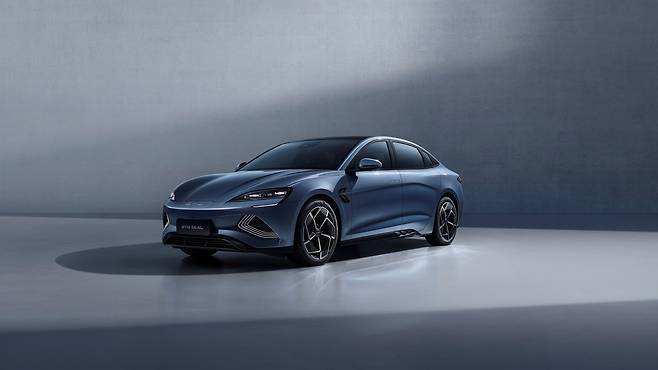
BYD set the price of its second domestic release, the mid-sized sedan Seal, at 46.9 million won. Hyundai’s comparable model, the Ioniq 6, starts at 46.95 million won. BYD plans to introduce the mid-sized SUV Sealion 7 later this year.
“Last month, BYD faced financial strain from overproduction in China and discounted prices there by over 30%,” an industry insider noted. “If they sell the same cars in Korea at prices similar to Hyundai and Kia, it will be hard to attract consumer interest.”
Copyright © 조선일보. 무단전재 및 재배포 금지.
- 로리 매킬로이, ‘전설’이 되다... 24년 만에 마스터스 2연패, 역대 4번째
- 농가 고령화에 올해 과일 재배면적 1% 줄어...감소 규모 여의도 3.5배
- “오진으로 유방암 수술까지” 고백한 ‘미녀삼총사’ 배우
- 이스라엘 매체 “李대통령, 경제 압박에 국내 정치용으로 우릴 비판”
- 美 “동부 시간 13일 오전 10시부터 이란 출입 해상 교통 봉쇄”
- [더 한장] “비싼 기름값에...” 평일에도 주차장은 만차
- K게임 수출액 1위 중국… 10년 전 ‘한한령’ 리스크 또 터지기 전에 中 의존도 낮추고 ‘고밀도
- 숯불에 구운 듯한 풍미...궁중 너비아니 멤버십 할인 [조멤Pick]
- 모자 뒤집어쓰고 음악 축제서 애정 행각… 사랑에 빠진 전직 총리
- 이효석 “삼전·닉스, 1분기 이익 유지만 돼도 주가 2배로 오를 것”