Regular exercise twice a week reduces insomnia: studys
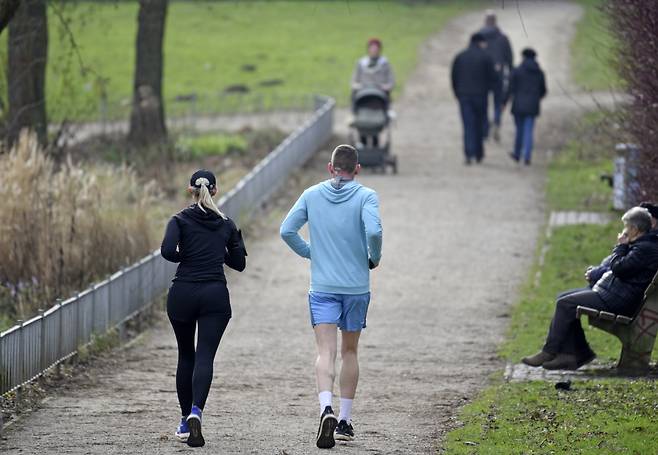
Regular exercise at least twice a week significantly reduces sleep disorders, according to a recent study conducted by an Icelandic college.
A research team led by Erla Bjornsdottir from the University of Reykjavik, Iceland, disclosed a link between physical activity and insomnia. The study analyzed data from 44,000 participants over a decade across nine European countries, with findings published in The BMJ, a British medical journal, Wednesday.
The team analyzed data from 4,399 individuals who took part in a respiratory system health survey across 21 centers in nine countries, including Iceland, Belgium, Denmark, Germany, Spain, France, the United Kingdom, Sweden and Estonia, from 1998-2002 and 2011-2014.
The study included 2,254 female and 2,085 male participants, aged between 39 and 67. They reported the frequency of physical activity, their sleep duration and their levels of daytime sleepiness at each survey point. Individuals who engaged in at least two exercise sessions per week, together totaling more than one hour, were categorized as the "active" group. Over a 10-year period, the research team divided the participants into four categories based on changes in their activity levels: "continued active," "continued inactive," "changed to active" and "changed to inactive.
The study revealed that the "continued active" group comprised 1,082 individuals, accounting for 25 percent of the participants, while the "continued inactive" group included 1,601 participants, represented 37 percent. Those who "changed to active" were 775, making up 18 percent, and the "changed to inactive" group had 881 individuals, constituting 20 percent.
Participants who maintained a routine of exercising two to three times per week over a prolonged period experienced a decrease in the risk of insomnia and significantly enhanced their likelihood of achieving the recommended six to nine hours of sleep each night.
The group with continuous activity reported a 42 percent lower difficulty in falling asleep compared to the group with continuous inactivity. The probability of experiencing symptoms of insomnia was 22 percent lower, and the likelihood of reporting two or three symptoms of insomnia was also 37-40 percent lower.
The research team noted that while the study's results indicate that active physical activities enhance sleep quality and reduce chronic insomnia, the impact of factors such as gender, age, body mass index and types of exercises remains uncertain.
By Shin Ji-hye(shinjh@heraldcorp.com)
Copyright © 코리아헤럴드. 무단전재 및 재배포 금지.