[존 프랭클의 문무겸전] 강의실에서든 도장에서든 ‘기본’에만 집중한다
이 글자크기로 변경됩니다.
(예시) 가장 빠른 뉴스가 있고 다양한 정보, 쌍방향 소통이 숨쉬는 다음뉴스를 만나보세요. 다음뉴스는 국내외 주요이슈와 실시간 속보, 문화생활 및 다양한 분야의 뉴스를 입체적으로 전달하고 있습니다.
기본에 충실한 자세야말로 과대망상의 가장 강력한 해독제

지금까지 내 칼럼을 읽어준 독자들이 조금이나마 이해하게 되었기를 바란다. 문(文)과 무(武)의 길은 겉보기엔 정반대 같아도 공통점이 상당히 많다는 것을. 그중에서도 내가 가장 중요하게 여겨온 것은, 가르칠 때나 배울 때나, ‘기본’이다. 그러나 학문과 무술 모두에서, 가르치는 이와 배우는 이가 사고와 동작의 기본에서 벗어나는 모습을 너무도 자주 본다. 정작 그들의 성취를 좌우하는 것은 바로 기본인데도.
대학 교수로서 나는 연구와 교육을 함께 맡고 있다. 승진 심사에서 연구 비중이 90%, 교육은 5%에 불과하지만, 나는 연구만큼 교육에 진지하게 임한다. 다만 그 자세는 연구와 정반대다. 교육자로서 내가 할 일은 내 성취로 학생들을 현혹하는 것이 아니라, 언젠가 그들도 각자의 분야와 방식으로 내가 하는 일을 해낼 수 있도록 도구를 쥐여주는 것이다. 한국에 ‘브라질리언 주짓수’를 처음 소개한 무술 지도자로서도 마찬가지다. 나만의 주짓수를 연마하는 것과 가르치는 것은 대체로 별개다. 강의실에서든 도장에서든, 나는 거의 기본에만 집중한다.
비법을 감추려는 것도, 학생들의 능력을 폄하하는 것도 아니다. 기본을 다져야 지적·무술적 능력을 가장 확실하게 발전시키고 발휘할 수 있기 때문이다. 내 책임은 수천 명의 제자에게 내 방식을 가르치는 것이 아니라, 자기만의 방식을 개발할 수 있는 제자 수천 명을 길러내는 것이다. 흔한 오해와 달리 기본은 학생들을 옭아매지 않는다. 오히려 자유롭고 독립적인 존재로 키운다.
교육자가 기본에서 벗어나는 것은 언뜻 정반대로 보이는 두 가지 이유 때문이다. 첫째는 일종의 자기중심적 관대함으로, 아는 것을 빠짐없이 알려주는 것이 학생에게 도움이 될 거라는 순진한 믿음에 기인한다. 그러나 그런 방식은 대체로 학생들을 중심도 방향도 없는 가능성의 늪에 빠뜨린다. 분별력부터 가르쳐야 할 지도자가 책임을 저버리는 꼴이다. 나의 스승 중 한 분인 도검 명장 J. D. 스미스는 이렇게 조언했다. 가장 중요한 것은 가능한 일과 불가능한 일을 구별하는 것이 아니라, 가능한 일과 바람직한 일을 구별하는 것이라고.
둘째 이유도 같은 역효과를 내지만 그 뿌리는 더 어둡다. 대학 교수나 무술 지도자 중에는 깊은 내적 불안과 자기애에 사로잡힌 이들이 있다. 그들이 현학적인 설명을 늘어놓는 것은 자신을 뛰어넘을 제자를 기르기보다는 지식을 과시하기 위해서다. 이들은 ‘자기 방식’을 맹목적으로 따르라고 요구하며, 그것이 최고의 경지이고 그 지식을 알려주는 것이 큰 은혜인 양 자만한다. 물론 실상은 정반대다.
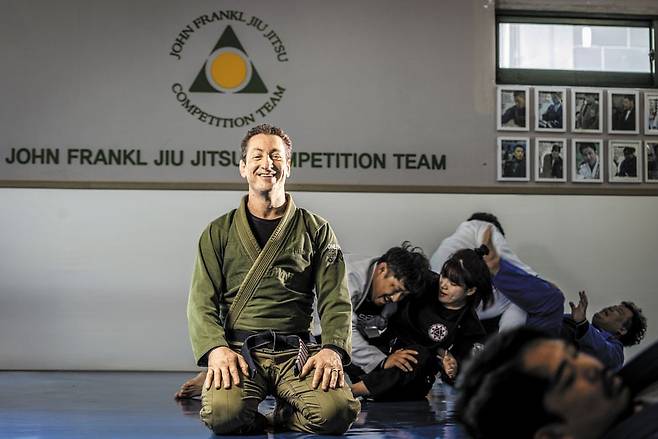
지름길은 없다. 적어도 오래도록 가치 있는 무언가를 추구하는 여정에서는 더 그렇다. 불필요한 것을 덜어내는 일이나 효율성의 가치를 부정하는 게 아니다. 어리석게도 ‘요령’만을 찾아 헤매다가 시간은 두 배, 에너지는 세 배를 쓰고 성과는 절반에 그치는 사람을 수없이 보았다. 옛말에도 있듯이, 빠져나가는 유일한 길은 ‘정면 돌파’뿐이다.
이 원칙은 문과 무를 넘어 여러 영역에 두루 적용된다. TV와 소셜 미디어에는 식습관을 바꾸지 않고도 쉽게 살을 빼고, 어려운 외국어를 여섯 달 만에 익힐 수 있다는 장사꾼의 약속이 넘쳐난다. 다 헛소리다. 제대로 된 스승이라면 쉬운 길을 약속하는 대신 천천히, 체계적으로, 때로는 고통을 감수하면서 기본을 익히라고, 그리고 평생 그 기본을 다듬으라고 요구한다.
네이비실 출신 조코 윌링크의 책 제목처럼 ‘규율이 곧 자유다’. 가르치는 자든 배우는 자든, 기본을 배우고 숙달하며 끊임없이 갈고닦는 규율을 통해서만 고유한 스타일과 탁월한 기량을 얻고 유지할 수 있다.
어느덧 무술을 수련한 세월이 50년을, 한국어를 공부한 세월은 40년을, 대학에서 가르치고 연구한 세월은 30년을 넘겼다. 평생 숙달의 경지를 좇아왔지만, 기본으로 돌아가는 일이 오히려 빈번해진다. 배울수록 내가 실제로 아는 것이 얼마나 적은지 깨닫는다. 그런 의미에서 기본에 충실한 자세야말로 앞서 언급한 과대망상의 가장 강력한 해독제가 될지도 모른다. 내가 우리 팀을 위해 만든 표어에도 그런 의미가 담겨 있다. “단순하다. 그러나 쉽지는 않다.”
기본이 있기에, 나는 평생 학생으로 살 수 있다. 단순함의 아름다움과 위력에 늘 새로이 매료되면서. 동시에 기본이 있기에, 나는 평생 스승으로 살 수 있다. 제자들이 내 밑에서 날 흉내 내는 존재가 아니라, 각자가 최선의 모습으로 성장하도록 힘닿는 데까지 돕는 스승으로.
<영문 원고>
It is my sincere hope that those readers who have been either courageous or masochistic enough to bear with me through my first four columns have also begun to understand that literary and martial pursuits, despite their ostensible polarity, share many salient and significant commonalities. Among them, the one that has long struck me as most significant is the crucial importance of fundamentals to both teaching and learning. And yet, for differing reasons, I too often witness teachers and students in both domains deviate from the first principles of thought and movement on which their actual successes depend.
As a professor at a research-intensive university, I am responsible for both research and teaching: creating new knowledge and transmitting existing knowledge. In fact, 90% of my evaluation for promotion and tenure was based on research, with teaching and service receiving a paltry 5% each. Nevertheless, I take all three equally seriously, and my approach to teaching is essentially the opposite of my approach to research. My job as a teacher is not to mesmerize students with my accomplishments but to provide them with the tools eventually to do what I do, albeit in different fields and ways.
As the founder of Brazilian Jiu Jitsu in Korea, head of a large organization, and martial arts instructor, I have similar responsibilities. I continually expand my knowledge and refine my personal expression of the art, but this is largely separate from what I teach. In both the university classroom and the Jiu Jitsu academy, I focus almost exclusively on fundamentals.
This is not because I am hiding secrets or believe my students incapable of mastering advanced knowledge or techniques. Rather, a firm grounding in fundamentals best ensures their ability to develop and express their own intellectual and martial abilities. Put another way, my responsibility is to train thousands of students capable of developing their own styles, not to teach my particular style to thousands of students. Contrary to widespread misconceptions, fundamentals do not limit students; they are precisely what makes their eventual freedom and independence possible.
There are two primary reasons teachers stray from fundamentals, and they are seemingly antithetical. The first arises from a sort of solipsistic generosity—certain teachers desire to reveal every single thing they know in the naïve belief that this will actually benefit students. More often than not, however, it simply leaves students unmoored in a morass of unfocused possibilities. This amounts to a dereliction of duty on the part of the instructor who should be teaching discernment first and foremost. As one of my own mentors, Master Bladesmith J. D. Smith, once wisely told me, the most important thing is to distinguish not between what is possible and impossible, but between what is possible and what is desirable.
The second motive, while equally counterproductive, is actually more sinister. Although we often put them on pedestals, some university professors and martial arts instructors are deeply insecure and narcissistic (the irony of my writing this is not lost on me!), their pedantry aimed more at florid displays of their own knowledge than at cultivating students capable of eventually equaling and surpassing them. They most often teach and demand slavish aping of “their game,” vainly believing that it represents the highest expression of knowledge in their field, and that they are doing their students a great service by revealing such recondite knowledge. The opposite, of course, is true.
Equally true is the fact that there are no shortcuts, at least not on the way to anything of enduring value. I am not gainsaying either parsimony or efficiency, two of the cornerstones of effective intellectual and physical expression. In both scholarship and martial arts, however, I have personally witnessed countless people benightedly seeking “hacks” only to wind up spending twice the time and three times the energy to attain half of the results, if that. As the old saying goes, the only way out is through.
And this is true, as all first principles are, across domains and far beyond the pen and the sword. Spend even a single evening watching television or scrolling through social media, and you will be bombarded with huckster promises of easily losing unwanted weight without changing your diet, casually mastering a difficult foreign language in six months, or effortlessly capturing the mate of your dreams. It is all bullshit. And any teacher worth their salt will promise nothing easy, but rather demand that you slowly, methodically, sometimes even painfully not only master the fundamentals of your chosen discipline but also continue to apply and refine them for the rest of your life.
Former Navy SEAL Jocko Willink has an entire book counterintuitively titled Discipline Equals Freedom, and he is absolutely correct. It is only through the discipline of learning, mastering, and perpetually polishing the fundamentals of their respective disciplines that teachers and students alike can attain and maintain individual style and virtuosity.
Though I rarely think about it consciously, I presently find myself in my sixth decade of martial arts practice, my fifth decade of Korean language study, and my fourth decade of university teaching and research. And I cannot help but reflect upon the apparent paradox that after a lifetime spent in the pursuit of mastery, I find myself returning ever more frequently, rather than less frequently, to the fundamentals. The more I learn, the more I realize how little I actually know. In this sense, an honest dedication to fundamentals may actually be the most potent antidote to the pernicious grandiosity mentioned above. This is encapsulated in one of the mottos I created for my team: It is simple, not easy. The fundamentals allow me both to be a lifelong student, perennially captivated by the beauty and the power of simplicity, and to be a lifelong teacher who can and will do everything in my power to help students become the best versions of themselves rather than subordinate and derivative versions of me.
Copyright © 조선일보. 무단전재 및 재배포 금지.
- 새 제임스 본드의 손목이 비었다… 오메가·예거 르쿨트르의 ‘시계 전쟁’
- 삼성물산 건설부문 새 수장에 최영재... 6년 만에 교체
- 이재근 KB금융지주 회장 취임…“리딩뱅크 넘어 글로벌 플랫폼으로”
- 내달 입주 물량 전월보다 45% 늘지만 작년의 절반…인천 계양 3기 신도시 첫 입주
- ‘태국 골프 여제’ 티띠꾼, 소렌스탐 넘어 25년 만에 LPGA 통산 상금 1위 등극
- 5대 은행, 대기업 대출 20% 늘릴 때 중소기업은 3% 증가 그쳐...연체율 상승에 대출 문턱 더 높아진
- 코스피 ‘검은 월요일’ 공포 속 2.77% 내린 4734.9 출발
- 엔비디아 반토막, 나스닥 20% 추락… AI 버블은 이미 터졌나
- 킬패스 빛났지만… 이강인, 동료 결정력 부재에 또 ‘침묵’
- 스쿠발, 메츠와 6059억원 계약… 투수 역대 최고 몸값