Why We Ask about the Source of the Eggs
*Originally published in Korean by ILDA on Published: June 14, 2005.
“In Korea, there is no meaningful discussion about women's bodies and rights in relation to biotechnology,” said Ha Jeong-ok, a doctoral student of the Department of Sociology at Seoul National University.
It seems to be impossible to object to the results of the embryonic stem cell research of Seoul National University’s Dr. Hwang Woo-suk, who is known in Korean as the person who “caught President Bush one in the jaw.” People are fired up about the “hero” Dr. Hwang, whose work made them anticipate technology which can cure now-incurable diseases. In such a climate, few can raise questions about his team's product.
However, the religious world has indeed risen in revolt. Archbishop Jeong Jin-seok has compared Dr. Hwang's research to “murder,” and this opposition caused the country to begin an argument about bioethics and science technology. It is one of religious bioethics vs. biotechnology’s hope to cure diseases. Netizens have listed many pros and cons. However, the possibility of human cloning that the religious world is fighting against is not the only issue that must be addressed.
“The Easiest Country in Which to Buy Egg Cells”
Dr. Hwang's human embryo stem cell colonies have surprised the world, but what really shocked others in the life science technology industry was how he could get those hundreds of egg cells. The world-famous science journal 'Nature' has already published an article questioning the source of the eggs and casting suspicion on the researcher's ethics.
Within Korea, the Committee on Research Ethics of Therapeutic Human Embryo Cloning, part of the Korean Bioethics Society, issued a statement against Dr. Hwang on May 22nd of last year. The committee said, “Biotechnological development has to observe the international standards of bioethics”, and sent a list of questions “with the expectation of honest replies” about Hwang's vague research process. The questions asked about the source of the egg cells, research expenses, whether the research process was properly supervised, etc., but as these questions went unanswered, suspicions have not been cleared.
The number of egg cells used in Dr. Hwang's study is not known for certain. Even supposing that there are only 242, as a press report last year claimed, no one knows who donated them. The female doctoral student and researcher who claimed they were her eggs during the interview with Nature changed her story, saying she had misspoken because of her poor English, after domestic and international debate erupted over whether it was ethical. Later, Dr. Hwang's side said the egg cell providers were nurses who supported the purpose of the research but they haven't shown any consent forms or evidence to prove this claim. Can it be that all of those 242 egg cells were from the 16 “voluntary” egg cell providers, as Dr. Hwang’s team said?
|
▲ Image credit: Generated with OpenAI's ChatGPT image-generation tool (2026). |
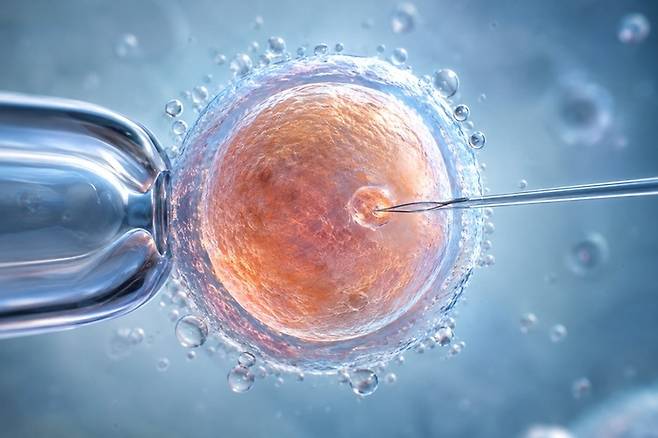
If this is true, they have gathered about 15 egg cells per person. To harvest 15 egg cells from a person, it is necessary to inject a superovulation promoter and make several egg cells ovulate at once. Even through injecting this hormone twice a day without fail, they can only gather 3-10 egg cells in 10 days.
The women who said that they donated “voluntarily” must have had an injection which even infertile women who receive it to conceive say is hard to endure. Even more, by injecting the dangerous superovulation promoter, they have risked their health.
Where are the missing egg cells from infertility clinics?
The source of the egg cells is a very important problem for women rights and biotechnology. Kim Byeong-su, a lecturer at Hong-ik University who has raised questions about the ethical problems of biotechnology, said, “Korea is the easiest country in which to get women's egg cells. Many other countries give up their research because of the difficulty of getting the egg cells. But I saw a venture business which exported egg cells to Japan from Korea few years ago”. He also lamented the structure of Korea's society, which makes it so easy to deal in egg cells even though it is illegal.
Ha Jeong-ok added, “In Korea, biotechnology is seen as an extension of fertility clinics.” Although there are many in vitro fertilization procedures performed in Korea, She said that “even in Seoul─well known for its fertility clinics─fertility hospitals’ reporting is irregular, and the system for reporting procedures is so lax that there is no central archive.”
Currently, in accordance with Article 15 of the Bioethics and Safety Act, when hospitals or clinics designated as “medical institutions for embryo creation” gather egg cells or sperm, they have to provide a document that details “the purpose of the embryo creation, the storage and disposal of the embryo, and whether consent was given to use the remaining embryos for reasons other than pregnancy.”
However, this document was not required until last year. A famous infertility hospital, Maria Hospital, admitted this, and said, “Until last year we didn’t provide consent forms, but now, because of the law, we require them from women who want artificial insemination.” An infertile woman who had this procedure last year at Cha Hospital verified that the situation was similar at the famous private hospital, saying, “At that time, there was no clause on the surgical consent form asking about those kinds of details.”
According to Korean Womenlink, until last year “the number of remnant embryos that fertility clinics had in storage was estimated at 100,000-500,000.” Before the Bioethics and Safety Law went into effect this January, it was also difficult to confirm how eggs collected and stored by fertility clinics were being stored and whether they were being used for other purposes. There been no law that regulated whether or not such records kept, and so no data existed.
Scientific Development at the Expense of Women Rights
Though the myriad of suspicions surrounding the source of the eggs have not been clearly resolved─that is, they are still just suspicions─it is clear that we need to take notice of this issue. We must be aware that eggs collected from women’s bodies may be used as tools for scientific research without the women’s knowledge when the government’s vigilance is lacking. Also, we must pay attention to the fact it is easy for the effects of harvesting eggs on women’s bodies to be overlooked in an atmosphere in which people blindly worship biotechnological development.
As Professor Kim Seon-uk of the Department of Law at Ewha Women’s University pointed out, “Even when the biotechnological development in question is related to women's bodies and women's reproductive ability, discussions in the male-dominated fields of science, medical technology, ethics, and law give little consideration to women’s perspective and experiences”. Professor Kim also asserted that especially for biotechnology policy, “ethical and legal discussions about this problem must develop, so that women’s rights are not violated”. [Translated by Park-Jung Sunyoung]
*Original article: https://ildaro.com/2403 Published: June 14, 2005
Copyright © ildaro.com