From a young Park Ji-sung's diary to the 1988 Olympics hoop: Inside Korea's first national sports museum
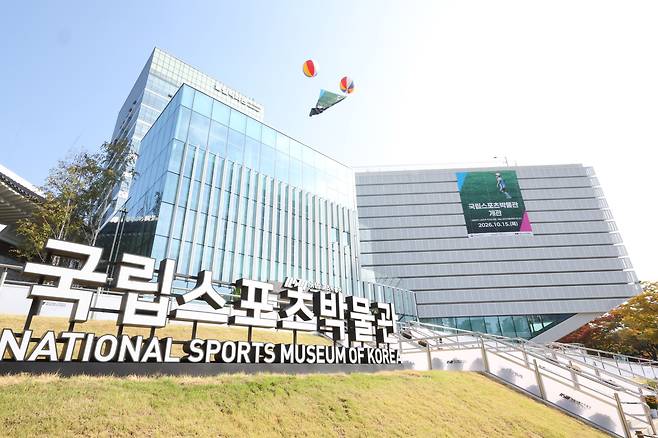
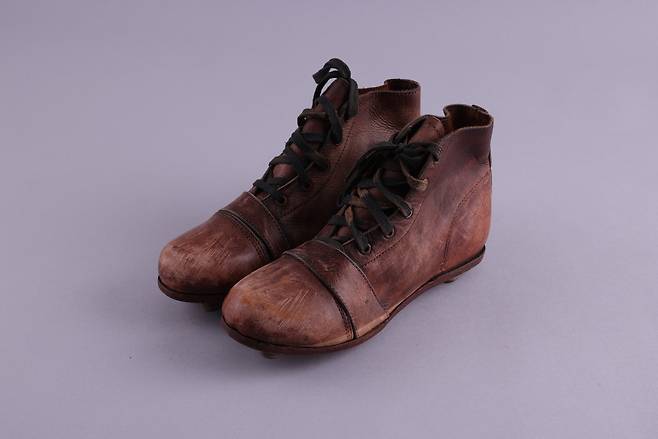
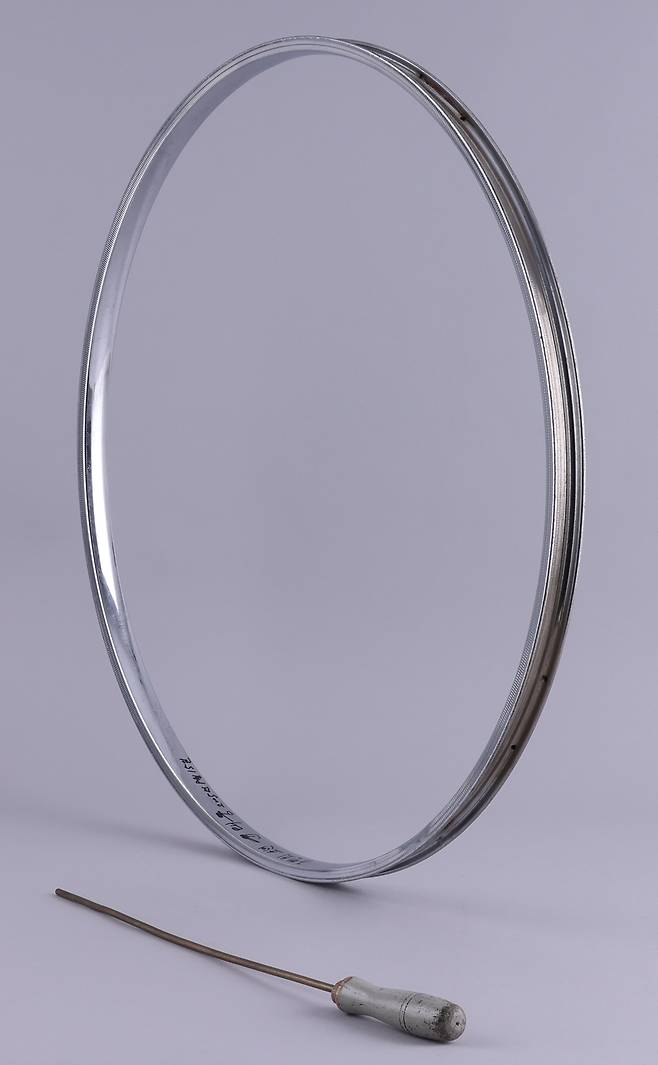
A young Park Ji-sung’s diary, handmade football boots from Japan’s 1910-45 colonial era and the gulleongsoe, the hoop that rolled across the stadium at the 1988 Seoul Olympics, now sit under one roof in southern Seoul.
The National Sports Museum of Korea, the country’s first national museum dedicated to sports, opened in Olympic Park in Songpa District on Oct. 17. It holds about 70,000 sports-related items.
The museum is next to the Korean Sport & Olympic Committee building and is a 10-minute walk from Mongchontoseong Station. It comprises four floors above ground and two below for a total floor area of 10,733 square meters (115,529 square feet).
The first floor houses a special exhibition hall, and the second and third host permanent history exhibitions. The fourth floor is a rooftop garden, while the two basement levels hold storage vaults. A children’s museum and library are in the neighboring Seoul Olympic Museum building, which was refurbished alongside the new museum.
Five spots stand out.
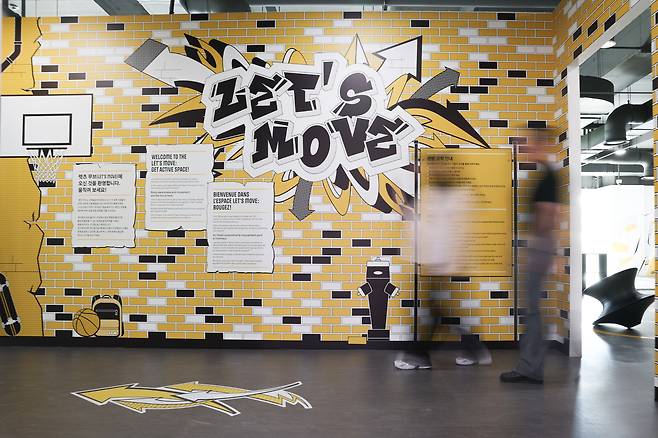
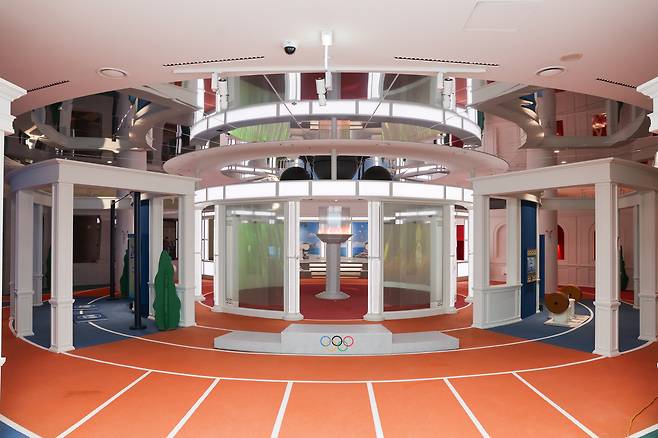
At the children’s museum, visitors can try the high jump and other events using electronic equipment and collect a medal afterward.
History Hall 1 on the second floor displays relics, such as Sohn Kee-chung’s gold medal and laurel wreath from the 1936 Berlin Olympics marathon and Suh Yun-bok’s winner’s medal from the 1947 Boston Marathon. A hangul edition of “Muye Dobo Tongji,” the Joseon Dynasty (1392-1910) illustrated martial arts manual, is also on display.
History Hall 2 on the third floor houses the competition uniform worn by Yang Jung-mo when he won a gold medal in wrestling at the 1976 Montreal Games — Korea’s first Olympic gold medal. Ha Hyung-joo’s judo gold medal from the 1984 Los Angeles Olympics is also here, along with the equipment that Choi Ye-jin used to win boccia gold at the 2012 London Paralympics.
“During basic drills, I caught the ball with my hands when I was supposed to head it and got told off. I need to fix this habit,” a young Park Ji-sung wrote in his elementary school diary.
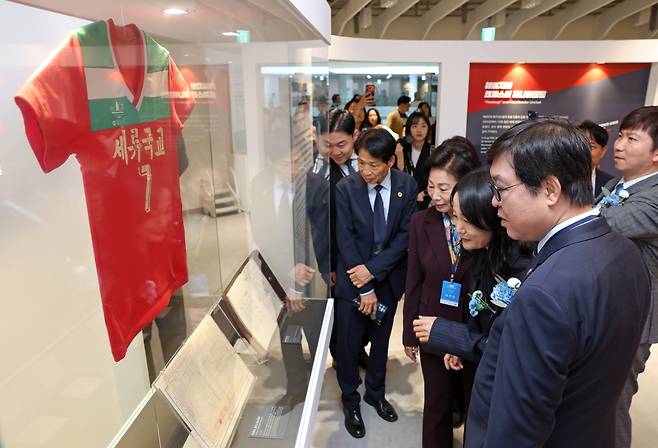
As the archive room aims to bring history and its untold stories to life through the objects on display, future exhibitions will be dedicated to other stars.
The museum is also running an archival exhibition on Hodori, the tiger mascot from the 1988 Seoul Olympics, with sketches for the mascot’s initial designs on display and a range of Hodori merchandise available.
Another section on the 1988 Games traces Seoul’s bid to host — including the “miracle of Baden-Baden,” when the International Olympic Committee awarded Seoul the Games at its 1981 session in the spa town, then in West Germany — and covers the torch relay and other memories.
The last spot offers a breather. Alongside sports-related books, the library stocks general literature, with residents in mind. From the rooftop garden, visitors can take in the park’s World Peace Gate and lake while enjoying a cup of coffee from the unstaffed cafe on the first floor.
The museum is open from 9:30 a.m. to 5:30 p.m., including weekends and public holidays. It closes on Mondays or the following day if that Monday is a public holiday. It also closes on Jan. 1 and during the Lunar New Year holiday and Chuseok holidays. Admission is free.
BY LEE HAY-JUNE [cho.yongjun1@joongang.co.kr]
Copyright © 코리아중앙데일리. 무단전재 및 재배포 금지.