From Alaska: High Hopes for LNG, but Who Will Bear the Risks?
이 글자크기로 변경됩니다.
(예시) 가장 빠른 뉴스가 있고 다양한 정보, 쌍방향 소통이 숨쉬는 다음뉴스를 만나보세요. 다음뉴스는 국내외 주요이슈와 실시간 속보, 문화생활 및 다양한 분야의 뉴스를 입체적으로 전달하고 있습니다.
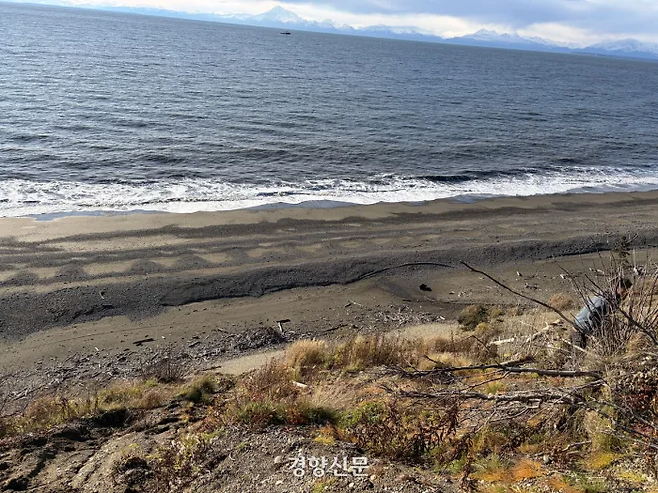
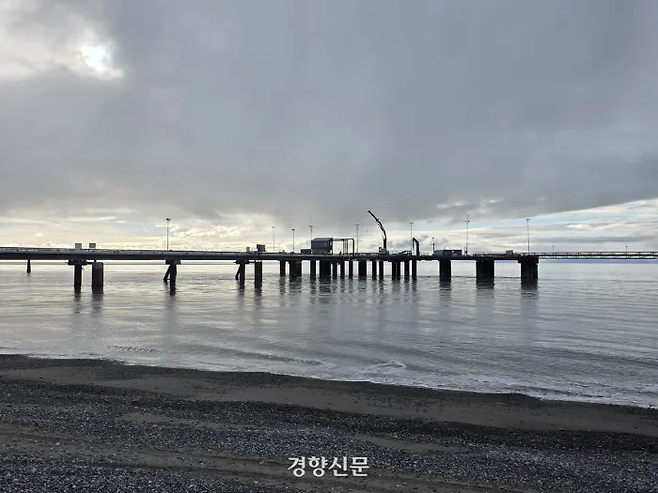
A three-hour drive south of Anchorage, Alaska‘s largest city, leads to Nikiski, a small industrial area on the shores of Cook Inlet. Dense coniferous forests line the road to this community, which is home to oil and gas production facilities and a large fertilizer plant that has ceased operations. This is where the proposed Alaska LNG pipeline, for which the United States is seeking South Korean investment, would terminate.
When I visited the proposed LNG liquefaction plant and export terminal site on October 18, the area was quiet. The shoreline where a marine export terminal covering approximately 81,000 square meters is planned was an empty expanse of land. The proposed onshore liquefaction plant site, an area equivalent to roughly 510 soccer fields, still had existing roads and houses. There was no visible sign that site preparation had begun.
President Donald Trump had visited Alaska on October 13 and declared that all permits had been secured and construction could begin “tonight.” Yet five days later, silence still hung over the site.
Despite the stillness at the proposed construction site, local residents expressed hope that the project would finally become a reality.
Crystal, 80, who has owned a bar near the proposed site for nearly three decades, said she had attended every community meeting Glenfarne, the project‘s developer, had held at the local recreation center.
“I believe it‘s going to happen,” she said of the proposed pipeline that would bring natural gas from Prudhoe Bay on Alaska’s North Slope to Nikiski. “You‘re going to benefit from it, too,” she added, referring to South Koreans.
Asked why she believed the project would succeed this time after decades of failed attempts, she replied, “I don‘t know. I’m not a mechanic.” She said she was not interested in dwelling on why previous projects had failed.
“All I am for is now. I want it to happen now,” she said. “Enough negative, enough bullshit. Let‘s all get together and work on this and get it going.”
Jonas, 27, a regular at the bar, also believed that Trump’s strong backing, combined with South Korean investment, could produce a different outcome this time.
When told that the South Korean government had not made a final investment decision and that Trump had made the announcement unilaterally, he laughed and said, “Trump is crazy.”
“We‘re close allies,” he added. “I don’t see anything wrong with Korea investing in the U.S.”
Other customers at the bar also had a message for South Koreans. “Make sure you tell them how much we want this pipeline to happen,” they said.
An Energy Crisis in an Oil-Producing State
The residents’ eagerness to see the pipeline built reflects Alaska’s increasingly difficult energy situation.
For decades, Southcentral Alaska, including Anchorage and Nikiski, where roughly two-thirds of the state‘s population lives, has relied on natural gas produced from Cook Inlet for heating and electricity generation. Surplus gas was even exported to Japan through the LNG terminal in Nikiski.
But those exports ended in 2015. With production from Cook Inlet gas fields declining, the region is expected to face a shortfall in meeting local demand as early as next year.
Higher energy bills are already a reality, with rising oil prices adding to the burden. Crystal said her energy costs had increased by nearly 30 percent compared with a year earlier.
The Kenai Peninsula Borough, which includes Nikiski, is pursuing plans to make up the gas shortfall through imports. The LNG export terminal in Nikiski, which has stood idle for more than a decade since shipments to Japan stopped, is now preparing to be converted into an import terminal.
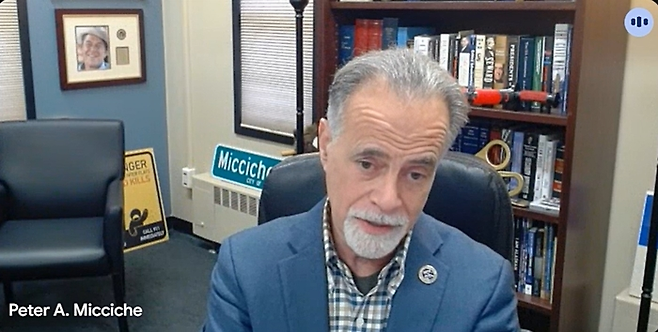
For Peter Micciche, mayor of the Kenai Peninsula Borough, the situation carries a particular irony. He previously worked for ConocoPhillips, where he was involved in LNG exports to Japan.
In a video interview with The Kyunghyang Daily News on October 15, Micciche said that even if construction on Alaska LNG began immediately, it would take another three to four years before gas could reach Southcentral Alaska.
Importing natural gas into a state with enormous gas reserves of its own is politically difficult, he acknowledged. But he said he had tried to help residents understand that “the price per unit is more important than the politics of using Alaska gas only.”
That does not mean Micciche has given up on Alaska LNG.
He hopes the project will eventually allow Nikiski to return to its days as an LNG exporter. The new gas supply could help revive shuttered industrial facilities, including the fertilizer plant, and bring back economic activity.
“I want to make Nikiski noisy again,” he said.
Micciche acknowledged the enormous challenges facing the project but emphasized Alaska LNG‘s geopolitical advantages as a secure and reliable source of energy.
“I sold LNG to two customers in Japan without missing a single shipload for 40 years,” he said.
While price competitiveness remains a challenge, he argued, the project also offers important benefits in terms of supply security and reliability.
Permafrost and High CO₂ Content: The Extraordinary Cost of Alaska Gas
Not everyone in Nikiski shares that optimism.
Some residents with firsthand experience in the oil and gas industry are skeptical of the project‘s economic viability.
Ron, 72, whom I met on October 19 at a diner frequented by industrial workers before and after their shifts, described North Slope gas development as extremely expensive and said the project would be difficult to bring to fruition.
Ron has worked in the oil and gas industry for more than 50 years. That morning, he was heading home after working through the night.
“The biggest problem is the high level of impurities in the gas,” he said, pointing to the extensive processing required to make it suitable for sale.
According to the minutes of a 2015 Alaska legislative finance committee hearing, Prudhoe Bay gas contains approximately 12 percent carbon dioxide, among the highest levels for major LNG projects worldwide. The facilities needed to remove the impurities were estimated to cost between $10 billion and $12 billion.
Ron doubted that Alaska LNG would be able to compete on price.
Building the pipeline presents an even greater challenge.
Transporting natural gas from the North Slope to Nikiski would require a pipeline stretching approximately 800 miles. It would have to cross more than 440 waterways, ranging from small streams to major rivers, and run for tens of kilometers beneath Cook Inlet, where powerful tidal currents create difficult construction conditions.
Above all, excavating permafrost to bury the pipeline is a high-risk undertaking that could destabilize the ground and trigger subsidence.
Mikhail Kanevskiy, a permafrost expert at the Institute of Northern Engineering at the University of Alaska Fairbanks, said in a written interview with The Kyunghyang Daily News that one of the project‘s greatest challenges is the presence of ice-rich permafrost along parts of the proposed route.
“Unfortunately, the entire pipeline route does not follow the existing oil pipeline,” he said. Extensive geophysical surveys and drilling would be necessary to identify and assess permafrost conditions, he explained.
When ice in the permafrost melts, the ground above it can sink, potentially destabilizing buried pipelines.
Kanevskiy‘s research team examined a section of the Dalton Highway north of Fairbanks and found that ice-rich soils lost between 20 and 60 percent of their thickness upon thawing. In some locations, massive underground ice wedges occupied nearly half the ground volume.
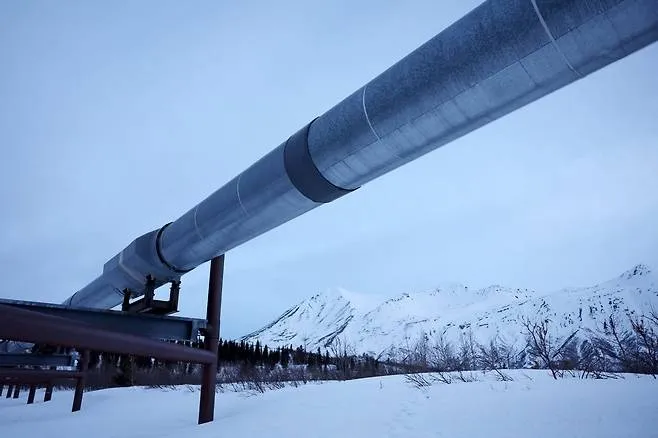
Climate change is adding to these risks.
Kanevskiy warned that rising permafrost temperatures and changing precipitation patterns could accelerate permafrost degradation.
According to a report by the American Meteorological Society, permafrost temperatures along Alaska‘s northern coast have risen by 0.4 to 0.8 degrees Celsius per decade.
At Point Lay, an Arctic coastal village studied by Kanevskiy‘s team, ground subsidence has damaged buried water and sewer lines, while roughly two-thirds of homes have suffered damage.
A particularly difficult problem is locating ice hidden underground.
In a road section measuring just over 4.5 kilometers, researchers found ice wedges in eight of nine boreholes in one area, but in only one of 12 boreholes in a nearby area. Subsurface conditions differed dramatically over a distance of approximately one kilometer.
More than 60 boreholes were needed to investigate this relatively short stretch.
Although remote sensing and artificial intelligence are helping researchers conduct surveys, Kanevskiy said substantial drilling and sampling are still necessary. He was not certain whether such investigations could be carried out more efficiently today than during construction of the Trans-Alaska oil pipeline 50 years ago.
The Financial Risks Nobody Wants to Bear -- Could South Korean Taxpayers End Up Paying?
These difficult geological conditions and complex construction requirements not only drive up costs but also heighten the risk of unforeseen cost overruns.
Some Alaska lawmakers question whether those risks have been adequately reflected in the developer‘s cost estimates.
State Senator Cathy Giessel, a Republican who chairs the Alaska Senate Resources Committee, criticized Glenfarne’s estimated project cost of $44.5 billion to $54.5 billion as overly optimistic.
In a telephone interview with The Kyunghyang Daily News on October 14, Giessel pointed out that even Alaska Governor Mike Dunleavy had publicly suggested the project could cost $70 billion.
“$70 billion, probably on paper, that‘s a good number,” she said. “But when you actually put it into the ground with delays and increased costs due to inflation and shortage of materials, we expect that cost will be closer to $90 to $100 billion.”
Giessel described a scenario in which Glenfarne begins pipeline construction without adequate preparation, planning or financing, only to halt work suddenly, as her worst fear.
She was also deeply concerned about the possibility that rising costs would make the project uncompetitive, leaving Alaska with a pipeline but no completed LNG export facilities.
The project’s economic model depends on recovering the enormous construction costs through large-scale LNG exports. If that model collapses, the burden could fall on Alaskans, whose domestic gas demand is relatively small.
Annual natural gas demand in Southcentral Alaska is approximately 2 billion cubic meters, a tiny fraction of the pipeline‘s planned capacity.
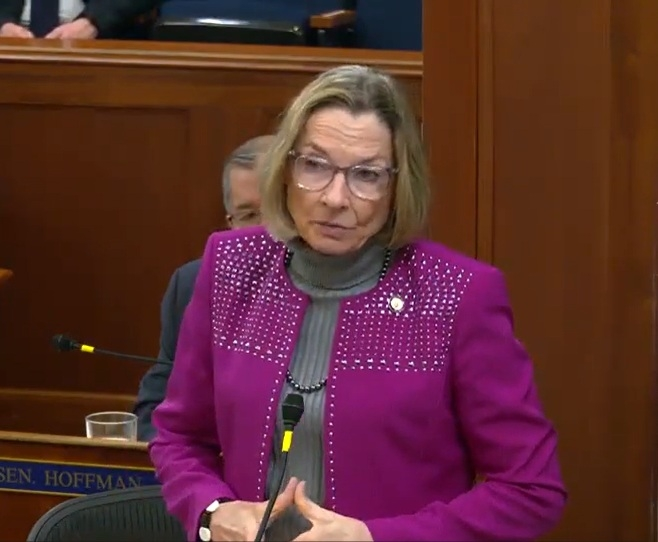
Giessel said Alaskans were deeply concerned that they should not be subsidizing the project or bearing its financial risks.
“At this point, it appears we are,” she said.
Giessel also welcomed the South Korean government’s response when President Trump announced that Seoul had committed $54 billion to the project. South Korea quickly clarified that no such investment decision had been finalized.
“I really appreciated the almost immediate response from the Korean government saying, hold on, we never said that,” she said.
She described Seoul’s cautious approach as wise, reflecting her hope that the government would thoroughly scrutinize the project’s economics before making any investment decision.
Even Micciche, one of the project‘s strong supporters, said he understood South Korea’s concerns about its commercial viability.
Nevertheless, he appealed to the South Korean government to “stay at the table.”
Micciche argued that Alaska has important national security needs, including the possibility of new military bases, as well as opportunities to develop critical minerals. Reliable energy supplies would be essential to supporting those activities, he said.
He hopes such strategic considerations could help attract federal investment, reducing the financial burden on private investors and improving the project‘s competitiveness. That, in turn, could encourage additional buyers and investors to participate.
“It‘s not a finished project,” Micciche said, emphasizing that work remained to develop a competitive financing package. “Stay at the table,” he urged South Korea. “We need our partners, our export partners to be at the table to help us develop a finance plan that‘s competitive.”
Yet within Alaska itself, there are sharp disagreements over proposed tax breaks intended to improve the project‘s economics.
Glenfarne has sought to replace existing property taxes on project facilities, including the pipeline, with a tax based on the volume of natural gas transported. The change would effectively reduce its tax burden by an estimated 80 to 90 percent.
But concerns over lost revenue for local governments and the potential transfer of costs to residents remained unresolved. Despite three special legislative sessions, the proposed tax relief legislation failed to pass in August.
Even Micciche, who strongly supports the project, drew a line on shifting costs to local taxpayers. He said he was willing to negotiate property tax reductions, but the project would still have to cover additional local expenses associated with roads, public services and other community needs.
Alaska politicians and local governments recognize the project‘s potential benefits, but they are also determined to minimize the financial risks borne by their own residents.
South Korea, meanwhile, faces pressure to invest $54 billion in a project that could leave it with enormous losses if it fails. If public money is invested and subsequently lost, South Korean taxpayers could ultimately bear the cost.
A Home for Endangered Belugas and Wild Salmon

Financial costs and tax burdens are not the only potential price of Alaska LNG.
Environmental groups warn that large-scale development could have serious consequences for the marine ecosystem of Cook Inlet.
Ben Boettger, an energy policy analyst at the Alaska environmental group Cook Inletkeeper, said in a written interview with The Kyunghyang Daily News that LNG carriers would cross critical habitat for the endangered Cook Inlet beluga whale.
“Alaska LNG would have a severe impact on Cook Inlet belugas,” he said. Boettger warned that noise from increased ship traffic could interfere with the whales’ ability to hunt and communicate through sound, making it even harder for the population to recover. Cook Inlet belugas have declined from around 1,300 in the 1970s to just over 300 today.
He also raised concerns about climate change. According to a 2023 U.S. Department of Energy analysis, Alaska LNG could generate 2.7 billion to 2.8 billion metric tons of greenhouse gas emissions over 30 years, from production through final combustion.
Boettger challenged the argument that LNG would necessarily reduce global emissions by replacing coal. He warned that long-term LNG purchase agreements could discourage investment in renewable energy in South Korea, as utilities often have to pay for contracted gas even if they do not use it.
The project could also affect fishermen in Cook Inlet.
Penelope Haas, who has worked in commercial fishing for 19 years and lives in the coastal city of Homer at the southern end of the Kenai Peninsula, expressed concern about the potential consequences of LNG terminal construction, increased vessel traffic and accidental spills.
“The tides in Cook Inlet are huge, and there’s lots of current, strong currents and ice that make it difficult to reliably operate there,” she said in an interview with The Kyunghyang Daily News.
But her greatest concern was whether the project made economic sense at all. Haas acknowledged that some fishermen supported energy development because the region’s natural gas shortages had raised concerns about energy costs.
Personally, however, she had long doubted whether Alaska LNG was realistic. “It always seemed to me like this project is not realistic,” she said. “So I‘ve never really paid much attention to it.”
The LNG would have to sell at an extremely high price to recover the massive investment, she argued. “It seems like a lot of talk, but nothing real,” she said, adding that the project had made little progress over the years because of its economics.
Haas also wanted South Koreans to understand what is at stake in Cook Inlet. “Cook Inlet is one of the few places on the earth that still has wild salmon,” she said. “These are not hatchery fish or farmed fish. They are true wild fish.”
She hoped South Koreans would recognize the value of the region’s remaining wild salmon populations.
Then she delivered a direct message to South Korea. “I think that Trump is pushing this for politics. It’s playing politics, but not economics,” she said.
“From one Cook Inlet fisherman to the South Korean people, I do not advise you to invest in the LNG project.”
“You’re going to lose money.”
니키스키 | 정유진 특파원 sogun77@kyunghyang.com
Copyright © 경향신문. 무단전재 및 재배포 금지.
- [속보]“끝났다” 외친 서울시 직원들···‘무죄’ 오세훈, 본격 대선모드 들어가나
- ‘쌍별 셰프’ 손종원, 신세계그룹 임원 됐다
- “김정은 사망설은 허위”···국정원, 국회 정보위에 보고
- 오세훈 2심 재판부 “김한정과 대납 요청할 만한 관계 아냐…오히려 캠프에서 홀대”
- 광명 ‘붕은우’가 누구길래···붕어빵 사려고 2시간씩 기다리는 사람들
- 건국대 중간고사서 ‘AI 부정행위’ 의혹···600여명 대면 재시험
- [단독]음주운전 중 차량추돌한 전북 국힘 당협위원장···“혈중농도 면허취소 수준”
- 대한항공·아시아나항공 고객 개인정보 유출···해외 협력사 ‘아마데우스’ 시스템 뚫렸다
- ‘SNS 막말’ 논란에 입 연 원안위원 “넋두리처럼 한 것···누가 됐다면 사과드린다”
- 아침부터 모습 감춘 상어 ‘부캉이’ 어디로 갔나···“잠영하며 바다 적응 하는 듯”