National museum director scrutinized after lending misattributed calligraphy from private collection
전체 맥락을 이해하기 위해서는 본문 보기를 권장합니다.
"I did lend the piece from my private collection," You told the JoongAng Ilbo by phone on Thursday, referring to the controversial calligraphy work titled "Ilban Sigukeun," which means "Even a bowl of rice is a gift from the nation."
"I also believed the calligraphy was the work of an independence activist," You said. "It was one of the pieces I had planned to donate to the Buyeo Cultural Center [in South Chungcheong] for the establishment of a county museum."
이 글자크기로 변경됩니다.
(예시) 가장 빠른 뉴스가 있고 다양한 정보, 쌍방향 소통이 숨쉬는 다음뉴스를 만나보세요. 다음뉴스는 국내외 주요이슈와 실시간 속보, 문화생활 및 다양한 분야의 뉴스를 입체적으로 전달하고 있습니다.
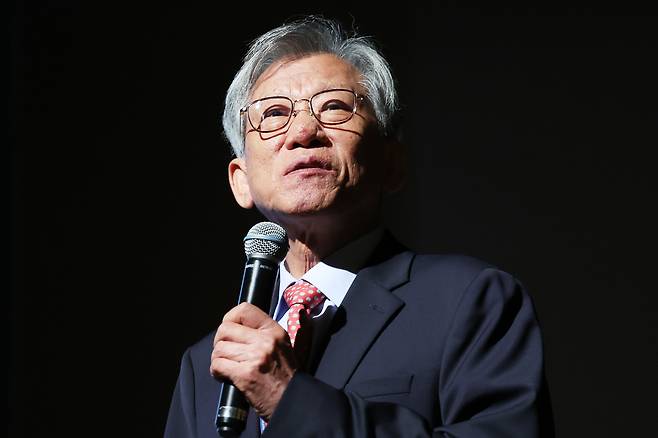
The director of Korea’s flagship national museum is facing scrutiny after a calligraphy piece from his private collection was displayed as the work of an independence activist — only to be later identified as the work of a pro-Japanese collaborator.
Director of the National Museum of Korea You Hong-june has also donated and exhibited other items from his private collection at the museum since taking office, raising questions about the museum’s criteria for selecting work to display and the director’s influence on those selections.
The calligraphy in question was presented as the work of Park Won-geun (1912-50), an independence activist from North Chungcheong who fought against Japanese colonial rule (1910-1945). The museum displayed the piece as part of its special exhibition, “The Korean Table: Food, Nature, and Life,” which opened July 1.
Just over a month later, the museum removed it after people outside the institution questioned whether it had been attributed to the correct person.
After consulting experts, the museum confirmed on Sept. 7 that the calligraphy was actually the work of pro-Japanese collaborator Park Jung-yang, who had once used the name Park Won-geun. The museum apologized and pledged to prevent similar mistakes but did not disclose who owned the piece or how it came to be displayed.
"I did lend the piece from my private collection," You told the JoongAng Ilbo by phone on Thursday, referring to the controversial calligraphy work titled "Ilban Sigukeun," which means "Even a bowl of rice is a gift from the nation.”
“I also believed the calligraphy was the work of an independence activist,” You said. “It was one of the pieces I had planned to donate to the Buyeo Cultural Center [in South Chungcheong] for the establishment of a county museum.”
“[I was] preparing to have more pieces appraised,” the director said. He had donated 865 artifacts valued at roughly 2.7 billion won ($2 million) between 2019 and 2024.
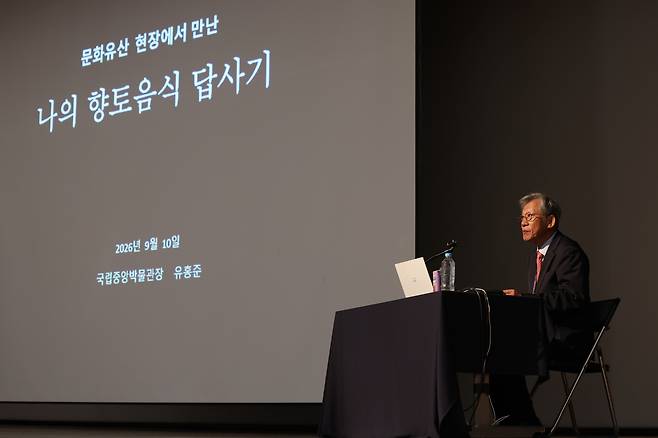
"The museum's failure to correctly interpret the artifact was a mistake that exposed its lack of expertise," the director said in a separate apology issued Sept. 10.
The museum confirmed that the piece belonged to You and had been borrowed "at the director's recommendation" in documents submitted to the offices of opposition People Power Party Reps. Cho Eun-hee and Jung Yeon-wook ahead of a parliamentary audit on Monday.
"Even during the planning stage, some questioned whether the piece fit with the rest of the exhibition," a source from the museum's Archaeology and History Department said Thursday.
The revelation has fueled growing calls for the director to take responsibility for lapses in the museum's verification process.
"A national museum should apply the strictest standards when selecting exhibits, yet it is deeply concerning that works owned or recommended by the director may bypass rigorous curatorial review," said a senior figure in the museum community who requested anonymity. "Museum staff must seriously reflect on their responsibility to the public and the museum's role as a public institution."
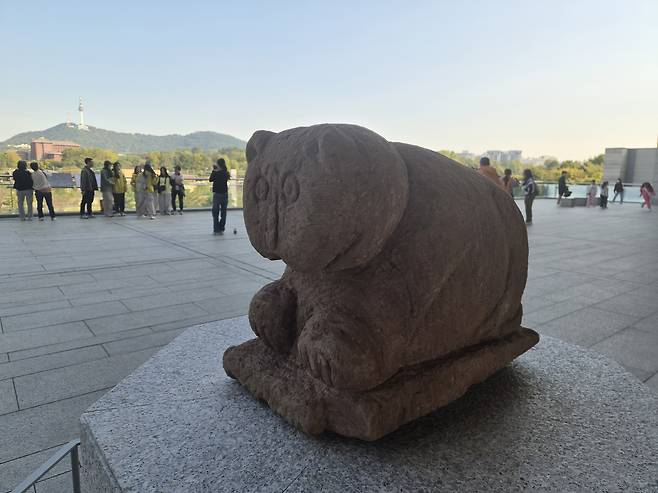
The JoongAng Ilbo found that a stone tiger sculpture from the Joseon Dynasty (1392–1910) had previously belonged to You's wife before it was donated to the museum and installed on the outdoor steps of the museum's permanent exhibition hall in April.
An artifact titled "Folding Screen with Calligraphy by Bak Yeong-hyo and Kim Ga-jin" also went on display in the museum's Joseon room in July, as the adjacent Korean Empire room reopened after renovations. Its label read, "Gift by Yoo Hong-june."
Neither piece now identifies its donor. A source from the national museum said Yoo’s name was removed “when the exhibit panels were replaced in late July.”
BY KANG HYE-RAN [lee.soojung1@joongang.co.kr]
Copyright © 코리아중앙데일리. 무단전재 및 재배포 금지.