Check into a gotaek stay: 5 historic Korean homes you can sleep in
Why stay in just any accommodation when you can spend the night in one with centuries of history and stories to tell?
Across Korea, there are gotaek — old homes — that have stood for decades or even centuries and opened their doors to overnight guests.
Here are five gotaek, ranging from simple stays to more upscale experiences, where travelers can journey into a piece of someone else’s history for a night.
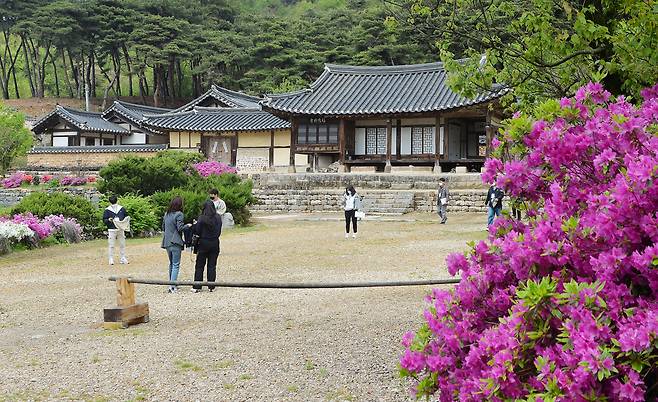
Parkjinsa Gotaek
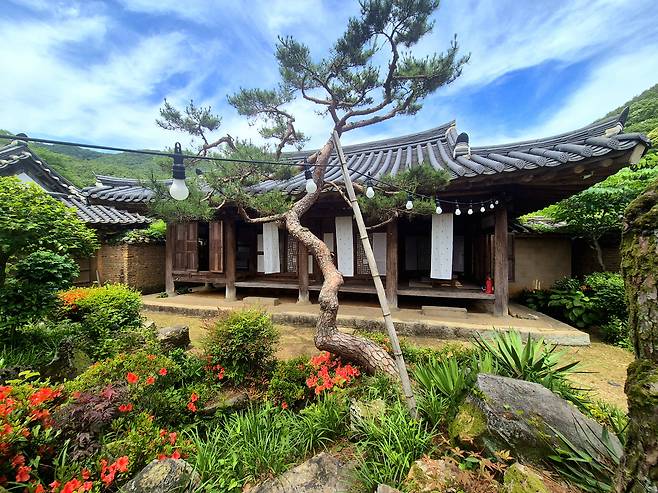
In a quiet village in Goseong, South Gyeongsang, Parkjinsa Gotaek carries the legacy of the Miryang Park clan, which produced three generations of scholars during the Joseon Dynasty.
Built around the 1850s, the home consists of seven buildings that retain their traditional structure and appearance, along with pine trees more than a century old. One of its most distinctive features is a gate honoring an ancestor recognized for exceptional filial devotion.
Of the seven buildings, two are open for overnight stays: the anchae, or women's quarters, and the sarangchae, traditionally the men's quarters.
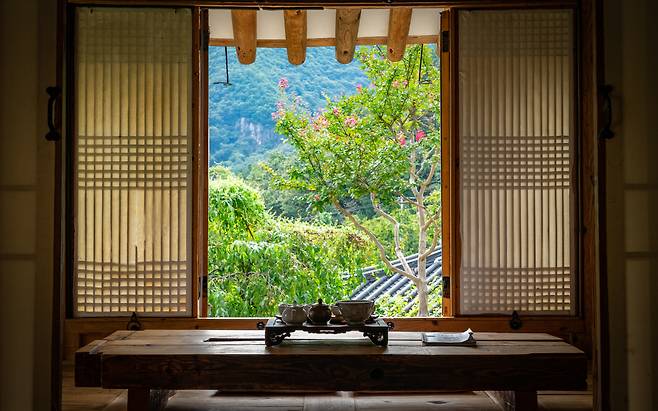
Guests can dine seated on the floor of the daecheongmaru, or main wooden-floored hall, or enjoy tea and snacks on the numaru, an elevated wooden veranda.
Soeun Gotaek
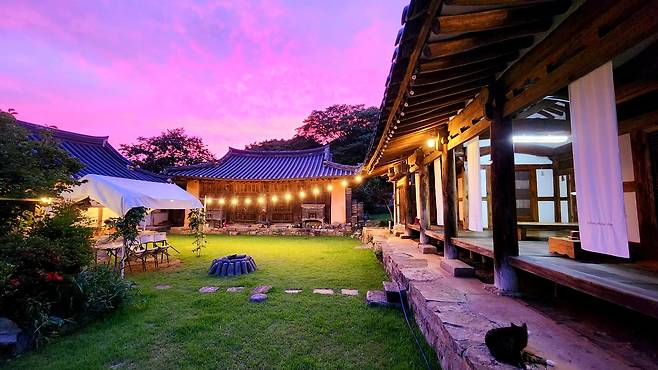
Believed to have been built around 1820, Soeun Gotaek is the oldest historic homes in Toero Village in Miryang, South Gyeongsang. It was once home to Yi Tae-hyeong (1895-1973), an educator who devoted much of his life to educational initiatives and helped establish schools in the area. He moved there in 1936 to live close to his parents after his elder brother died. He later served as principal of a private school.
Now run by his descendants, the historic home, designated as cultural heritage material by South Gyeongsang, sits at the foot of Mount Hwaak and has five small gardens. Guests can engage with woodblock printing on hanji (traditional Korean handmade paper), stamp carving and traditional tea ceremonies during their stays. Overnight stays are available only on Fridays and Saturdays.
Myeongjae Gotaek
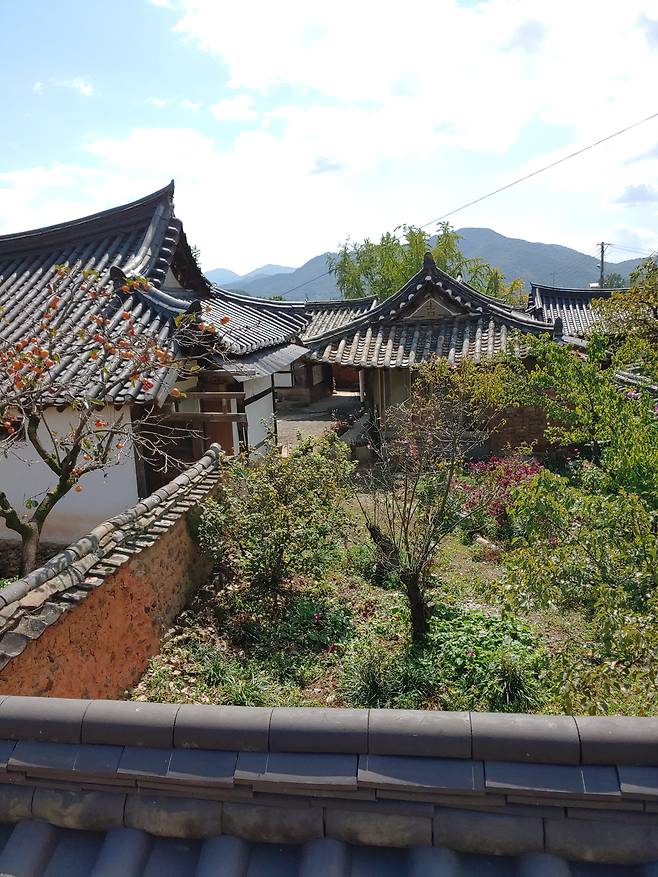
If you've ever wondered what life looked like for a Joseon-era aristocratic family, Myeongjae Gotaek offers an answer. Built during the later years of prominent scholar and Confucian thinker Yun Jeung (1629–1714), the house greets visitors with a rectangular lotus pond stretching across its front garden.
What distinguishes the house is its sophisticated architectural design, which makes clever use of the surrounding environment. The storehouse, for example, is positioned in relation to the main living quarters to create a narrowing passage that channels air through the compound, while other features of the house were designed to make use of natural light, shade and ventilation.
The house includes several rooms for overnight stays and offers cultural activities including tea ceremonies and natural dyeing.
Chunghyodang
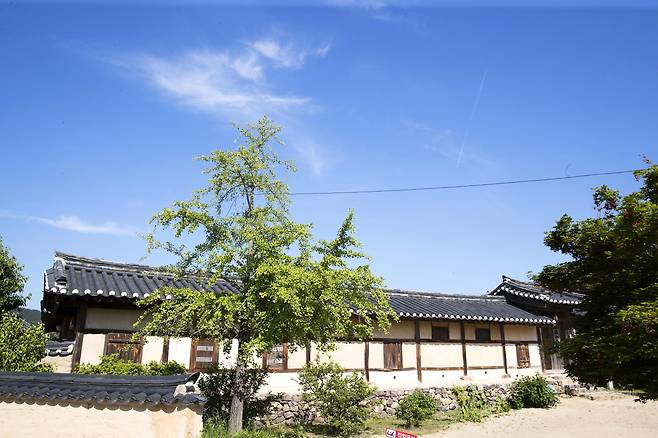
Chunghyodang in Andong, North Gyeongsang, may be familiar to some overseas thanks to one particularly famous visitor: Queen Elizabeth II.
During her 1999 visit, the queen watched the family prepare kimchi and gochujang, sipped tea inside the anchae and planted a commemorative tree in front of the house.
But Chunghyodang's history stretches back much further. The house served as the head family residence of the family of Ryu Seong-ryong (1542–1607), a prominent Joseon scholar and statesman who served as chief state councilor during the 1592–98 Imjin War. The treasure-designated house was built after his death in the 17th century by his grandson and later expanded by succeeding generations.
Guests are served breakfast featuring the head family's cuisine in a private dining room and can enjoy traditional tea during their stay.
Bukchondaek
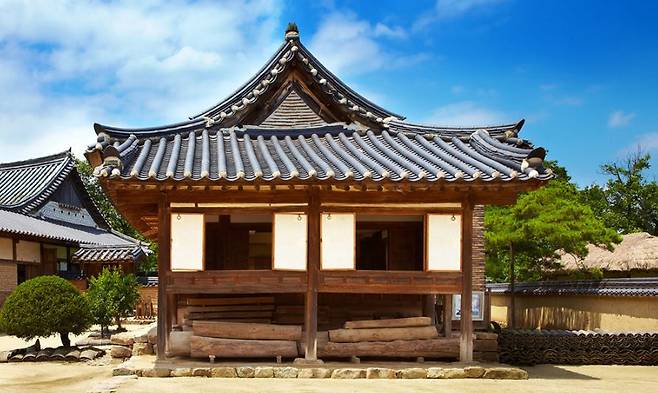
Bukchondaek is the largest historic noble family home in Hahoe Folk Village in Andong, North Gyeongsang. The house dates to 1797, when Ryu Sa-chun (1741–1814) built its first structures. His great-great-grandson, Ryu Do-seong (1823–1906), added much of the present compound in 1862.
Among its accommodation options are Bukchonyugeo, Hwagyeongdang and Susinwa. Guests staying in Bukchonyugeo, the grand sarangchae traditionally used by the family's senior man and important visitors, can take in sweeping views of Hahoe Village.
Overnight guests can hear the family's history from a descendant and enjoy Korean meals served in brassware.
BY WOO JI-WON [woo.jiwon@joongang.co.kr]
Copyright © 코리아중앙데일리. 무단전재 및 재배포 금지.