Frieze, Kiaf to shine ‘Spotlight’ on ‘coexistence’ in final year under same roof
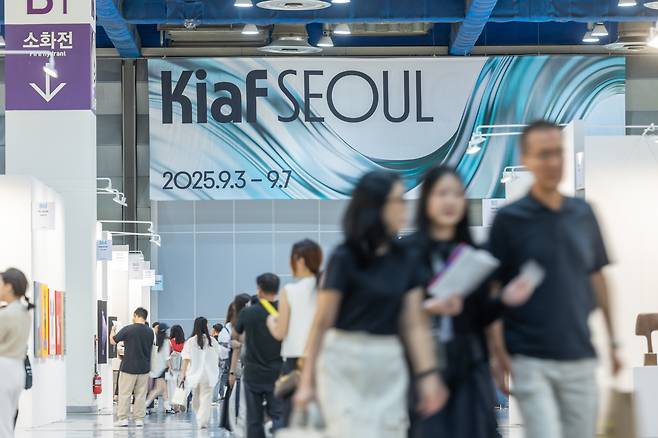
Two of the country's biggest annual art fairs, Frieze Seoul and Kiaf, are returning during the first week of September, featuring an ever-impressive roster of both domestic and international galleries along with revamped programs to draw more visitors.
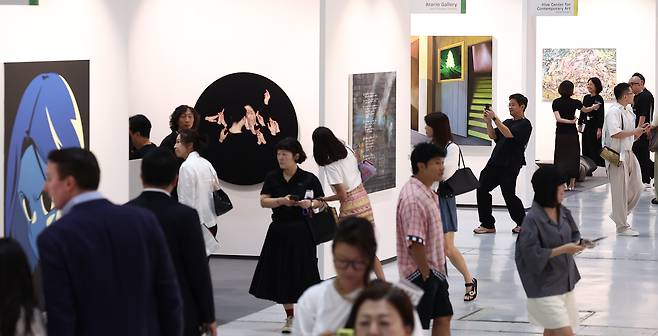
What separates this year’s editions of the two monumental fairs from previous ones is not only the continued participation from some of the global art world’s most prominent galleries — a continuation not guaranteed — but also all-new programs and appointments. A total of 133 galleries from across 30 countries are taking part in Frieze Seoul, while Kiaf concentrates more on domestic galleries with 127 Korean ones participating in an overall roster of 175 galleries from 18 countries.
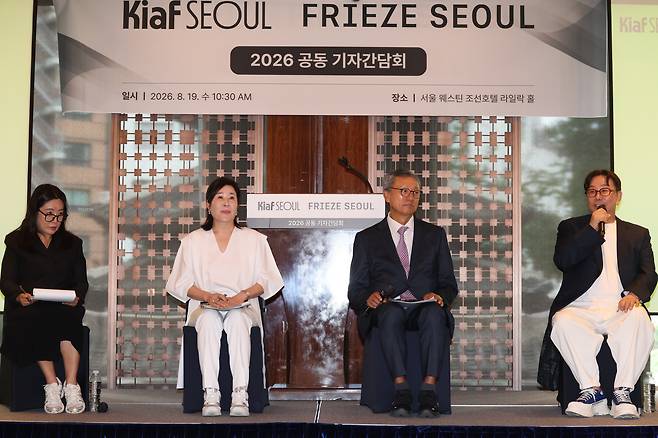
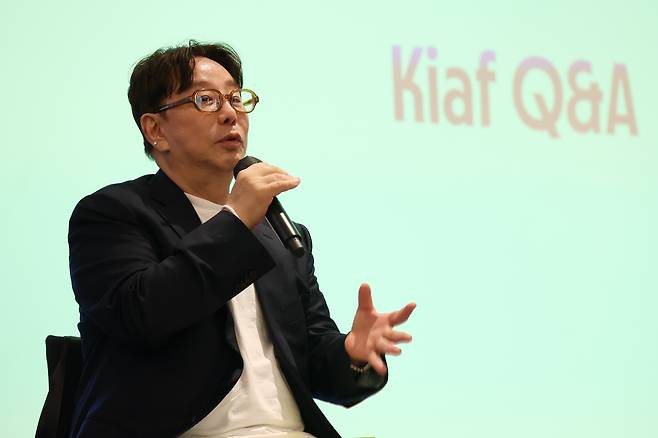
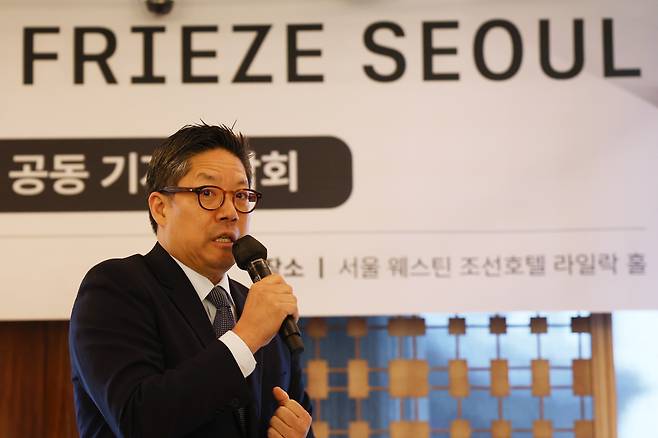
“We chose the theme of ‘coexistence’ for this year’s edition, which at first seemed like an overused concept in art, but we ultimately thought was still very relevant,” said Kiaf creative director Jung during a joint press conference for the two fairs at Westin Josun Seoul in Jung District, central Seoul, on Wednesday.
Kiaf will feature works from artists represented by some of Korea’s most well-known galleries including Kukje, Hyundai, Gana Art, Wooson, Arario and Hakgojae. While participation is heavily concentrated among domestic galleries, Kiaf will still also host international galleries such as Whitestone, Kornfeld and decade-long participants Tsubaki and Galerie Zwischen.
Special exhibitions in the “Humal” and “Virtual Vital” sections of Kiaf 2026 will explore the theme of coexistence through the relationship between humanity and technology, according to the organizers.
“Through these two sections, we seek to offer an experience that helps visitors discover a balance of senses between humanity and technology,” Jung said.
Pressed on his vision for transforming the older Kiaf into something new to attract visitors and buyers, Jung, whose career spans directorships at events in the fashion, performance and theater industries, stressed the protection of the fair's “traditions” while finding ways to innovate.
“The most important thing we focused on was homing in on the unique characteristics of Kiaf among the hordes of art fairs out there,” he said.
“Frieze Magazine is going to expand its editorial commitment to the region, devoted to contemporary arts and culture,” Lee said. “We are very excited about this initiative; it’s been something discussed for years and which I think is a nice step to show a longer-term commitment to Korea’s ecosystem.”
Participating galleries in this year’s edition of Frieze include some of the most recognizable names globally, such as Gagosian, Pace, Thaddaeus Ropac, Lehmann Maupin, Hauser & Wirth and Gladstone.
Leading up to and following what is now being dubbed Frieze-Kiaf week in the first week of September, major arts institutions and commercial galleries are gearing up to showcase some of the biggest names in Korean art in time to catch the audience flowing through the fairs. The Museum of Modern and Contemporary Art, Korea is soon opening a major survey of Do Ho Suh; PKM Gallery is featuring Koo Jeong-a; Seoul Museum of Art currently shows Yoo Young-kuk; and countless others also lining up retrospectives and shows.
This year’s editions of Frieze Seoul and Kiaf will close off the streak of the two fairs being held at the same location at Coex, with Frieze moving to Dongdaemun Design Plaza next year and Kiaf staying put while Coex goes through partial renovations. But this does not mean that the long-held partnership between the two fairs will end, organizers stressed Wednesday.
Tickets to Frieze Seoul and Kiaf are sold jointly, with standard passes ranging from 70,000 won to 90,000 won ($50 to 64.50) depending on entry time slots.
BY LIM JEONG-WON [lim.jeongwon@joongang.co.kr]
Copyright © 코리아중앙데일리. 무단전재 및 재배포 금지.