Es Devlin brings her works on breaching voids, creating connection to Seoul
전체 맥락을 이해하기 위해서는 본문 보기를 권장합니다.
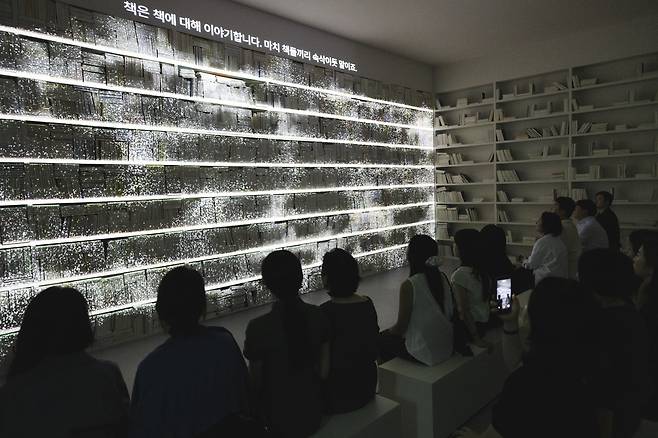
"The subject of this first room is an introduction to the whole journey and also a meditation on porosity between self and other," said Devlin during a press conference and tour of the exhibition at Futura Seoul last Friday, showing the room of books that visitors encounter first during the show, installation piece "Infinite Library."
"I believe that consciousness is embodied. It's not in our mind; it's in a body," she said. "AI [can be] a useful tool for scale and reach, but does not in any way replace embodied encounter."
이 글자크기로 변경됩니다.
(예시) 가장 빠른 뉴스가 있고 다양한 정보, 쌍방향 소통이 숨쉬는 다음뉴스를 만나보세요. 다음뉴스는 국내외 주요이슈와 실시간 속보, 문화생활 및 다양한 분야의 뉴스를 입체적으로 전달하고 있습니다.
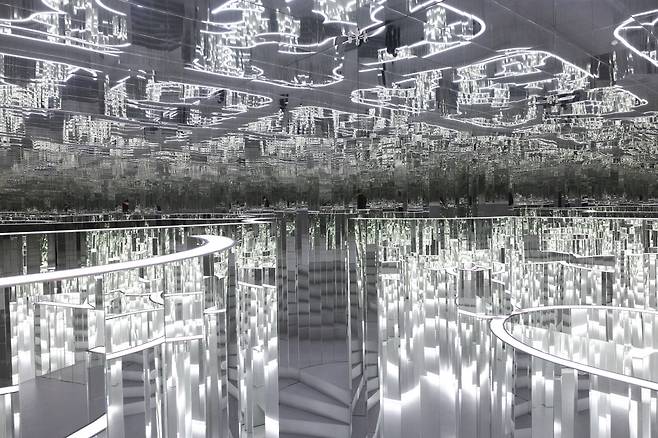
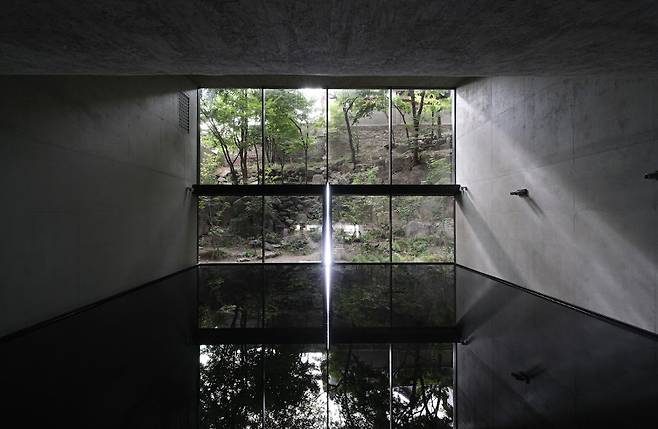
A wall stacked to the brim with books that opens into an intricate room made entirely of mirrors. An infinite roll of paper where visitors can sketch their own portraits of strangers they met in the exhibition space. A single, long beam of light reflected onto a body of water.
It’s old news to say Devlin is a household name in stage design and spatial art. Beginning her career designing sets for theater and opera, she has won Olivier and Tony Awards for her work, expanded into concert design for pop heavyweights such as Beyoncé, U2, Kanye West and Adele and was the force behind the Britain Pavilion at the 2020 World Expo, becoming the first woman artist to receive such a commission since world expos began in 1851.
“The subject of this first room is an introduction to the whole journey and also a meditation on porosity between self and other,” said Devlin during a press conference and tour of the exhibition at Futura Seoul last Friday, showing the room of books that visitors encounter first during the show, installation piece “Infinite Library.”
The void between the individual and others is a recurring theme during the show. The room of mirrors, “Mirror Maze,” that is the second installation piece that visitors see at the gallery space, presents differently angled reflections of the viewer and everyone else inside, asking how we view ourselves and our relation to others.
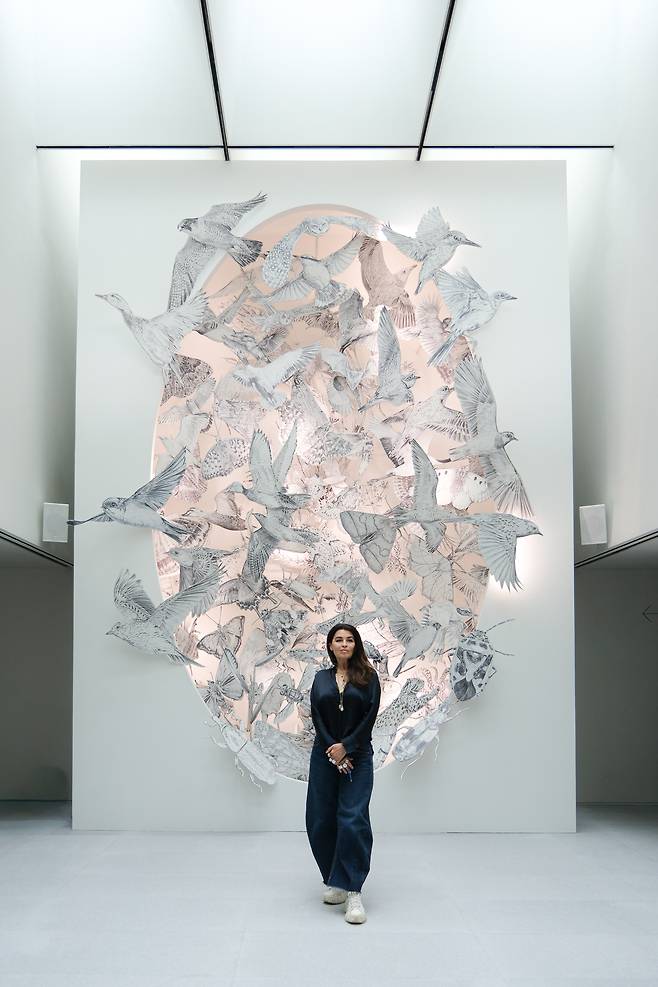
A key question that Devlin addresses is how the void may be breached. She deals with how the self, and the human species in a larger sense, may connect across to other people and even other species. The third installation on the second floor of Futura Seoul, “Come Home Again,” a wall of bird sculptures over light-emitting diode panels, specifies this focus of the artist. Devlin wants us to “learn and remember the names of endangered beings” through the piece.
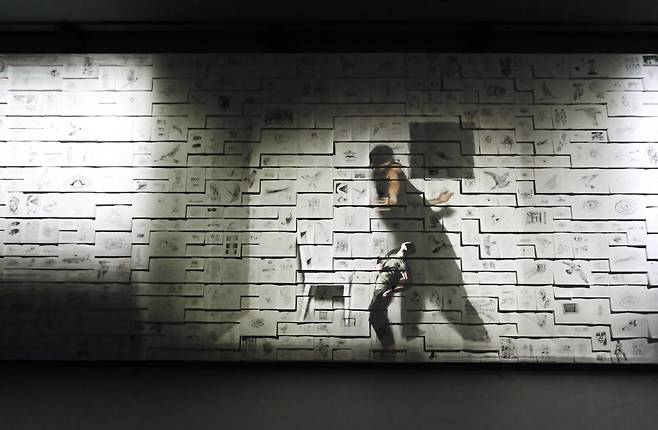
“You have left a trace of you, and you’re going to take a trace of me — in this show there is a reciprocal exchange,” Devlin said. “In the end, we will have a monthslong collective portrait, eventually connecting these into a global [one].”
“I believe that consciousness is embodied. It’s not in our mind; it’s in a body,” she said. “AI [can be] a useful tool for scale and reach, but does not in any way replace embodied encounter.”
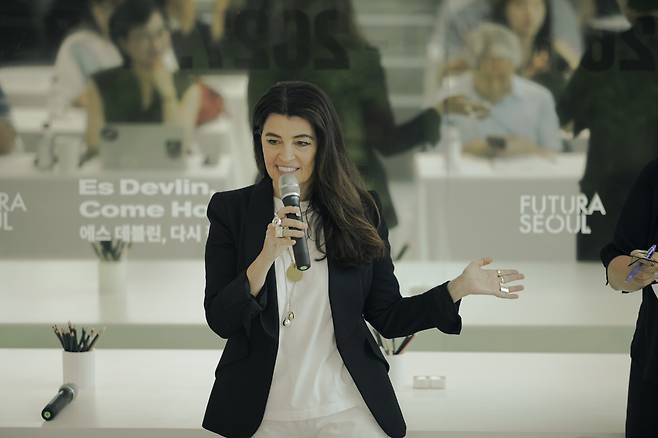
What seeps through all of the installation and multimedia pieces being shown at “The Third Poem: Come Home Again” show is Devlin’s conviction of the power and necessity of connection and communal empathy. At the same time very personal and often drawing inspiration from the artist’s own memories, the pieces, while beautiful, are not simply an aesthetic experience but a probe into what a collective encounter can achieve.
“What you will see is that my approach to an audience — whether it’s here in an art gallery, or whether it’s 100,000 people gathered at the Super Bowl or at Beyoncé’s Formation Tour — the approach is not any different,” Devlin said. “The approach is always: what did somebody do when they were present, and what did they observe and encounter?”
“The Third Poem: Come Home Again” runs through Jan. 17 next year at Futura Seoul. Admission for adults is 22,000 won ($15.60).
BY LIM JEONG-WON [lim.jeongwon@joongang.co.kr]
Copyright © 코리아중앙데일리. 무단전재 및 재배포 금지.