금시세(금값) 반등
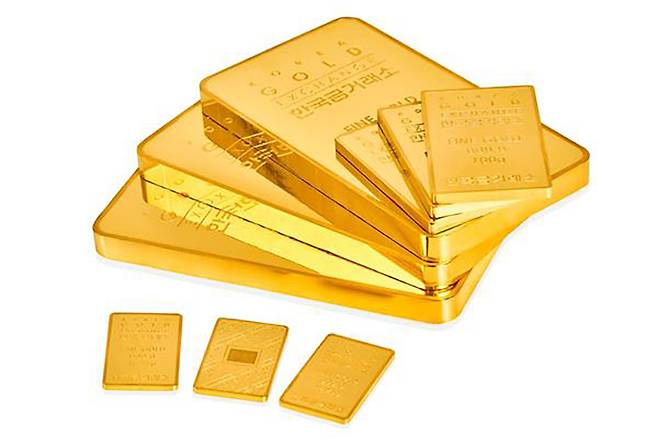
-오늘의 금시세(한국금거래소 순금 0.92%↑)
-한국금거래소 순금 살 때 87만4천원
-KRX 전날 19만8천350원 마감
-국제 금값 4,379달러…주간 0.9% 상승
-美 소매판매 0.6%↓…9월 금리 인상 전망 후퇴
-달러 약세·금리 동결 기대 금가격 지지
-호르무즈 불확실성·유가 상승은 변수
-다음 주 FOMC 회의록에 금시장 촉각
국내 금시세가 다시 반등했다. 한국금거래소 순금 가격은 한 돈에 87만4천원으로 올라섰다. 국제 금가격도 미국의 소비 둔화와 금리 인상 기대 약화에 힘입어 반등했다.
15일 오전 10시 기준 한국금거래소에서 순금(24K·3.75g)을 살 때 가격은 87만4천원으로 전날 마감가 86만6천원보다 8천원(0.92%) 올랐다.
팔 때 가격은 73만1천원으로 4천원(0.55%) 상승했다.
18K 금 제품을 팔 때 가격은 53만7천300원으로 2천900원(0.54%), 14K는 41만6천700원으로 2천300원(0.55%) 각각 올랐다.
백금과 은 가격도 동반 상승했다.
백금 한 돈을 살 때 가격은 34만7천원으로 4천원(1.15%) 올랐다. 팔 때 가격은 28만2천원으로 4천원(1.42%) 상승했다.
은 한 돈을 살 때 가격은 1만2천190원으로 40원(0.33%), 팔 때 가격은 1만300원으로 40원(0.39%) 각각 올랐다.
한국거래소(KRX) 금시장은 직전 거래일인 14일 1g당 금 가격은 전 거래일보다 2천220원(1.11%) 내린 19만8천350원에 거래를 마쳤다.
시가는 19만9천500원이었으며 장중 고가 역시 19만9천500원이었다. 저가는 19만6천690원을 기록했다.
거래량은 21만1천729g, 거래대금은 419억2천453만원 규모였다.
KRX 금값은 지난 13일 20만570원까지 올라섰지만 하루 만에 다시 20만원 아래로 내려왔다. 앞서 국제 금가격이 급등한 이후 차익실현 매물이 나오면서 국내 금시장에도 영향을 준 것으로 풀이된다.
원·달러 환율도 변수다.
이날 오전 원·달러 환율은 1,418.50원을 나타냈다.
국내 금가격은 국제 금값뿐 아니라 원·달러 환율의 영향을 함께 받는다. 달러 기준 국제 금가격이 같더라도 원화 가치가 떨어지면 국내에서 거래되는 금가격에는 상승 압력이 발생할 수 있다.
국제 금시장에서도 금가격이 다시 반등했다.
미국 현지시간 14일 현물 금 가격은 온스당 4,379.95달러로 0.7% 상승했다.
전날에는 장중 6월5일 이후 최고 수준까지 올라선 뒤 차익실현 매물이 나오면서 1% 넘게 떨어졌지만 하루 만에 상승세를 되찾았다.
미국 12월 인도분 금 선물도 0.4% 오른 온스당 4,437.30달러에 거래를 마쳤다.
주간 기준으로도 국제 금가격은 상승했다. 현물 금은 이번 주 약 0.9% 올랐다.
이번 주 금값의 방향을 결정한 핵심 변수는 미국 경제지표였다.
7월 소비자물가지수(CPI)와 생산자물가지수(PPI)가 물가 압력의 추가 확대를 보여주지 않은 데 이어 소비 지표까지 예상보다 부진하게 나타났다.
미국의 7월 소매판매는 전월보다 0.6% 감소했다. 시장에서는 소폭 증가를 예상했지만 오히려 감소했다.
감소폭도 14개월 만에 가장 컸다. 6월에는 0.2% 증가했다.
미국 경제를 떠받치는 소비가 둔화될 가능성이 제기되면서 연방준비제도(Fed)가 9월 회의에서 추가 금리 인상에 나설 필요성이 낮아졌다는 전망에 힘이 실렸다.
최근 발표된 고용지표도 이러한 전망을 뒷받침하고 있다.
7월 미국 고용이 예상보다 크게 약화된 데 이어 물가와 소비 지표까지 둔화하면서 시장의 관심은 인플레이션뿐 아니라 경기와 고용으로 이동하고 있다.
이에 시장이 반영하는 9월 금리 인상 가능성은 일주일 전 약 55%에서 약 31%까지 떨어졌다.
금리 전망은 금가격과 밀접하게 움직인다.
금은 이자를 지급하지 않는 자산이다. 기준금리 인상 가능성이 낮아지면 채권 등 이자를 지급하는 자산과 비교한 금 보유의 기회비용이 줄어들 수 있다.
달러 약세도 금가격 상승에 힘을 보탰다.
14일 미국 달러지수는 약 0.3% 하락했다. 달러 가치가 떨어지면 다른 통화를 사용하는 투자자에게 달러로 거래되는 금의 구매 부담이 낮아질 수 있다.
실제로 미국 소매판매가 예상과 달리 감소하자 달러가 약세를 보였고 금가격에는 상승 압력이 나타났다.
다만 국제 금시세의 추가 상승을 낙관하기에는 변수도 적지 않다.
가장 큰 변수 가운데 하나는 국제유가다.
호르무즈 해협을 둘러싼 미국과 이란의 대치가 계속되면서 에너지 공급에 대한 불확실성이 이어지고 있다.
미국과 이란의 해협 재개방 협상이 교착 상태를 보이는 가운데 선박 공격까지 이어지면서 국제유가는 다시 상승 압력을 받고 있다. 브렌트유는 배럴당 88달러 부근, 서부텍사스산원유(WTI)는 82달러 선에서 움직였다.
유가 상승은 금시장에 복합적인 영향을 미친다.
중동의 지정학적 긴장이 확대되면 대표적인 안전자산인 금에 대한 수요가 늘어날 수 있다. 반면 유가 상승이 미국의 물가를 다시 자극하면 연준이 금리를 높은 수준에서 유지하거나 추가 인상할 가능성이 커질 수 있다.
최근 금가격이 경제지표 발표 때마다 큰 폭으로 움직이는 이유도 여기에 있다.
금값은 이번 주 한때 온스당 4,450달러 부근까지 올라섰다. 그러나 4,500달러선에 가까워지자 차익실현 매물이 나오면서 상승폭을 반납했다.
지난 13일에는 장중 온스당 4,449.39달러까지 올라 6월5일 이후 최고치를 기록했지만 이후 4,300달러대로 밀렸다. 시장에서는 4,500달러 부근이 단기적으로 중요한 저항선으로 인식되고 있다.
그럼에도 금시장의 투자심리는 비교적 강한 편이다.
Kitco News가 실시한 주간 설문조사에서는 참여한 시장 전문가 10명 가운데 9명이 다음 주 금가격 상승을 전망했다. 개인 투자자 조사에서도 응답자 222명 가운데 68%가 상승을 예상했다.
다만 전망이 한 방향으로만 기울어진 것은 아니다.
금리 인상 가능성이 낮아지고 달러가 약세를 보이는 점은 금가격에 우호적이지만, 4,500달러 부근의 기술적 저항과 높은 국제유가, 미국 장기 국채금리 등은 추가 상승을 제한할 수 있다.
따라서 단기적으로는 4,300달러대를 지키면서 다시 4,400달러 후반으로 올라설 수 있는지가 관건이 될 전망이다.
다음 주에는 미국 경제지표와 연준의 통화정책 신호가 금시장의 방향을 결정할 것으로 보인다.
우선 미국 제조업과 주택시장 지표가 잇따라 발표된다.
월요일에는 뉴욕 엠파이어 스테이트 제조업 지수가 나온다. 화요일에는 주택 착공과 건축 허가 관련 지표가 공개된다.
가장 관심을 끄는 일정은 수요일 공개되는 7월 연방공개시장위원회(FOMC) 회의록이다.
연준은 지난달 28~29일 회의에서 기준금리를 3.50~3.75%로 동결했다. 당시 정책위원 사이에서 향후 금리 경로를 놓고 의견 차이가 나타난 만큼 회의록을 통해 연준 내부의 인플레이션과 경기 판단을 확인할 수 있다.
특히 최근 고용과 소비가 약화되고 물가 상승률도 둔화한 상황에서 연준 정책위원들이 추가 금리 인상 필요성을 어느 정도로 판단했는지가 관심사다.
회의록에서 금리 동결을 뒷받침하는 내용이 확인되면 시장의 9월 금리 인상 전망이 추가로 낮아지면서 금가격에 긍정적으로 작용할 수 있다.
반대로 인플레이션에 대한 경계가 예상보다 강하게 나타난다면 국채금리와 달러가 반등하면서 금가격에는 부담이 될 가능성이 있다.
목요일에는 미국 주간 신규 실업수당 청구건수와 필라델피아 연방준비은행 제조업 지수가 발표된다.
금요일에는 S&P 글로벌 종합 구매관리자지수(PMI) 잠정치가 나온다. 미국 민간 부문의 경기 흐름을 가늠할 수 있는 지표다.
이번 주 금시장의 움직임은 연준의 금리 전망에 대한 민감도가 다시 높아졌다는 점에서도 주목된다. 미국의 고용 부진에 이어 CPI와 PPI, 소매판매까지 잇따라 발표되면서 금값은 경제지표에 따라 큰 폭으로 움직였다. 물가 상승 압력이 예상보다 강하지 않고 소비까지 둔화하면서 시장에서는 연준이 당장 추가 긴축에 나설 필요성이 낮아졌다는 인식이 확산됐다.
다만 금리 인상 가능성이 낮아졌다고 해서 곧바로 금가격의 추가 상승을 장담하기는 어렵다. 국제 금가격은 이번 주 4,450달러 부근까지 올라섰지만 이 가격대에서 차익실현 매물이 빠르게 출회됐다. 최근 단기간에 가격이 크게 오른 데 따른 부담이 여전히 남아 있다는 의미다.
특히 4,500달러선 돌파 여부가 단기 흐름을 가를 가능성이 있다. 이 가격대를 넘어 안착할 경우 추가 상승에 대한 기대가 커질 수 있지만 다시 밀린다면 당분간 4,300~4,500달러 사이에서 등락을 이어갈 가능성도 있다. 결국 금리 전망뿐 아니라 달러와 국채금리, 국제유가가 어느 방향으로 움직이느냐가 중요하다.
은 가격도 이번 주 금과 비슷한 흐름을 나타냈다.
미국 현지시간 14일 현물 은 가격은 온스당 64.88달러로 0.7% 상승했다.
백금은 온스당 1,746.97달러, 팔라듐은 1,320.93달러로 각각 상승했다. 국내에서도 이날 한국금거래소의 은과 백금 가격이 모두 올랐다.
금시장은 다시 중요한 가격대에 접근하고 있다.
국제 금시세는 이번 주 6월 초 이후 최고 수준까지 올라섰다가 차익실현 매물에 밀렸지만 4,300달러 후반에서 주간 거래를 마쳤다.
미국의 고용과 소비 둔화, 물가 안정은 연준의 추가 금리 인상 가능성을 낮추면서 금가격을 지지하고 있다. 반면 높은 국제유가와 장기 국채금리, 4,500달러 부근의 저항은 추가 상승을 제한하는 요인이다.
국내 금가격 역시 국제 금시장의 움직임과 원·달러 환율에 따라 변동성이 이어질 가능성이 있다.
한국금거래소 순금 가격은 14일 86만6천원까지 내려갔다가 이날 다시 87만4천원으로 반등했다. KRX 금가격도 직전 거래일 19만8천350원으로 20만원 아래에서 거래를 마쳤다.
다음 주에는 미국 FOMC 회의록을 비롯한 경제지표와 달러·국채금리, 국제유가 움직임이 국내외 금값의 방향을 가를 주요 변수로 꼽힌다.
실시간 금값시세는 한국금거래소와 한국거래소(KRX) 금시장에서 확인할 수 있다.
/박상진 기자 jhc@kjdaily.com
다음은 위 기사를 번역한 전문이다. 번역에 오류가 있을 수 있다.
<Precious Metals Market Trends on the 15th>
- Today\'s Gold Price (Korea Gold Exchange Pure Gold 0.92%↑)
- Korea Gold Exchange Pure Gold Buying Price: 874,000 Won
- KRX Closed at 198,350 Won Yesterday
- International Gold Price at $4,379… Up 0.9% Weekly
- US Retail Sales Down 0.6%… September Rate Hike Outlook Backtracks
- Weak Dollar and Expectations of Rate Freeze Support Gold Prices
- Hormuz Uncertainty and Rising Oil Prices Are Variables
- Gold Market Closely Watching Next Week\'s FOMC Minutes
Domestic gold prices have rebounded again. The price of pure gold at the Korea Gold Exchange rose to 874,000 won per don. International gold prices also rebounded, driven by slowing U.S. consumption and weakening expectations for interest rate hikes. As of 10:00 AM on the 15th, the purchase price of pure gold (24K, 3.75g) at the Korea Gold Exchange was 874,000 won, an increase of 8,000 won (0.92%) from the previous day\'s closing price of 866,000 won.
The selling price rose by 4,000 won (0.55%) to 731,000 won.
The selling price of 18K gold products increased by 2,900 won (0.54%) to 537,300 won, while 14K gold rose by 2,300 won (0.55%) to 416,700 won.
The prices of platinum and silver also rose in tandem.
The purchase price of one don (unit of weight) of platinum rose by 4,000 won (1.15%) to 347,000 won. The selling price increased by 4,000 won (1.42%) to 282,000 won. The buying price for one don of silver rose by 40 won (0.33%) to 12,190 won, while the selling price rose by 40 won (0.39%) to 10,300 won.
On the 14th, the last trading day, the Korea Exchange (KRX) gold market closed at 198,350 won per gram, down 2,220 won (1.11%) from the previous day.
The opening price was 199,500 won, and the intraday high was also 199,500 won. The low was recorded at 196,690 won.
The trading volume was 211,729g, and the trading value amounted to 41.92453 billion won.
The KRX gold price rose to 200,570 won on the 13th but fell back below 200,000 won in just one day. It is interpreted that profit-taking sales emerged following the earlier surge in international gold prices, impacting the domestic gold market as well.
The won-dollar exchange rate is also a variable.
The won-dollar exchange rate stood at 1,418.50 won this morning.
Domestic gold prices are influenced by both international gold prices and the won-dollar exchange rate. Even if the international gold price in dollar terms remains the same, a decline in the value of the won can create upward pressure on gold prices traded domestically.
Gold prices also rebounded in the international gold market.
On the 14th (US local time), spot gold prices rose 0.7% to $4,379.95 per ounce.
The previous day, prices fell by more than 1% due to profit-taking after reaching their highest level since June 5 during intraday trading, but they regained their upward momentum within a day.
US December gold futures also closed at $4,437.30 per ounce, up 0.4%. International gold prices rose on a weekly basis as well. Spot gold increased by approximately 0.9% this week.
The key variable determining the direction of gold prices this week was U.S. economic indicators.
Following the fact that the July Consumer Price Index (CPI) and Producer Price Index (PPI) did not indicate further expansion of inflationary pressure, consumption indicators also appeared weaker than expected.
U.S. retail sales in July fell 0.6% from the previous month. While the market had anticipated a slight increase, sales actually declined.
The magnitude of the decline was also the largest in 14 months. In June, sales had increased by 0.2%.
As the possibility of a slowdown in consumption—which underpins the U.S. economy—was raised, the view that the Federal Reserve (Fed) has lessened the need to pursue further interest rate hikes at its September meeting gained traction.
Recently released employment figures also support this outlook.
Following U.S. employment figures for July weakening significantly more than expected, and with price and consumption indicators also slowing, market attention is shifting from inflation to the economy and employment.
Consequently, the market’s perceived probability of a September interest rate hike has fallen from approximately 55% a week ago to about 31%.
Interest rate outlooks move closely with gold prices.
Gold is an asset that does not pay interest. If the likelihood of a benchmark interest rate hike decreases, the opportunity cost of holding gold compared to interest-paying assets such as bonds may decline.
The weakening dollar also contributed to the rise in gold prices.
On the 14th, the U.S. dollar index fell by approximately 0.3%. When the value of the dollar drops, the burden of purchasing gold, which is traded in dollars, can decrease for investors using other currencies.
In fact, as U.S. retail sales declined contrary to expectations, the dollar weakened, creating upward pressure on gold prices.
However, there are still many variables to consider when it comes to being optimistic about further increases in international gold prices.
One of the biggest variables is international oil prices.
Uncertainty regarding energy supply persists as the standoff between the United States and Iran over the Strait of Hormuz continues.
International oil prices are once again under upward pressure as negotiations between the U.S. and Iran to reopen the strait remain at a stalemate and attacks on ships have followed. Brent crude traded around $88 per barrel, while West Texas Intermediate (WTI) hovered around the $82 mark.
Rising oil prices have a complex impact on the gold market.
If geopolitical tensions in the Middle East escalate, demand for gold, a representative safe-haven asset, may increase. Conversely, if rising oil prices stimulate inflation in the U.S. again, the likelihood of the Federal Reserve maintaining high interest rates or raising them further increases.
This explains why gold prices have recently been fluctuating significantly whenever economic indicators are released.
Gold prices briefly rose to around $4,450 per ounce this week. However, as the price approached the $4,500 mark, profit-taking selling pressure emerged, causing it to give back some of its gains. On the 13th, the price rose to $4,449.39 per ounce during trading, marking its highest level since June 5, but subsequently fell back to the $4,300 range. The market perceives the area around $4,500 as a significant short-term resistance level.
Nevertheless, investor sentiment in the gold market remains relatively strong.
In a weekly survey conducted by Kitco News, nine out of ten participating market experts predicted a rise in gold prices next week. In a survey of retail investors as well, 68% of the 222 respondents anticipated a rise.
However, the outlook is not entirely skewed in one direction.
While the reduced likelihood of interest rate hikes and the weakening dollar are favorable for gold prices, technical resistance around $4,500, high international oil prices, and long-term U.S. Treasury yields could limit further gains.
Therefore, the key factor in the short term is expected to be whether the price can hold the $4,300 level while rising back into the high $4,400 range. Next week, U.S. economic indicators and signals from the Federal Reserve\'s monetary policy are expected to determine the direction of the gold market.
First, U.S. manufacturing and housing market indicators will be released in succession.
On Monday, the New York Empire State Manufacturing Index will be released. On Tuesday, indicators related to housing starts and building permits will be disclosed.
The most attention-grabbing schedule is the release of the minutes from the July Federal Open Market Committee (FOMC) meeting on Wednesday.
The Fed kept the benchmark interest rate unchanged at 3.50–3.75% during its meeting on the 28th and 29th of last month. Given that there were differences of opinion among policymakers regarding the future interest rate path at the time, the minutes will allow for an assessment of the Fed\'s internal assessment of inflation and the economy.
In particular, given the recent weakening of employment and consumption and the slowdown in inflation, the focus is on the extent to which Fed policymakers assessed the necessity of further interest rate hikes.
If the minutes confirm details supporting the rate freeze, the market\'s outlook for a September rate hike may be further lowered, which could have a positive impact on gold prices.
Conversely, if concerns over inflation prove stronger than expected, there is a possibility that Treasury yields and the dollar will rebound, placing pressure on gold prices.
On Thursday, the U.S. weekly initial jobless claims and the Philadelphia Federal Reserve manufacturing index will be released.
On Friday, the preliminary S&P Global Composite Purchasing Managers\' Index (PMI) will be released. This is an indicator that gauges the economic trends of the U.S. private sector.
The movements of the gold market this week are also noteworthy because sensitivity to the Federal Reserve\'s interest rate outlook has increased again. Following weak U.S. employment figures, gold prices have moved significantly in response to economic indicators as the CPI, PPI, and retail sales were released in succession. With inflationary pressures not as strong as anticipated and consumption slowing, the perception has spread in the market that the need for the Fed to immediately engage in further tightening has diminished.
However, it is difficult to guarantee an immediate further rise in gold prices simply because the likelihood of an interest rate hike has decreased. International gold prices rose to around $4,450 this week, but profit-taking selling pressure emerged rapidly at this level. This implies that the burden of the recent sharp price increase remains.
In particular, whether the $4,500 mark is broken could determine the short-term trend. If the price stabilizes above this level, expectations for further gains could increase; however, if it falls back, there is a possibility that it will continue to fluctuate between $4,300 and $4,500 for the time being. Ultimately, not only interest rate forecasts but also the direction in which the dollar, government bond yields, and international oil prices move is crucial.
Silver prices also showed a similar trend to gold this week.
On the 14th (U.S. local time), spot silver prices rose 0.7% to $64.88 per ounce.
Platinum rose to $1,746.97 per ounce, and palladium to $1,320.93 per ounce. Domestically, silver and platinum prices at the Korea Gold Exchange also rose on this day.
The gold market is once again approaching key price levels.
International gold prices rose to their highest level since early June this week before being pushed back by profit-taking, but closed the week in the high $4,300 range.
Slowing U.S. employment and consumption, along with price stability, are supporting gold prices by lowering the likelihood of further interest rate hikes by the Federal Reserve. Conversely, high international oil prices, long-term government bond yields, and resistance around $4,500 are factors limiting further gains.
Domestic gold prices are also likely to continue experiencing volatility depending on movements in the international gold market and the won-dollar exchange rate.
The price of pure gold on the Korea Gold Exchange fell to 866,000 won on the 14th before rebounding to 874,000 won on the same day. The KRX gold price also closed below 200,000 won on the previous trading day at 198,350 won. Next week, economic indicators including the U.S. FOMC minutes, as well as movements in the dollar, government bond yields, and international oil prices, are cited as key variables that will determine the direction of gold prices both domestically and internationally.
Real-time gold prices can be checked at the Korea Gold Exchange and the Korea Exchange (KRX) gold market.
/Reporter Park Sang-jin jhc@kjdaily.com
Copyright © 광주매일신문. 무단전재 및 재배포 금지