Valley visits surge in hot summer — and so do the problems that come with them
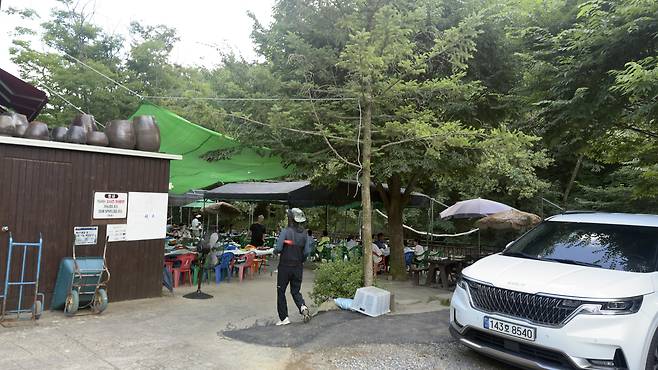
As sweltering heat continues across the country, people are heading for nature's air conditioner: valleys.
The number of visitors to Sillim Valley, a popular location in Gwanak District, southern Seoul, reached 10,633 between July and Aug. 4, nearly double the 5,348 visitors recorded during the same period last year, according to the district office.
But the growing crowds are also bringing problems, from the unauthorized occupation of public waterways to illegal parking and littering, prompting local authorities to step up inspections and enforcement.
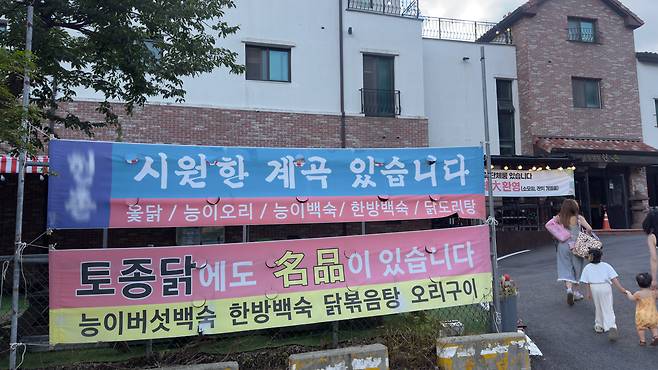
During a recent visit to a valley near Namhansanseong in Gyeonggi, a restaurant selling chicken soup, a quintessential summer dish, had a large banner reading, "We have a valley."
Its outdoor tables were set along the stream behind the restaurant, overlooking the water. In the section directly in front of the restaurant, diners could be seen wading and playing in the stream after finishing their meals.
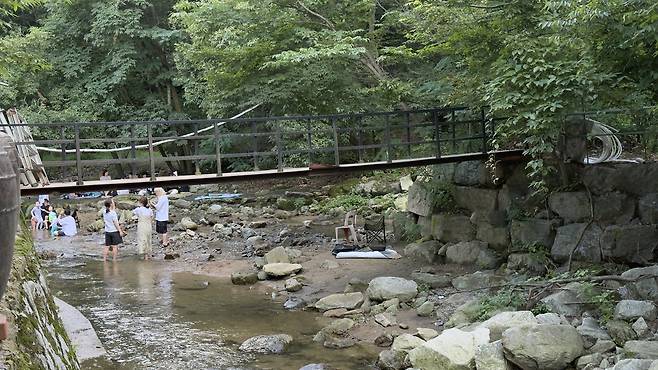
The situation was similar upstream, where restaurants and cafes operating along the valley effectively controlled access to sections near their establishments, making those areas less accessible to the general public.
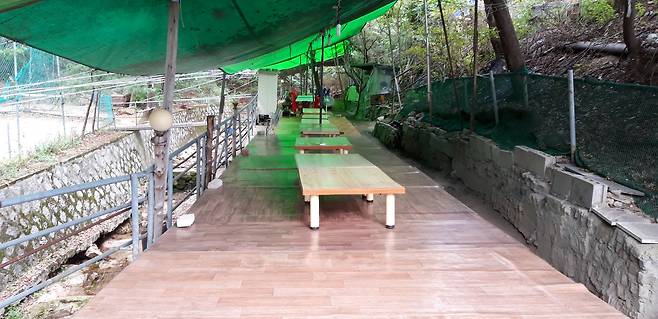
Elsewhere, the encroachment has been more explicit, with businesses accused of restricting access altogether by putting up "no outsiders" signs or even installing tables and other furnishings within public waterways.
The problem has persisted at Uidong Valley in Gangbuk District, northern Seoul, where some restaurants have repeatedly installed tables and tents within the stream, using portions of the public waterway as private commercial spaces.
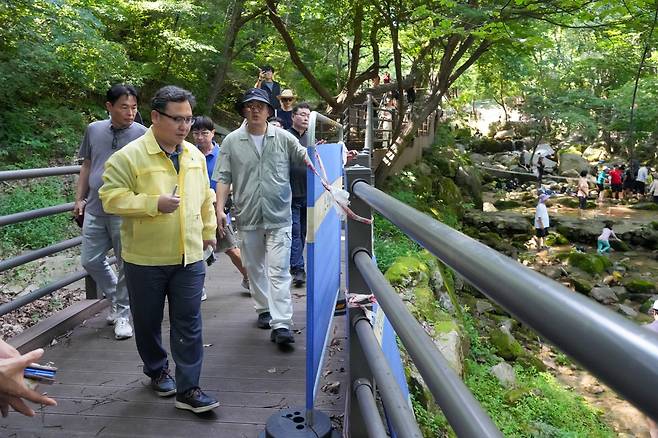
To combat such practices, the district office has stepped up enforcement, extending its intensive inspection period, originally scheduled to end on Aug. 17, through Sept. 20. It has also expanded its joint inspection teams, which will conduct intensive on-site checks every Saturday and Sunday.
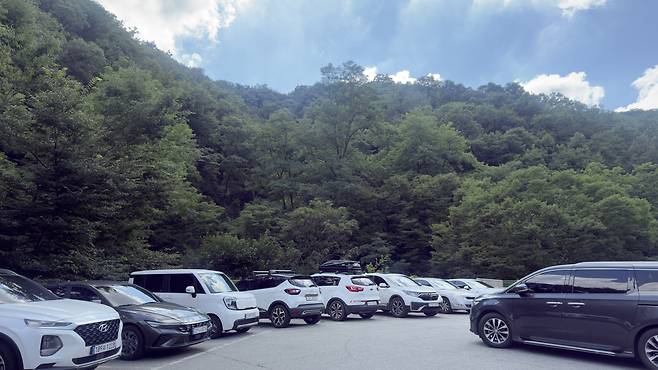
The influx of visitors — and their cars — is creating another problem: parking.
With limited parking available near many valleys, illegally parked vehicles have become an increasingly common sight, sometimes obstructing roads and inconveniencing residents and other drivers.
The shortage of parking spaces has also given rise to a new capitalistic problem.
Majang-ri Valley in Paju and Noksu Valley in Gapyeong, both in Gyeonggi, recently came under scrutiny after reports that some nearby residents were charging between 20,000 won ($14) and 30,000 won per vehicle to park on private property near the valleys, regardless of how long visitors stayed.
In response to concerns over excessive parking fees, the Gyeonggi provincial government launched an emergency inspection of parking lots near valleys across all 31 cities and counties in the province.
Rules vary depending on the location and managing authority, but cooking and littering are prohibited in many valleys located within forests and protected areas.
Visitors should also note that access to some valleys is restricted for environmental protection or visitor safety. Under the Natural Parks Act, entering an area officially designated as off-limits can result in a fine of up to 500,000 won.
BY WOO JI-WON [woo.jiwon@joongang.co.kr]
Copyright © 코리아중앙데일리. 무단전재 및 재배포 금지.