Forget the beach: These valley streams in Korea are colder than your fridge
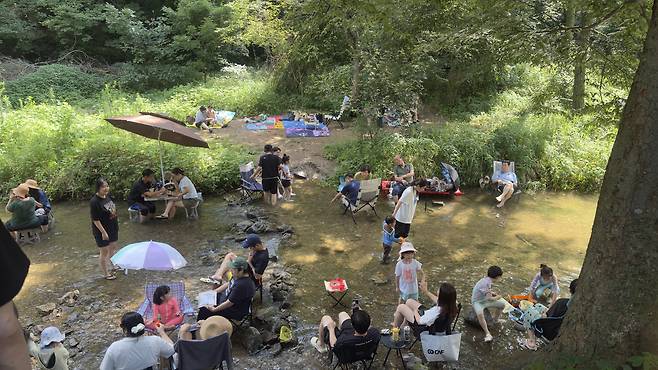
Though the worst of the summer heat has passed, stepping outside can still feel like walking into a sauna.
To escape the sweltering heat, many are heading to mountain valleys, summer retreats Koreans seem to love just as much as beaches.
With this year's unprecedented heat wave, which hovered over 40 degrees Celsius (104 degrees Fahrenheit) in some regions, the oases have seen even bigger crowds.
At Byeogun Valley in Nowon District, northern Seoul, for instance, the number of weekend visitors has surged fivefold, from around 300 last year to about 1,500 this summer, according to the district office.
With mountains covering much of the country, valleys are one of the defining features of Korea's landscape. Tucked beneath dense forests, these streams boast remarkably cool waters that can be even colder than the waters off Korea's beaches in summer, thanks in part to the surrounding tree canopy, which provides shade and helps keep water temperatures down.
“The water is colder than water fresh out of the refrigerator,” said Cho Ki-hyeon, an office worker who was cooling his feet in a valley at Namhansanseong in Gyeonggi on a recent Saturday. “It's scorching outside, but once I put my feet in the water, my whole body cools down.”
Hidden among the trees, the valley was already crowded with families, couples and groups of friends as temperatures climbed past 36 degrees Celsius.
In the ankle-deep stream, many set up camping chairs beneath mini parasols, soaking their feet while staying in the shade. Some set up folding tables to enjoy snacks such as instant noodles, watermelon and cold drinks.
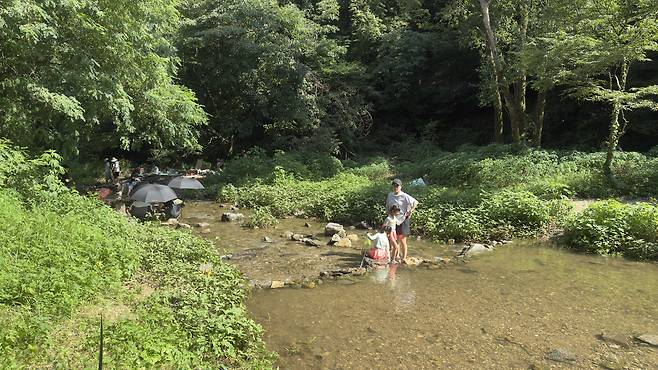
Many others spread picnic mats along the banks, escaping the sun beneath the shade of tall trees.
“As soon as I take my feet out of the water, I become hot again,” said Min Byeong-hoon, a visitor to the stream who said he had arrived early that morning with his wife.
Munwon Valley
Mount Gwanak has recently become a popular destination for valley outings thanks to its convenient location within Seoul.
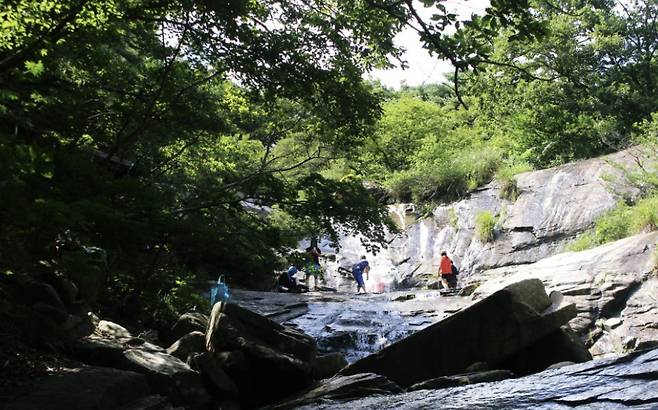
Hidden deeper inside the mountain, however, are several lesser-known spots, including Munwon Valley, which touts a more varied landscape, including two fairly tall waterfalls.
Take Subway Line 4 to Government Complex Gwacheon Station and leave through Exit 5. Walk about 20 minutes to the trailhead beside the Korea Testing and Research Institute.
The first accessible spot along the valley is under the bridge, where clear water reaches about an adult’s knees.
Cross the bridge and head uphill. Along the way, narrow paths lead down to several hidden spots scattered throughout the valley.
Although the valley itself is not particularly large, its charm lies in discovering the many hidden swimming holes along the way. It is also particularly appealing to those who enjoy hiking along unpaved trails to discover hidden spots.
Byeogun Valley
On the southwestern side of Mount Surak in Nowon District, northern Seoul, lies Byeogun Valley.
The lower section is shallow enough for young children to dip their feet and play safely. Compared with other valleys, Byeogun Valley is well maintained, with a wide deck running alongside the stream allowing visitors to spread out picnic mats and relax.
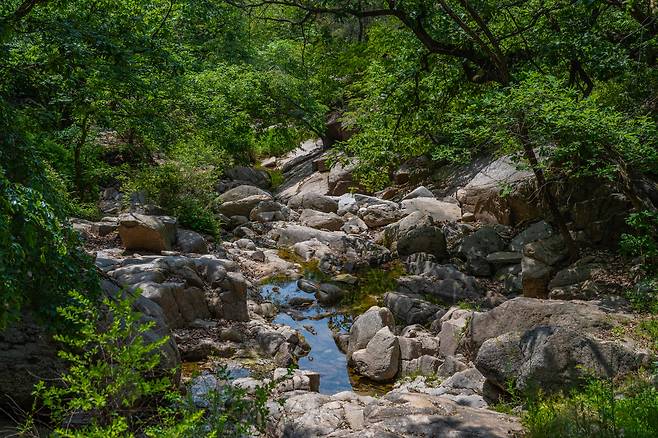
With the well-maintained walking trails, many visitors also enjoy a light trek before or after cooling off in the valley.
To get here, leave through Exit 1 of Suraksan Station on Line 7 and walk for about five minutes to the Suraksan Entrance Intersection. Turn right there, and after another five-minute walk, you'll reach the valley.
Dobong Valley
Looking for a clear, wider valley? Head to Dobong Valley.
You don’t have to hike deep into the mountains to reach the water. Just a 10-minute walk from Dobongsan Station leads directly to the valley. Leave through Exit 1 and head toward the entrance to Mount Dobong.
The valley is broad, with a few stone bridges crossing the stream.
But the biggest draw here isn't swimming; it's the chance to simply put your feet in the water and cool off without swimsuits or any special equipment. The shallow, clear stream is also home to a variety of aquatic life, making it a perfect spot for children to catch small creatures like daseulgi, or freshwater snails, for fun.
A series of small waterfalls along the stream adds to the scenic charm.
Large, staircase-like rocks line the banks, providing the perfect place to sit by the stream and dip your feet.
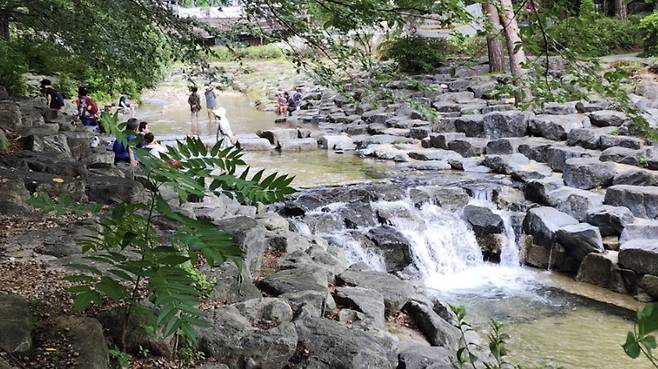
For those who want to immerse more than just their feet, head farther upstream, where the water becomes deeper and pools are large enough to wade into.
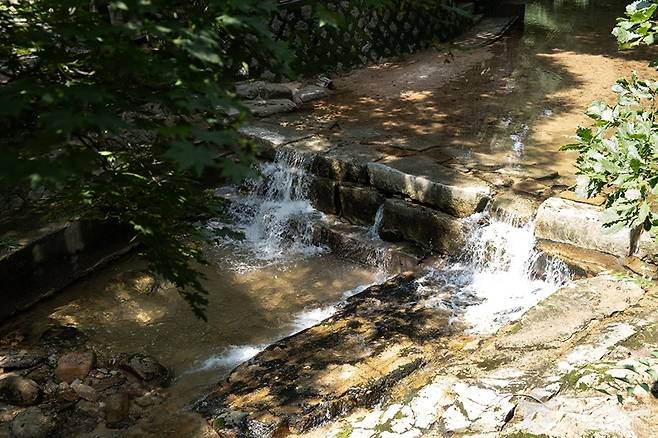
Gingorang Valley
Located on Mount Acha in eastern Seoul, Gingorang Valley stretches for a long distance, allowing visitors to spread out from the upper reaches to the lower stream without feeling crowded.
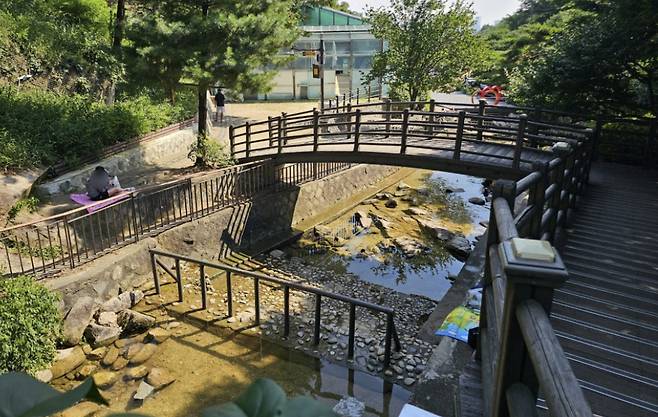
The lower section tends to be shallower, while farther upstream, the water is deeper, cleaner and colder, with more shade from the surrounding trees.
For the best experience, visit after rainfall, when the stream is at its fullest.
To get there, take the subway to Gunja Station, leave through Exit 3, transfer to Village Bus No. 02 and get off at Gingorang bus stop.
Mulbanga Tourist Area
Venture just outside Seoul, and bigger, more scenic valleys await.
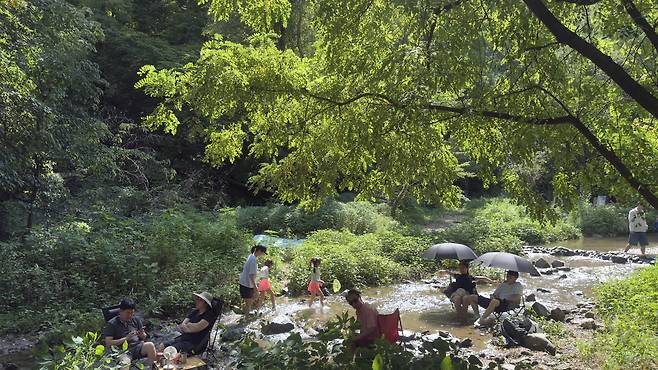
In many sections, the water is very calm and barely reaches the ankles, making it perfect for setting up a chair in the stream dip your feet — just as many visitors do.
However, tree cover does not extend over much of the stream, so bringing a personal parasol or some form of shade is recommended.
At the entrance are public restrooms and a small shop where visitors can buy snacks or enjoy more filling dishes such as noodles.
If the area is too crowded, walk farther downstream. The valley continues for quite a distance and even includes a waterfall.
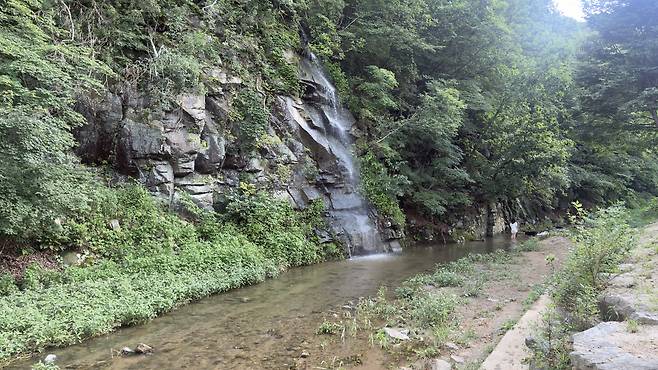
To get to Mulbanga Tourist Area, take Line 8 to Namhansanseong Station. Transfer to Bus No. 9, get off at the Jungang parking lot and walk about 15 minutes.
Geumgaeul Resort
Have you ever seen an emerald-colored valley?
Just outside Seoul, Geumgaeul Resort in Gapyeong awaits with clear, turquoise water.
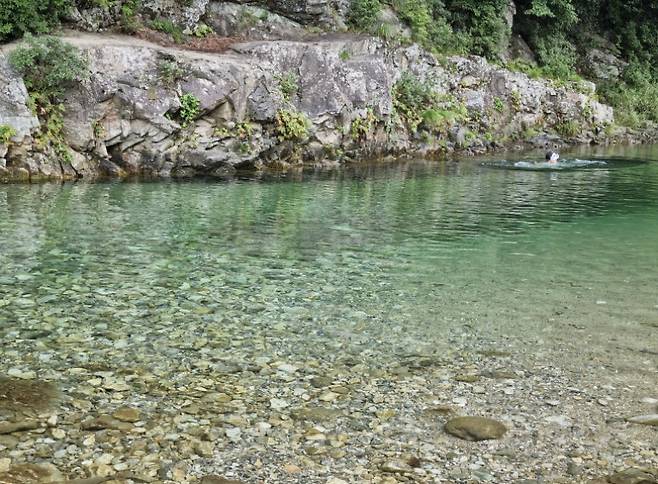
Follow the stream deeper into the valley, and you'll find a pristine natural swimming pool. Unlike many valleys dotted with large rocks that can make swimming difficult, this one opens up into a broad, unobstructed stretch of water where visitors can swim freely.
Take the Gyeongchun Line to Gapyeong Station, then take Bus 15-6 for about 45 minutes and get off at Gwancheong Village.
Address: 2475 Gahwa-ro, Buk-myeon, Gapyeong County, Gyeonggi
BY WOO JI-WON [woo.jiwon@joongang.co.kr]
Copyright © 코리아중앙데일리. 무단전재 및 재배포 금지.