A decade after Gangnam murder, women ask: What has changed?
On May 5, a 16-year-old girl walking home alone in Gwangju was fatally stabbed by a man she had never met.
The suspect, identified as a 23-year-old man, had allegedly prepared a weapon intending to kill a woman who had rejected him romantically. After failing to find her, he wandered the streets before targeting the teenage girl, following her for more than a kilometer before attacking her in an alley.
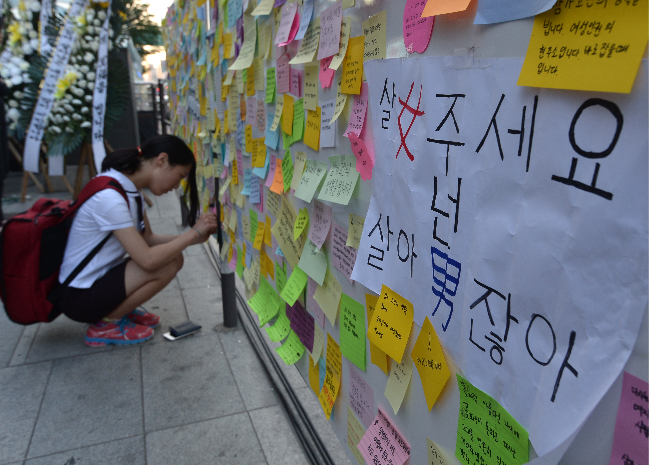
The attack came almost exactly 10 years after the 2016 Gangnam Station murder, one of the country’s most well-known cases of misogynistic violence. In that case, a 34-year-old man waited in a unisex restroom near Seoul’s Gangnam Station before killing a woman he did not know, later telling police he had done so because he felt ignored by women.
The Gangnam Station killing was a watershed moment, sparking what many describe as a “feminism reboot.” The case triggered a wave of activism and public debate over misogyny, violence against women and structural discrimination.
It was followed by the rise of the #MeToo movement in Korea, protests against illegal spycam pornography, demands for tougher punishment of digital sex crimes and broader discussions about consent and gender equality.
“It was a time when even the concept of misogynistic crime itself was dismissed and attacked,” said Choi Seung-yeon, 27, who was a high school student when the Gangnam Station murder occurred.
“There were words and actions by certain men that made me uncomfortable, but I didn’t know what to call them or how to define the problem clearly. But over the past 10 years, more people have begun recognizing the reality and speaking out.”
Kim, a 26-year-old office worker who declined to give her full name, said one positive change was that “far more women are willing to take action now.”
“But punishment for crimes against women still does not feel strong enough,” she said. “Shockingly, 10 years have already passed, but at the same time, so many women have continued to be killed since then that it almost feels normalized.”
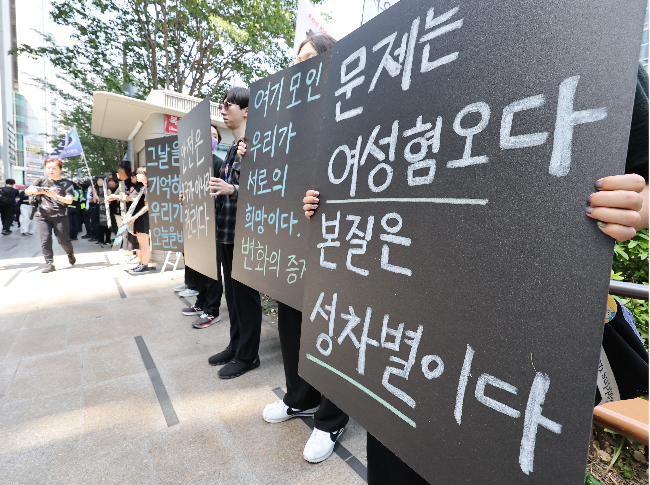
Women’s rights groups argue that the violence never stopped.
The Korea Women’s Hot Line’s “Gauge of Rage” report, claims at least 389 women were killed or faced attempted murder by intimate male partners in 2025, meaning roughly one woman every 22.5 hours.
“Over the past decade, at least 2,951 women have been killed or threatened with death in similar circumstances,” said Song Ran-hee, the representative of Korea Women’s Hot-Line.
“This is just based on cases reported in the media,” Song said.
The report also found that women were killed or faced attempted murder by strangers at least once every 3.98 days. Motives cited by perpetrators included “she refused sex,” “she was too loud” and “I felt bad.”
“Violence against women never occurs by accident,” Song said. “It grows from a social culture that tolerates control, objectification and contempt toward women.”
Legal reforms have followed the Gangnam Station murder, including the 2018 Framework Act on Prevention of Violence Against Women, tougher laws on digital sex crimes, and anti-stalking legislation enacted in 2021 and revised in 2023.
Yet activists argue the institutional response remains incomplete.
Police data shows that 336 victims of homicide or attempted homicide were female in 2024, but police do not separately record crimes motivated by misogyny, saying legal definitions remain unclear.
Experts say that absence has hindered policymaking.
“If femicide is not categorized separately, it becomes buried within general homicide statistics, making it difficult even for policymakers to recognize the seriousness of the problem,” said Kim Ji-sun, a senior researcher at the Korean Institute of Criminology and Justice.
Other countries have moved more quickly. Spain began compiling official femicide statistics in 2022, while European institutions have developed frameworks that examine motives, coercive control and patterns of gender-based violence.
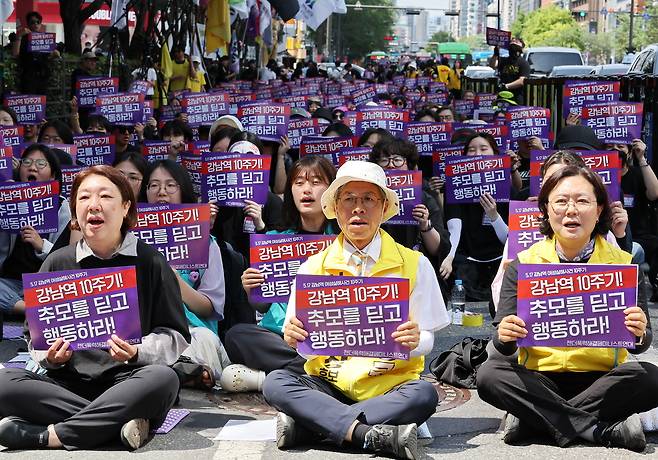
The persistence of violence against women reflects deeper structural problems that Korea has yet to confront, experts say.
“Society must acknowledge sexism as a root cause of repeated violence against women and implement measures that can genuinely protect victims’ lives,” said Kim Eun-shil, a professor of women’s studies at Ewha Womans University.
“We need a society that recognizes discrimination as the cause of this horrific disaster and takes concrete action to prevent deaths based on gender,” Kim said, calling for stronger institutional responses to gender-based violence.
She said the phrase widely used after the Gangnam Station killing — “She was killed because she was a woman, and I survived by chance” — remains one of the clearest descriptions of misogynistic violence in South Korea.
“No textbook on misogyny and no court ruling on femicide explains the reality more concisely and accurately than that sentence,” Kim added.
Experts say the forms of violence facing women have also changed over the past decade, extending from physical attacks to digital spaces.
According to National Police Agency statistics, 6,190 female victims of illegal filming crimes were recorded in 2024, remaining near the record high of 6,325 cases in 2015. Deepfake sex crimes generated using artificial intelligence have also become a growing concern, with women accounting for 90.1 percent of identified victims.
Activists say the figures show that gender-based violence has persisted since the Gangnam Station murder and expanded into new forms that existing institutions have struggled to address.
Copyright © 코리아헤럴드. 무단전재 및 재배포 금지.