Seoul to open Korean War memorial space in Gwanghwamun
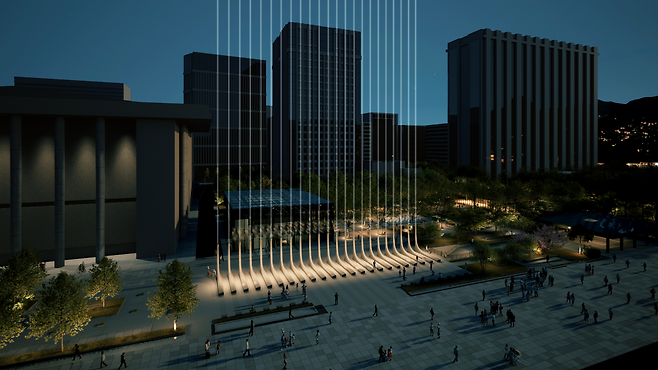
Seoul will open a new memorial space this week to share a message of solidarity, peace and prosperity while honoring the 22 countries that supported South Korea during the 1950-53 Korean War.
The Garden of Gratitude in Gwanghwamun Square is scheduled to officially open Tuesday with a completion ceremony attended by ambassadors to Korea from the 22 allied nations, Korean War veterans, diplomatic representatives and others.
The Seoul Metropolitan Government said the project was designed to commemorate the sacrifices made by allied nations and veterans who supported South Korea during the war and to promote messages of peace and international solidarity.
The city government said about 1.95 million people from 22 countries came to South Korea’s aid during the Korean War. Sixteen countries, including the US, the UK and Turkey, provided combat support, while six others, including India, Norway, Denmark and Sweden, provided medical support.
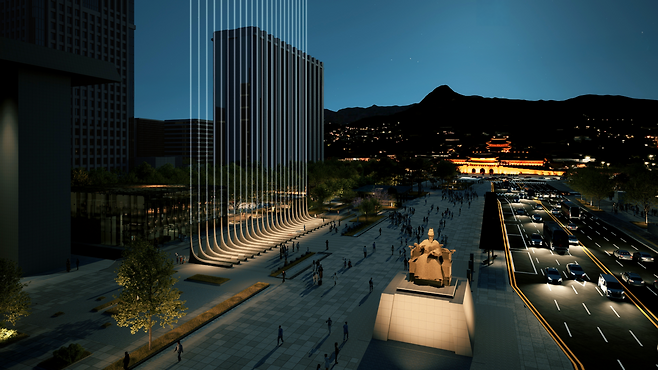
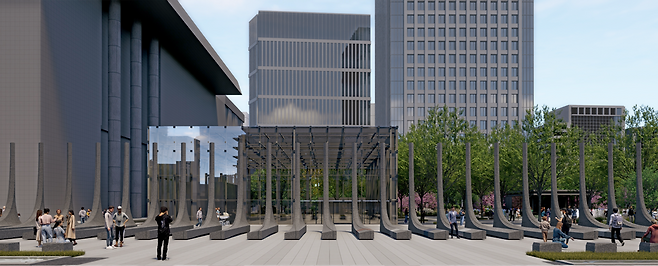
The highlight of the garden is Light of Gratitude 23, a set of 23 sculptures representing South Korea and the 22 allied nations. Each sculpture stands 6.25 meters tall, symbolizing June 25, 1950, the date the war broke out. The installation incorporates stones donated by participating countries, which city officials said stand for international cooperation and solidarity.
In March, Seoul invited diplomatic representatives from nine countries that had donated stones for the project to City Hall. Loukas Tsokos, Greece’s ambassador to South Korea, said, “The Garden of Gratitude is a deeply meaningful project and will become an important landmark representing the Republic of Korea.”
San Francisco Mayor Daniel Lurie visited Seoul in April and donated a portion of the stonework from San Francisco City Hall, a building rebuilt after the 1906 earthquake.
“Seoul and San Francisco are cities that rose from ruins and built histories of recovery and reconstruction. I hope this stone donation will serve as a meaningful occasion symbolizing the friendship and shared values of our two cities,” said the mayor.
Germany also donated a section of the Berlin Wall to share with the world the meaning of peace, reconstruction, restoration and recovery.
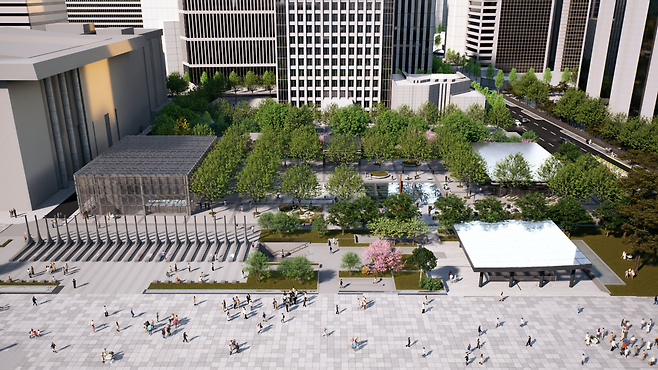
The site will also include an underground exhibition and immersive media space called Freedom Hall, where visitors can view historical materials related to the Korean War and information about participating countries.
Seoul officials said the digital exhibits will include images and videos highlighting the countries’ culture, tourism and daily life, alongside historical accounts of their wartime contributions.
The city government said it plans to operate tours, educational programs and annual activities at Gwanghwamun Square to maintain public interest in the site.
The project drew criticism during its planning stages. Some dismissed it as an effort to build a political legacy, while others questioned the need for the memorial based on differing views of history.
To address the criticism, the city government held several press briefings and conducted public consultations, which it said showed support for creating a symbolic public space and installing sculptures honoring war veterans.
Gwanghwamun Square, one of Seoul’s iconic public spaces, attracts about 27 million visitors annually.
During the Joseon era (1392-1910), the area served as a center of state governance where national rites were held, kings met with the public and relief grain was distributed during times of hardship.
By opening the Garden of Gratitude at a site of deep historical significance, the Seoul Metropolitan Government said it aims to honor the sacrifices of the countries that participated in the Korean War and the veterans who fought for freedom and peace, laying the foundation for modern Korea, while also promoting messages of peace and solidarity to visitors.
Copyright © 코리아헤럴드. 무단전재 및 재배포 금지.