Seoul steps up response to Hormuz vessel fire, prioritizes safety probe
South Korea is determining the cause of a vessel fire in the Strait of Hormuz while stepping up efforts to protect its nationals and shipping, the presidential office said Tuesday, outlining a broad government response following the incident.
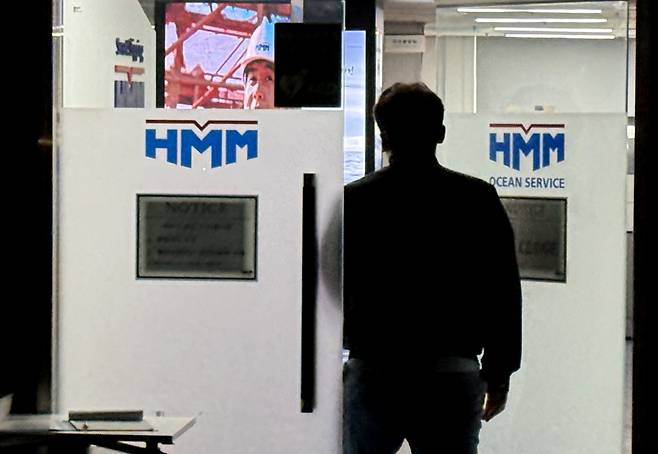
The updates came as authorities confirmed that a fire aboard the Panama-flagged HMM Namu, operated by a South Korean shipping company, had been fully extinguished, with no casualties reported among the 24 crew members, including six South Koreans. The exact cause of the fire — whether external or internal — has yet to be determined as of Tuesday afternoon.
A Cheong Wa Dae official, requesting anonymity, said, "The government is closely assessing the situation, including the cause of the fire, while taking necessary measures to ensure the safety of South Korean crew members and vessels."
The official added that authorities are maintaining communication with relevant countries and investigating the exact cause of the explosion. Follow-up measures will be taken once findings are confirmed.
The vessel was anchored in waters near the United Arab Emirates when an explosion occurred late Monday, with damage reported on the port side of the engine room. It remains on standby at sea.
At an emergency meeting chaired by presidential chief of staff Kang Hoon-sik around noon Tuesday, officials reviewed response measures. They agreed to tow the damaged vessel to a nearby port using a contracted tugboat, followed by berthing and a full safety inspection, according to presidential spokesperson Kang Yu-jung. Personnel from the Dubai office of the Korean Register will be dispatched immediately. Investigators from the Korea Maritime Safety Tribunal and fire inspection experts from the National Fire Agency will also be sent to the site to ensure an objective and reliable probe.
Authorities expect it will take several days to determine the exact cause of the explosion and fire, given the time required for towing, inspection and analysis. The government said it would “swiftly and accurately” establish the cause and report the findings transparently.
Officials said the government is closely assessing the situation, including the cause of the fire, while taking necessary measures to ensure the safety of the crew members and vessels, and maintaining communication with relevant countries.
The Ministry of Oceans and Fisheries and the Cheonghae Unit, a South Korean naval anti-piracy unit deployed overseas, are maintaining communication with the vessel and monitoring ship and crew safety in real time, according to Kang. Authorities have also been in direct contact with crew members’ families to provide updates and respond to concerns.
Since the outbreak of the Middle East conflict, the government has maintained daily contact with 26 South Korean vessels anchored in the Strait of Hormuz, continuing efforts to ensure their safety and provide necessary support. Ships previously operating near the UAE have since been redirected toward Qatar, while authorities continue real-time monitoring in coordination with relevant agencies, according to the oceans ministry.
In parallel, Seoul is maintaining close communication and sharing information with the United States, Iran and Gulf Cooperation Council member states — Saudi Arabia, the United Arab Emirates, Kuwait, Qatar, Bahrain and Oman — while instructing its overseas missions to monitor developments and coordinate with host governments.
The government reiterated that it views the safety of international sea lanes and freedom of navigation as principles protected under international law and serving the common interest of all countries.
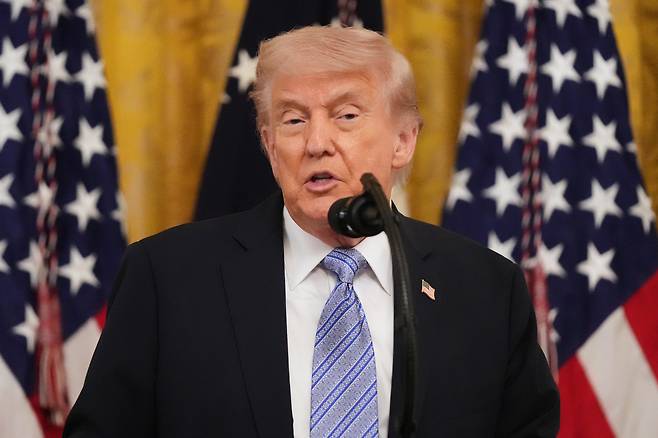
Meanwhile, US President Donald Trump publicly linked the incident to Iran and renewed calls for South Korea to join a US-led effort to reopen the waterway.
In a post on Truth Social, Trump claimed Iran had fired at vessels of “unrelated nations,” including a South Korean cargo ship, in connection with an operation dubbed “Project Freedom,” and suggested that Seoul should participate in the mission.
Project Freedom refers to Washington’s recently launched initiative to facilitate the movement of commercial vessels stranded in the strait that accounts for roughly one-fifth of global oil shipments.
Trump’s renewed call adds pressure on Seoul, which relies heavily on the waterway for energy imports while facing the risk of deeper involvement in a volatile regional conflict. The move also comes amid growing concerns in Seoul over potential strains in the decades-old alliance, as the two sides navigate sensitive issues such as South Korea’s pursuit of nuclear-powered submarines and broader defense roles.
A Cheong Wa Dae official said the authorities are actively participating in international efforts to stabilize global maritime logistics and are reviewing US proposals related to the Strait of Hormuz, including Project Freedom, in close consultation with Washington, taking into account those principles, the security posture on the Korean Peninsula and domestic legal procedures.
A Seoul-based expert said the situation underscores the difficult balancing act confronting the South Korean government.
“This is not simply a maritime accident, but a case that shows how US-Iran tensions over the Strait of Hormuz can directly affect South Korea’s energy security and maritime transport security,” said Yu Ji-hoon of the Korea Institute for Defense Analyses.
He cautioned that the cause of the explosion and the responsible party remain unclear, stressing that Seoul should prioritize fact-finding over prematurely characterizing the incident as an attack.
Yu said Trump’s remarks appear aimed at reinforcing the notion that South Korea is not a neutral bystander in the Hormuz crisis, while simultaneously increasing pressure for allied participation in US-led operations.
“For South Korea, the Strait of Hormuz is a critical sea lane directly tied to oil and gas imports, making it difficult to remain a bystander,” he said. “However, participation in military operations could lead to deterioration in relations with Iran, increased risks to South Korean vessels and nationals, and domestic political controversy, requiring a cautious approach.”
He added that responding to the US calls before confirming facts could undermine South Korea’s decision-making autonomy.
“Being asked to take military action before the facts are clearly established risks South Korea losing the initiative and being drawn into a US-driven strategic framework,” he said.
Yu suggested that Seoul instead pursue a calibrated response focused on noncombat contributions, such as information sharing, maritime surveillance and coordination with allies, while strengthening protective measures for South Korean vessels.
“The key issue is not whether South Korea can remain indifferent to the Hormuz crisis, but that it should not rush into military decisions amid uncertain facts,” he said.
“Seoul must balance alliance cooperation with the protection of its people and vessels, guided by objective evidence and national interest rather than political pressure.”
Copyright © 코리아헤럴드. 무단전재 및 재배포 금지.