In 'K-Everything,' Daniel Dae Kim wants you to look past the Korean hype
전체 맥락을 이해하기 위해서는 본문 보기를 권장합니다.
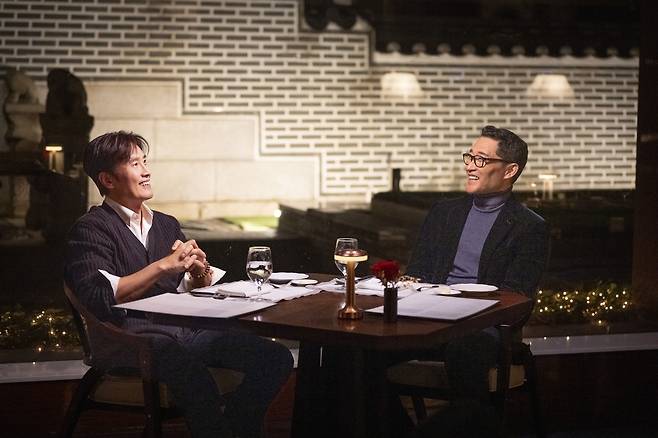
Kim hosts and executive produces, and the guest list runs deep. There's PSY (a.k.a the "Gangnam Style" guy), Lee Byung-hun of "Squid Game," Kang Min-goo of three-Michelin-starred Mingles in Seoul, and the producers behind "Golden," the breakout hit from Netflix's "KPop Demon Hunters."
The values I grew up with weren't necessarily American values. They were my parents'.
이 글자크기로 변경됩니다.
(예시) 가장 빠른 뉴스가 있고 다양한 정보, 쌍방향 소통이 숨쉬는 다음뉴스를 만나보세요. 다음뉴스는 국내외 주요이슈와 실시간 속보, 문화생활 및 다양한 분야의 뉴스를 입체적으로 전달하고 있습니다.
K-pop tracks on the Billboard Hot 100. K-dramas locked into Netflix's global charts. K-beauty products stacked across Sephora. K-barbecue joints drawing lines around the block all across the globe.
The "K-" prefix is obviously doing a lot of work these days, drumming up hype every time it lands somewhere new. But setting aside the label, what are the forces actually powering it all? And what does everyday life look like for the people behind it?
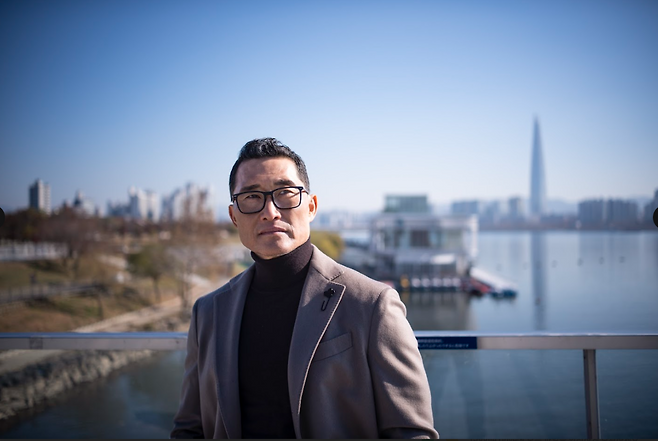
That's the question Daniel Dae Kim has spent the past year chasing. Premiering May 9 on CNN International with Hyundai Motor as exclusive sponsor, "K-Everything" is a four-part travel series that follows the actor across Korea as he digs into the country's pop, drama, beauty and food industries.
Kim hosts and executive produces, and the guest list runs deep. There's PSY (a.k.a the "Gangnam Style" guy), Lee Byung-hun of "Squid Game," Kang Min-goo of three-Michelin-starred Mingles in Seoul, and the producers behind "Golden," the breakout hit from Netflix's "KPop Demon Hunters."
You almost certainly know the man. Kim, 57, has been a fixture in Hollywood for more than three decades, in front of the camera and, increasingly, behind it. The resume runs from "Lost" and "Hawaii Five-0" through last year's Tony-nominated turn in David Henry Hwang's "Yellow Face." He also runs the production company 3AD, which produced ABC's "The Good Doctor," adapted from a 2013 Korean TV series of the same name.
Born in Busan, Kim left for the US at age 1 and grew up in New York and Pennsylvania. In the past few years, he has been circling back to the country of his birth: In 2024, he shot the Prime Video spy thriller "Butterfly" across more than 20 Korean cities, and that same year, was named an honorary citizen by the city of Seoul.
"It was never far from me," Kim says of Korea. "I was reminded of Korea every day, literally, through the food my mom would cook." It went deeper than that, he adds. The values at home, the rhythms, the expectations, all of it was shaped by a Korea his parents had carried with them from decades earlier.
The interview was conducted via video call on March 18, with Kim in New York. It has been edited for length and clarity.
Q. "K-Everything" -- bold title, given how much that prefix gets thrown around these days. What's the show actually trying to do?
A. What the producers and I wanted to do was highlight Korea for the prominent culture that it is. It's a country roughly the size of New Jersey, and yet the influence it has on the world stage is significant. So we wanted to go a little deeper behind the tongue-in-cheek headline and look at the driving forces, some of the dynamics in the country that got it to this point.
I think it's important for people who don't know anything about Korean culture, because they get their first introduction to all the things that make it special. And even for those who do know it — the so-called K-experts — I think there's something in there that will be entertaining, and maybe something they'll learn.
Q. Which corners of Korean culture did you focus on, and how did you map out the four episodes?
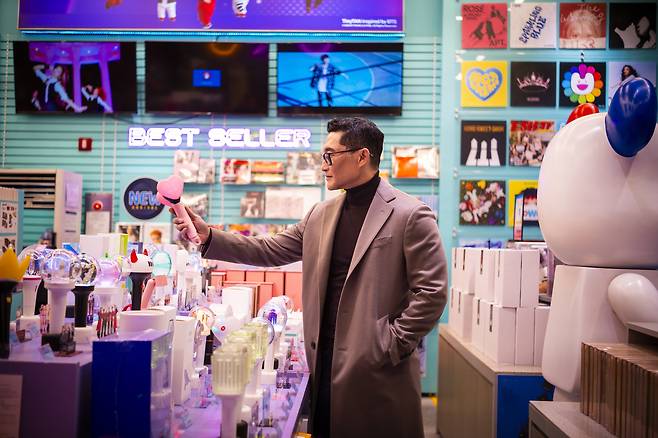
A. Four episodes: K-pop, K-drama, K-beauty and K-food. We deliberately marked off those areas because those are the ones having an impact around the world in a new and different way. For the K-pop episode, we interviewed PSY and some up-and-coming bands from The Black Label, and talked about the journey of becoming a K-pop star, what it means now to be world-famous as a Korean. We also talked about the downside: how competitive it is, how the success stories don't mean everyone gets to enjoy that success.
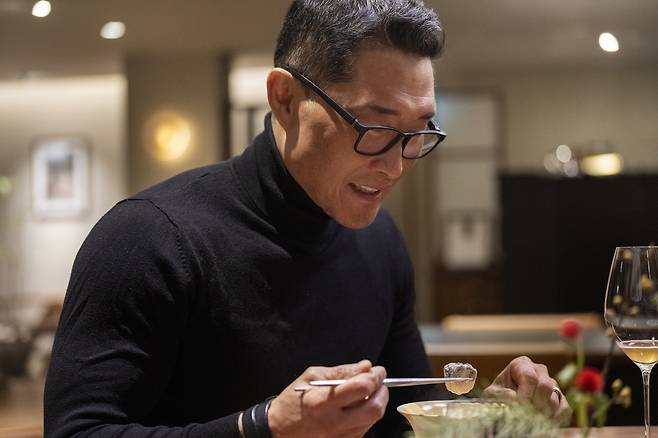
For the food episode, we spoke with chefs running everything from three-star restaurants to mat-jip, the neighborhood spots locals swear by. We went to a kimchi festival. We dug into the importance of jang(Korea's traditional fermented pastes and sauces). When I was a kid, nobody outside Korea really knew Korean food. Now you say "kimchi" and almost everyone in America knows what you're talking about, and they're trying to tell you how healthy it is, how it's a probiotic. We've come a long way.
Q. You were born in Busan and left when you were 1. Growing up in Pennsylvania, how did Korea actually live in your head? Close to home, or more abstract?
A. It has shifted, but it was always there. We ate Korean food I'd say 70 percent of the time at home, and my poor mom was cooking constantly. Korean food wasn't popular in Pennsylvania at the time, so she was learning how to make every dish from scratch. If she didn't have the right ingredients, she'd improvise with American ones. Our jajangmyeon (black bean noodles) didn't necessarily have the right noodles, the sauce wasn't as rich, but it was the best she could do.
The values I grew up with weren't necessarily American values. They were my parents'. Values they learned in Korea 50, 60 years ago. Those aren't even modern Korean values anymore. So I had this hybrid upbringing as a gyopo (a Korean raised abroad): neither modern Korean nor modern American.
Q. Anything in Korea that you wish more people knew beyond the usual travel-guide stuff?
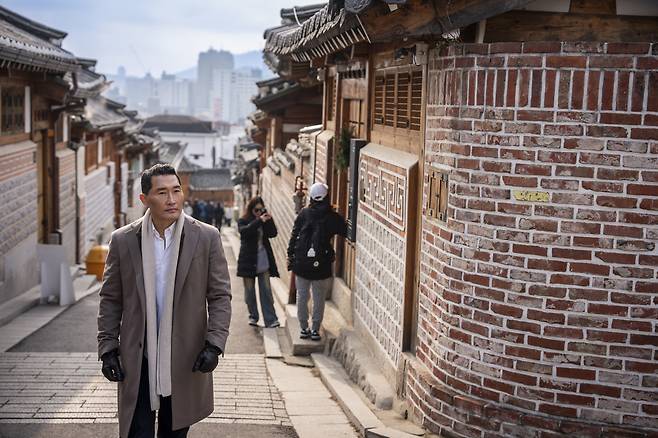
A. Honestly, I think Korea is so modern. There are little things in the society that make life so much easier. The safety doors at every subway platform — you don't have the kind of incidents you read about in America, where someone gets pushed onto the tracks. At a cafe, you can put your phone on the table to hold your seat and walk over to order. That doesn't happen anywhere else.
There's also a much more collective sense of care for each other. There was no controversy about masks during the pandemic. People wear them because they're considerate of others. It's not about my rights; it's about how you affect other people. That's a different philosophy, and one I prefer.
Q. You've spent years pushing for Asian American representation in Hollywood. But "Butterfly" and now "K-Everything" feel like a different project — pulling Korean stories outward rather than carving out space within Hollywood. Same mission, or is there tension between the two?
A. They may be heading in slightly different directions, but they're part of the same mission. What I want to do is bridge cultures. If we're going to understand one another, we need to be exposed to each other's culture — to get accustomed to it, to learn it isn't anything to be threatened by. The idea that if you don't look like us, you're not one of us — that's what I'm trying to get past. The more I travel, the more I see there's so much more that unites us than divides us.
Q. Are you consciously pulling toward Korean stories now in a way you weren't before?
A. Absolutely. The entertainment landscape is crowded, and it's important for anyone working in it to speak to their authentic experience. Being Korean American is mine. Anything I can do to create understanding between two cultures I care this deeply about, I'm going to try. And not just between America and Korea — Korea and Europe, anywhere else.
Q. Ten years ago, the idea of "Squid Game" or "Parasite" going global the way they did would have been unthinkable. The opportunity is real, but so are the questions — too much Korean content chasing the same audience, pressure on creators to cater to overseas viewers. Where do you see the upside, and what's worth being careful about?
A. You hit it on the head with authenticity. For every culture and every producer, there's a question of whether you're telling a story from your heart or telling one because you want it to sell. That's an age-old dilemma. Korea's success raises that question for Korean creators too: How do you keep going in a way that's still authentic but expands what Korean entertainment can be? You're going to have hits and you're going to have misses.
But what's important is that when there's a major Korean project — film, TV or music — people pay attention around the world now. That wasn't the case before. That reputation was hard won. It's a testament to the resilience and persistence of Korean people. They didn't stop. That's what gives me hope.
Q. Practical advice for Korean actors and crew eyeing a crossover to Hollywood?
A. There's never been a better time to leave your native country and test the waters somewhere else. But to expect the same level of success internationally — that might be an over-expectation. So bring the same work ethic.
And do the work on the language. Even as someone who speaks perfect English, the roles I can play in America are limited because of what I look like. If you have the additional barrier of language, that creates more limits. The same is true for me in Korea. My Korean is far from perfect, so I'm never going to play a native Korean. I'd have to play a gyopo, or a role with some international flavor built in. Who knows, with AI, in five years language might not matter at all. We may all be simultaneously translated. But right now, it still matters.
Q. Anything about "K-Everything" we haven't touched on?
A. Just a sense of pride. One of the things I really took away from the entire series was how proud Koreans are of who they are and what they've been through over the past 100 years — colonization, war — and how the country has emerged from all that in three generations to become as influential as it is. It says a lot about the strength of the Korean people. I was reminded of that throughout the whole shoot.
"K-Everything" premieres Saturday on CNN International, with all four episodes streaming on HBO Max.
Copyright © 코리아헤럴드. 무단전재 및 재배포 금지.