Why the 3 red dots? Inside the 'Perfect Crown' royal wedding
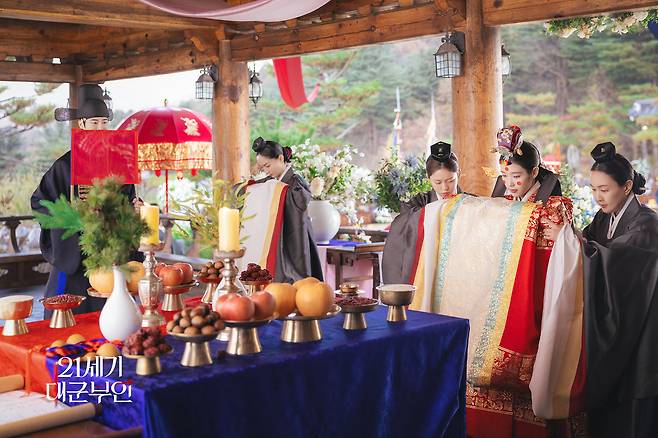
In episode seven of “Perfect Crown,” aired on May 1, Seong Hui-ju (played by IU, also known as Lee Ji-eun) finally marries Grand Prince Ian (Byeon Woo-seok).
The romantic comedy is set against the backdrop of a fictional constitutional monarchy in Korea, and the grand wedding ceremony offers a brief glimpse into the ritual and its many layers.
Here’s a closer look at the traditional Korean elements woven into the scene, and the significance behind their inclusion.
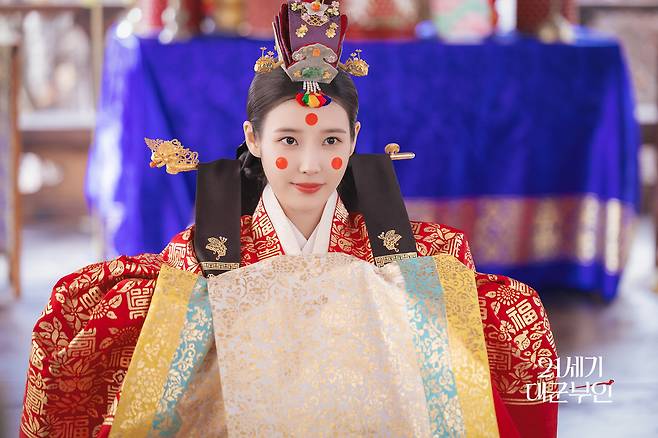
The bride's 3 red dots
On the bride’s face, small crimson dots on both cheeks and one on the forehead stand out. This is yeonji gonji. The cheek markings are called yeonji, while the dot between the brows is gonji.
The red pigment is believed to highlight the natural flush of youth, working as a visual symbol of vitality and new beginnings.
At the same time, the color carries older meanings. Traditionally, red was believed to repel misfortune. Folklore holds that wandering spirits, especially those of the unmarried, are averse to the color, making it a form of protection on a wedding day, according to the National Folk Museum of Korea.
While its exact origins are unclear, historical records suggest that women of the Silla Kingdom (57 BC-935 AD), and figures in Goguryeo (37 BC-668 AD) tomb murals from as early as the fifth century appear with tinted cheeks and lips.
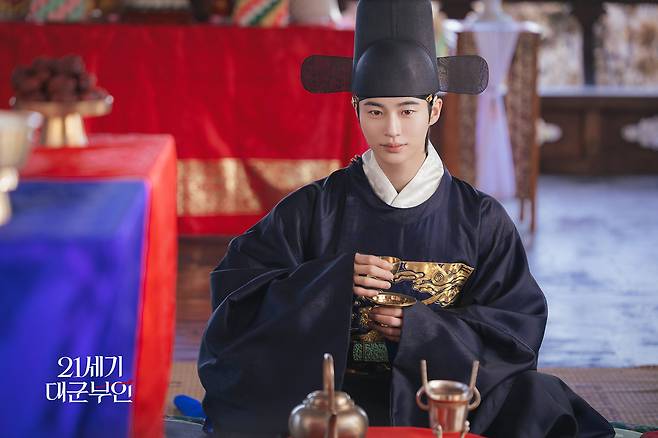
The groom's wooden goose
As Grand Prince Ian walks into the ceremony, he carries something carefully wrapped in red cloth: a wooden goose.
The goose has long been seen as a symbol of marital fidelity in Korean tradition. Geese typically mate for life, representing a promise of enduring love and constancy. The idea is simple: like the goose, a couple is meant to remain devoted to one partner for a lifetime.
In earlier times, a real goose may have been used in wedding rites. Over time, as that became impractical, it was replaced by a wooden carving. Traditionally, a designated attendant would carry it, and the groom would present it to the bride’s family. If you look closely, the goose later appears by Seong’s side.
Behind the red screen
At one point, as Seong fumbles slightly, Grand Prince Ian lifts a piece of red silk to cover his face, a hint of a smile slipping through.
In traditional Korean weddings, this face covering is known as a saseon, or poseon, literally meaning “a fan made of silk.” It functions as a kind of portable screen, held in both hands to shield the groom’s face as he walks or rides.
Historically, the screen helped block wind and dust during the groom’s journey to the bride’s home. It may also have carried a more social purpose. Scholars suggest that, before the ceremony, onlookers would tease the groom, trying to make him laugh, and the screen helped him keep a composed expression, preserving the formality of the ceremony.
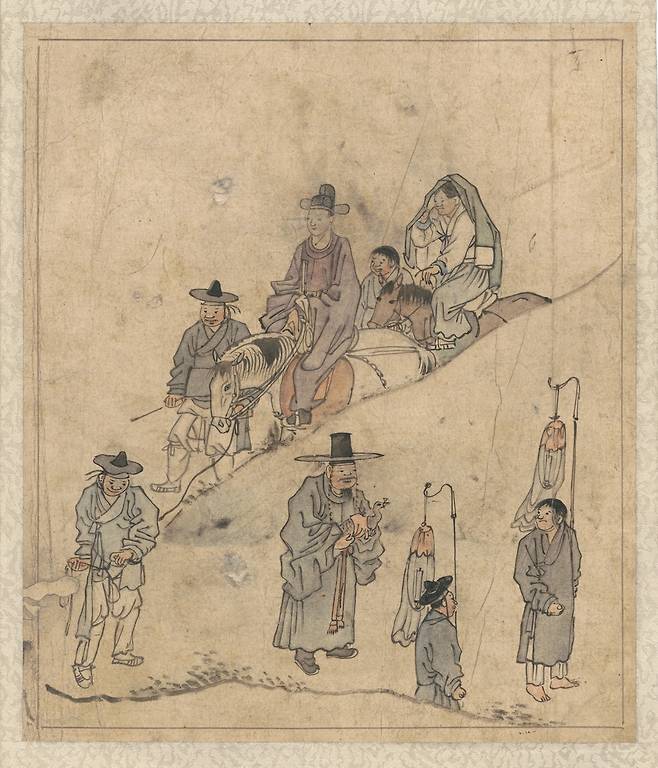
The journey to the bride
Earlier details, such as the wooden goose and silk screen, point to a key aspect of traditional Korean weddings: the groom's journey to the bride’s home.
Though customs varied by region and period, wedding ceremonies would typically take place at the bride’s house. The groom would set out in the late afternoon, often traveling on horseback with an entourage. Given the timing, lanterns and torches were essential, lighting the procession along the way.
After the wedding, he would stay at the bride’s home for a short period, sometimes a night, sometimes several days. Only then would the bride leave, carried in a ceremonial palanquin to her new home.
Royal weddings followed a different protocol, depending on status. Rather than traveling to the bride’s family home, a king or royal groom would welcome his bride through a formal procession, bringing her from a designated residence or palace annex into the main palace.
"Perfect Crown" is available for streaming on Disney+ internationally.
Copyright © 코리아헤럴드. 무단전재 및 재배포 금지.