Parties clash over security adviser's remarks as alliance row deepens
전체 맥락을 이해하기 위해서는 본문 보기를 권장합니다.
Senior People Power Party spokesperson Park Sung-hoon said in a statement that "after the unification minister carelessly exposed the location of a North Korean uranium facility — a key piece of intelligence shared between allies — the US began restricting the core information it provides to South Korea," arguing that "the most basic trust between allies has been broken."
Democratic Party floor spokesperson Baek Seung-a said in a Saturday written briefing that "the People Power Party is fixated on politicizing diplomacy and security issues as part of its election strategy," adding that "using foreign and security policy as a campaign tool goes beyond irresponsibility and amounts to an act that undermines national interest."
이 글자크기로 변경됩니다.
(예시) 가장 빠른 뉴스가 있고 다양한 정보, 쌍방향 소통이 숨쉬는 다음뉴스를 만나보세요. 다음뉴스는 국내외 주요이슈와 실시간 속보, 문화생활 및 다양한 분야의 뉴스를 입체적으로 전달하고 있습니다.
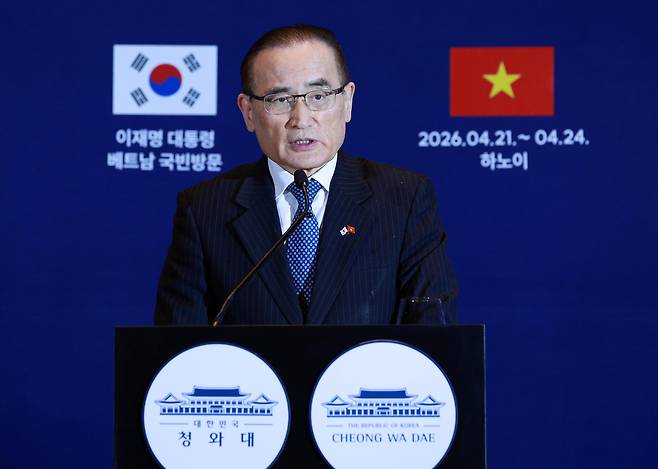
A political clash between rival parties over the state of the South Korea-US alliance intensified over the weekend, as disputes over National Security Adviser Wi Sung-lac’s remarks fueled concerns about trust between Seoul and Washington.
The main opposition People Power Party escalated its criticism Sunday, calling the situation a “security disaster.” Senior spokesperson Choi Bo-yun said in a statement that Wi’s Thursday reference to efforts to return ties to a “normal” state amounted to an acknowledgment of serious discord in the alliance. Choi also blamed the Lee Jae Myung administration for what she described as a breakdown in trust.
Since Friday, the main opposition has argued that the ruling bloc effectively admitted the alliance was "not normal." The ruling Democratic Party of Korea countered that the People Power Party was trying to drive a wedge in the alliance for political gain ahead of local elections in June.
Earlier, Wi told reporters during a briefing in Hanoi on Thursday that Seoul is in consultations with Washington to “return to a normal state of cooperation as soon as possible,” after the US took issue with Unification Minister Chung Dong-young’s remarks on a uranium enrichment site in Kusong and moved to limit intelligence sharing. Wi said the allies are seeking to bridge a gap in how they interpret the source of Chung’s remarks. Washington has treated them as a disclosure of shared intelligence, while Seoul insists they were based on publicly available information.
Wi also said in Hanoi that US concerns over alleged discriminatory regulations targeting Coupang, raised in a protest letter by Republican lawmakers, are affecting Korea-US security consultations. He described the issue as primarily corporate in nature but acknowledged it has spilled over into bilateral discussions.
Rival parties have since jumped on Wi’s remarks and the broader controversy to trade accusations over responsibility for the strain in the alliance.
On Saturday, People Power Party chair Jang Dong-hyeok argued in a Facebook post that Wi's comments amounted to an admission that the bilateral relationship is “not normal.”
Jang described the comment as “frank acknowledgment that the Korea-US alliance, the core pillar of security on the Korean Peninsula, is being shaken,” adding that “the alliance cannot be sustained by avoiding the problem.” He called for efforts to restore trust with Washington as well as Chung's dismissal.
Senior People Power Party spokesperson Park Sung-hoon said in a statement that “after the unification minister carelessly exposed the location of a North Korean uranium facility — a key piece of intelligence shared between allies — the US began restricting the core information it provides to South Korea,” arguing that “the most basic trust between allies has been broken.”
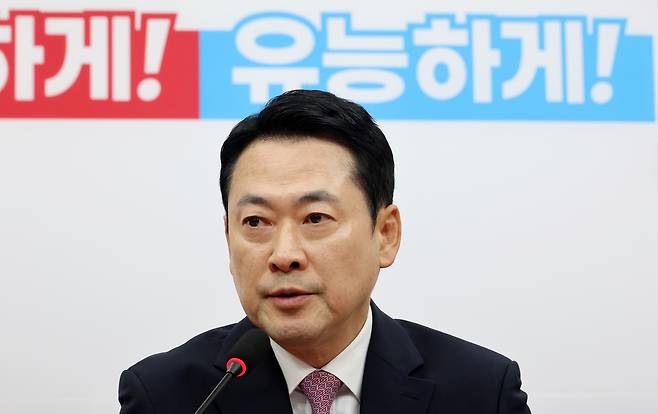
He added that “it is shocking that diplomatic friction surrounding the Coupang issue is obstructing key security negotiations, including nuclear submarine fuel supply and uranium enrichment rights,” calling for a sweeping overhaul of the government’s foreign and security team.
The Democratic Party pushed back, accusing the People Power Party of exploiting foreign and security issues for electoral gain ahead of the upcoming local elections.
Democratic Party floor spokesperson Baek Seung-a said in a Saturday written briefing that “the People Power Party is fixated on politicizing diplomacy and security issues as part of its election strategy,” adding that “using foreign and security policy as a campaign tool goes beyond irresponsibility and amounts to an act that undermines national interest.”
Baek also targeted Jang’s recent 10-day visit to the US, saying he had “invited criticism for fruitless diplomacy” and argued the trip was tied to local elections, questioning whether “diplomacy has been reduced to a political tool.”
Democratic Party spokesperson Jang Yoon-mi, on the same day, rebutted the People Power Party’s interpretation of Wi’s remarks, calling it “a typical example of outdated politics that prioritizes partisan conflict over national security by distorting comments that were never made.”
She claimed Wi’s remarks reflected “a commitment to stably manage pending issues between Seoul and Washington,” and urged the People Power Party to “stop exaggerating and distorting the situation in ways that could undermine the alliance.”
Vice Foreign Minister for Strategy and Intelligence Jeong Yeon-doo also said Friday after talks in Washington with Under Secretary of State for Political Affairs Allison Hooker that both countries are working toward “normalization,” while acknowledging that discussions are ongoing and the outcome remains uncertain. A senior US official, meanwhile, stressed that Washington expects partners to safeguard sensitive information shared through confidential channels.
Copyright © 코리아헤럴드. 무단전재 및 재배포 금지.