Ha Chong-hyun’s radical practice comes into full view in San Francisco
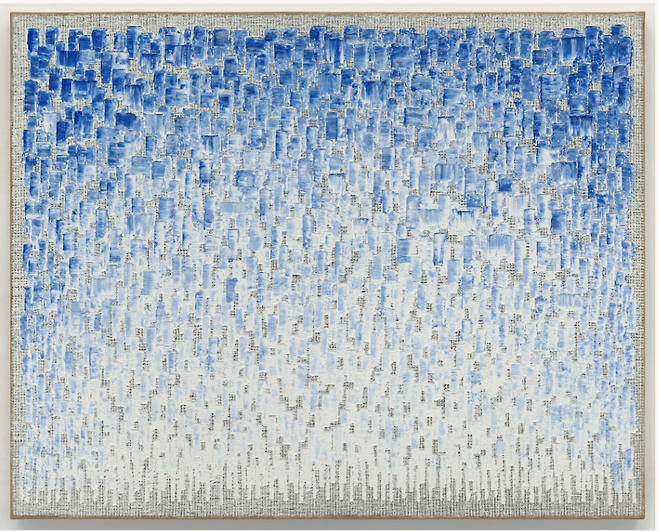
The Asian Art Museum of San Francisco will shed light on the leading dansaekhwa figure Ha Chong-hyun in a retrospective this September.
Though Ha is widely known for dansaekhwa — a Korean painting movement also known as monochrome-style painting — the exhibition seeks to highlight the breadth of his practice.
Now in his later years, Ha's decadeslong career traces the evolution of modern Korean art while reflecting the country’s turbulent history and rapid transformation.
“We wanted to examine what Ha Chong-hyun represents not only within Korean contemporary art but also in the global art scene. Although he is a leading dansaekhwa artist who is still active, he has never had a full retrospective in the US,” said Lee So-young, director of the museum, during a press conference in Seoul on Tuesday.
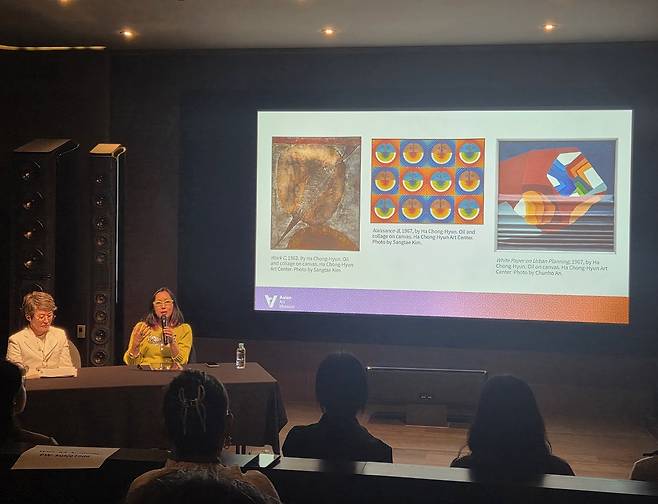
“In San Francisco, where about 40 percent of the population has Asian heritage, we expect the exhibition to resonate strongly and draw significant interest.”
The exhibition will mark the first large-scale solo presentation of a Korean artist to be held at the museum’s Pavilion, a newly opened space dedicated to contemporary art, according to the museum.
Curated by Kim Sun-jung, artistic director of Art Sonje Center, the exhibition will span the artist’s career from its early beginnings to the present, highlighting how his work evolved alongside Korea’s modern history.
It pays particular attention to Ha’s experience as a witness to the Korean War, the rapid industrialization that followed it, and the late 20th century, which is when Korean art began gaining international recognition.
“Ha once described himself as ‘an artist in constant transformation,’” Kim said.
“The exhibition will present his wide-ranging practice from art informel works shaped by the trauma of the war, to paintings inspired by Korea’s traditional ‘obangsaek' color system, to works reflecting urban expansion during industrialization as well as avant-garde pieces responding to political repression.”
At its core will be the renowned 1970s “Conjunction” works that brought him international attention and later identified him as a dansaekhwa artist
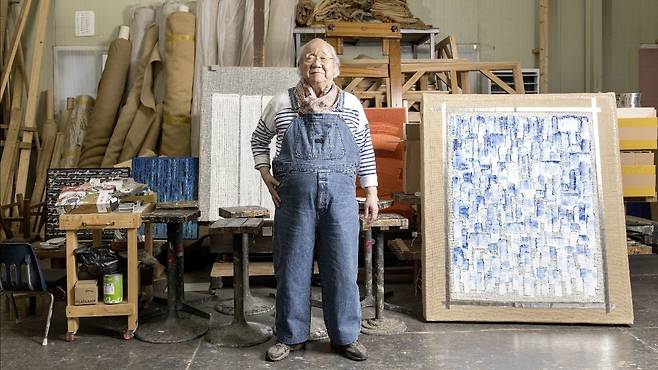
The series overturned the concept of painting using canvases made of hemp cloth.
His so-called “baeapbeop,” literally meaning "back-pressure technique,” involves pushing thick layers of paint through the back of the burlap canvas so that the paint oozes through, creating a unique texture on the surface.
Kim, who previously curated the artist's two exhibitions in Seoul and Venice, said her understanding of the artist deepened after encountering his solo show at the National Museum of Modern and Contemporary Art, Korea, in 2012.
“I was struck by the sheer diversity of his practice, as he has often been broadly known for his dansaekhwa paintings,” she said.
The exhibition at the Asian Art Museum will feature around 50 works and will run from Sept. 25 to Jan. 25, 2027.
Copyright © 코리아헤럴드. 무단전재 및 재배포 금지.