Seerslab’s AI glasses aim to fit in, not replace smartphones
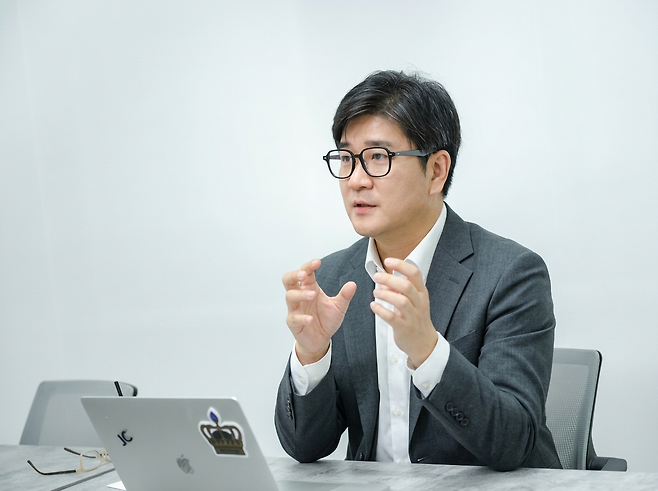
Artificial intelligence-powered smart glasses are moving closer to the mainstream, but not every company is trying to replace the smartphone.
“We didn’t start with that idea,” Michael Chong, chief executive of Seerslab, said in an interview with The Korea Herald in Seoul. “We wanted to see if AI could fit naturally into daily life — like a normal pair of glasses.”
During a demonstration, the company’s glasses identified ingredients on a table and suggested recipes within seconds via voice command — a glimpse of how AI could integrate into everyday routines.
As global tech giants and Chinese manufacturers race to position smart glasses as the next computing platform, Seerslab is taking a different path: focusing on usability rather than disruption.
The philosophy that focuses on usability underpins AInoon, Seerslab’s AI-powered smart glasses. Unlike many rivals aiming to replace smartphones, the device is designed to work alongside them — and to be worn the whole day through.
“The big companies are trying to replace smartphones,” Chong said. “We’re not.”
The distinction shapes how Seerslab defines both the product and the market. Rather than betting on a breakthrough moment, the company is focused on gradual adoption — how users integrate devices into existing habits.
“Before it’s a device, it’s glasses,” Chong said, likening the category to fashion rather than electronics. Instead of converging on a single dominant product, the market is likely to fragment across price points, styles and use cases.
The broader market, however, is accelerating rapidly.
Meta holds more than 70 percent global market share, while Chinese manufacturers including Xreal, Xiaomi, RayNeo and Viture are expanding aggressively, backed by manufacturing scale and pricing power.
Global shipments are projected to reach 22.67 million units this year, up more than 50 percent on-year, with Chinese firms expected to account for nearly half. Government subsidies and a strong manufacturing ecosystem allow them to move quickly from concept to production.
Seerslab’s AInoon, priced at 395,000 won ($269), sits above low-cost alternatives but within the reach of mainstream consumers. Its integration with local platforms such as Kakao services and navigation apps reflects a focus on everyday usability in Korea.
Seerslab’s strategy is rooted in its origins.
The company built its early business in augmented reality, developing vision-based AI technologies used in mobile apps and global platforms, reaching tens of millions of users. It also worked with entertainment companies, including K-pop collaborations.
That market narrowed as large platforms internalized those capabilities, a shift accelerated by generative AI. Seerslab pivoted into hardware but retained its focus on user experience.
“The hardware alone doesn’t create value,” Chong said. “What matters is the services, the content, the ecosystem.”
The company has developed software tools for third-party developers and is expanding integration with widely used services, allowing users to check messages, navigate or search nearby information without taking out their phones.
Despite rapid growth, the category remains in its early stages.
Battery limits, heat, weight and viewing angles remain technical hurdles. Most devices still rely on smartphones, while use cases often duplicate existing mobile functions.
Privacy is another concern. “These devices can see what you see and hear what you hear,” Chong said, noting risks involving personal and corporate data.
Seerslab encountered such constraints early. Display-based augmented reality glasses proved difficult to commercialize due to high costs, battery limits and issues with prescription lenses.
The company simplified its approach. AInoon weighs about 30 grams — closer to conventional eyewear — with a design focused on long-term wearability.
“The goal is to make something people can keep wearing,” Chong said.
For now, the industry’s direction remains unsettled. But Seerslab is framing the question differently — not how far the technology can go, but how seamlessly it fits into daily life.
“Technology shouldn’t feel separate,” Chong said. “It should just blend in.”
Copyright © 코리아헤럴드. 무단전재 및 재배포 금지.