Korean telecom giants drop streaming services
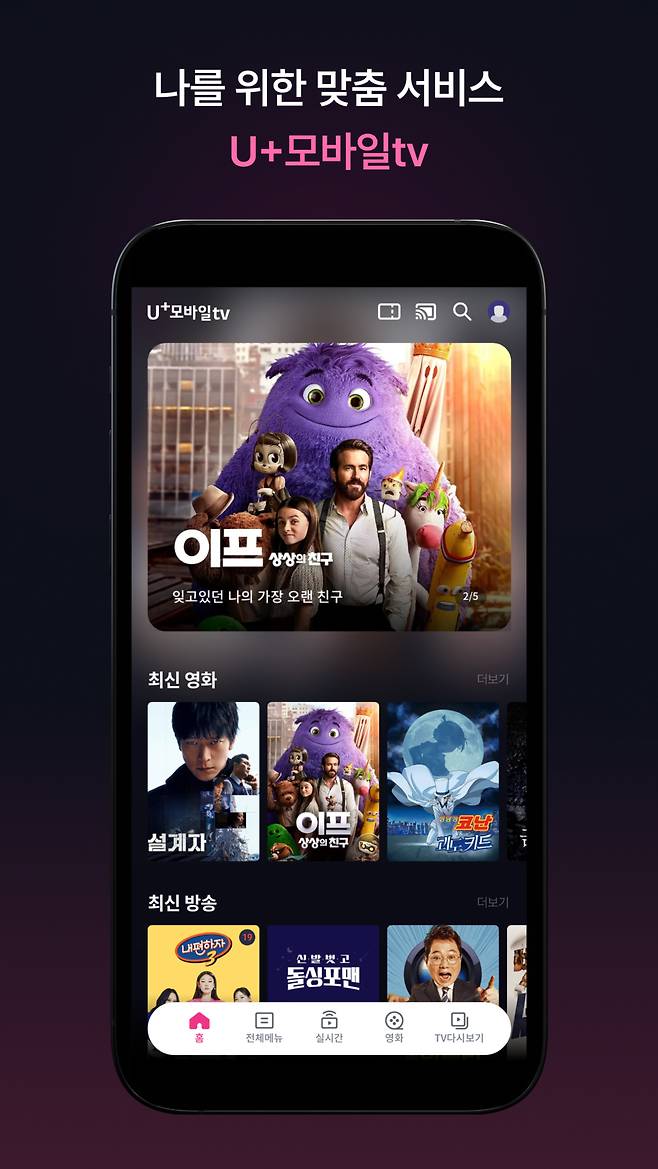
Korea’s leading telecom operators are pulling back from stand-alone streaming services, as rising costs and fierce competition have undercut the case for maintaining their own platforms.
The country’s three dominant carriers, LG U+, KT and SK Telecom, had entered the streaming market in recent years, aiming to secure subscribers and diversify revenue. But the strategy has proven difficult to sustain.
LG U+ is the latest to exit. The company said it would shut down U+ Mobile TV at the end of May, after halting new paid subscriptions and beginning a phased withdrawal of premium video-on-demand offerings. The company has also filed for regulatory approval to amend its terms of service ahead of the shutdown. U+ Mobile TV service, a mobile-first streaming platform, offered both live channels and video-on-demand programming.
The move follows earlier retreats across the sector. SKT’s Oksusu, launched in 2016 and once claiming about 9.5 million users, was merged with Pooq in 2019, laying the groundwork for what is now the local streaming platform Wavve. KT’s Seezn, introduced in 2019, was folded into Tving in 2022. By May, none of the three major telecom companies will operate a stand-alone streaming platform.
Currently, the three major carriers dominate South Korea’s telecom market, with SKT accounting for 38.7 percent of total mobile subscriptions as of 2025, followed by KT at 23.7 percent and LG U+ at 19 percent, according to data from the Ministry of Science and ICT.
The exits reflect mounting pressure from global competitors such as Netflix and the escalating costs of producing original content, a model that demands significant investment and a steady flow of new releases.
In response, telecom operators are shifting their focus to Internet Protocol Television, or IPTV, where they retain a structural advantage. Unlike stand-alone streaming services, IPTV is embedded within a television-based ecosystem, delivering live channels and on-demand programming through set-top boxes.
The new strategy emphasizes closer integration between IPTV and mobile services, such as LG U+ preparing to introduce U+tv Mobile, a companion app designed to enable cross-device viewing and remote control functions.
The telecom carriers are also moving toward greater integration across their IPTV services, launching an IPTV VOD gift voucher that can be used on all three major platforms: KT’s Genie TV, SKT's B tv or LG U+’s U+tv.
“Rather than building streaming audiences from scratch, telecom operators are betting on IPTV, where margins are more predictable, and retention strategies are already in place," said a media industry official, who requested anonymity.
According to data from the Korea Communications Commission, paid broadcasting subscriptions in Korea reached 36 million in the first half of 2025, with IPTV accounting for 21 million, or 59 percent of the market. Cable television followed with 12 million subscribers, or 33 percent, while satellite services made up the remaining 7 percent.
IPTV has long been a popular source of content consumption in Korea, having been supported by the country's advanced fiber-optic and 5G infrastructure, which enables high-quality streaming, as well as bundled service packages that combine television, mobile and broadband into a single offering.
However, data suggests that their growth has been slightly stunted recently, largely due to the rapid rise of global streaming platforms in the content industry.
KT had 9.5 million IPTV subscribers as of the end of 2025, up 0.9 percent from the previous year. SK Broadband had 6.7 million IPTV subscribers as of the end of last year, down 1.2 percent from 6.8 million the previous year. SK Broadband is a wholly owned subsidiary of SKT, serving as its core arm for fixed-line communications, media and data services.
During the same period, LG U+ recorded 5.7 million IPTV subscribers and 1.3 trillion won ($877 million) in revenue. While its subscriber base grew 2.9 percent from the year before, its revenue declined by around 60 million won year-on-year.
Copyright © 코리아헤럴드. 무단전재 및 재배포 금지.