Graphy Bets on Custom Clear Aligners[Expert Insight]
[NA Eun-kyung, Edaily Reporter] As the clear aligner market expands rapidly, customized design-based technology is emerging as an alternative to address the limitations of automation-driven treatment. Industry observers say future competitiveness will hinge not on convenience but on treatment precision.
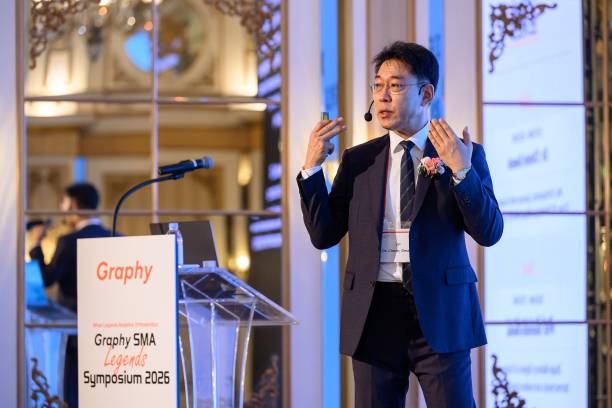
Gwack Choon, an advisory professor at Ajou University’s Graduate School of Clinical Dentistry and director of Barunee Orthodontic Clinic in Gimhae, has more than 30 years of clinical orthodontic experience. He has actively adopted digital orthodontics and 3D printing in practice. In an interview with Edaily, Gwack said the essence of clear aligner therapy lies not in the device itself but in treatment design. He emphasized that treatment outcomes depend on how precisely tooth movement is implemented for each patient.
South Korea’s clear aligner market is currently dominated by competitors using thermoforming systems, which account for more than 90% of the market, while domestic company Graphy holds less than 10%. These competitors rely on digital treatment planning software to automate both design and manufacturing. While the standardized process offers convenience, some clinicians point to limited room for physician intervention, making detailed customization difficult.
Gwack highlighted structural limitations of such automated systems. He said thermoforming systems have evolved with a focus on efficiency and convenience, resulting in extensive automation. As a result, there can be constraints in applying highly detailed treatment plans that reflect individual patient characteristics and the clinician’s intent.
In contrast, Graphy’s Shape Memory Aligner, or SMA, stands out for its customized design approach that assumes active physician involvement. Gwack said the Graphy system allows clinicians to directly incorporate their expertise and treatment philosophy into device design based on patient-specific treatment plans.
He added that experienced practitioners can apply and further develop diverse treatment approaches, which sets the system apart. Rather than simply using a device, clinicians can design and lead the treatment process. This may explain why a relatively high proportion of SMA users are orthodontic specialists.
These differences are often compared to ready-to-wear versus bespoke clothing. Thermoforming aligners, with their standardized processes and efficiency, resemble ready-made garments, while Graphy’s customizable approach is closer to tailored clothing designed for each patient.
Graphy’s SMA is also seen as addressing limitations of conventional thermoformed aligners. According to Gwack, traditional thermoplastic aligners tend to lose corrective force after a certain stage, limiting their effectiveness in complex tooth movements. In contrast, SMA materials activate shape memory properties at oral temperatures, delivering consistent force over time. This enables more stable outcomes in complex movements such as rotation, torque control, and vertical movement.
SMA-based devices are particularly advantageous for patients seeking to minimize or avoid attachments, small resin bumps placed on teeth to aid movement, as well as those aiming to shorten treatment duration or reduce the need for retreatment. In clinical practice, 20% to 30% of clear aligner patients undergo retreatment. SMA technology can help reduce this by improving the reproducibility of planned tooth movements.
Material properties also differentiate the technology. Gwack noted that the oral environment involves high humidity, temperature fluctuations, and repeated strong chewing forces. He said Graphy’s resin maintains strength and dimensional stability under such conditions, while its shape memory properties ensure consistent orthodontic force over time. He added that reducing complex laboratory processes such as wire bending or welding has improved precision, contributing to high satisfaction among both clinicians and patients.
Looking ahead, Gwack expects the clear aligner market to be reshaped by a balance between automation and customization. As 3D printing and digital orthodontics advance, the importance of the design phase is increasing. He said competitiveness will depend more on the precision and reproducibility of treatment plans than on the device itself.
He added that 3D printing is no longer optional but essential, and that the shift toward digitally driven customized treatment will accelerate as the new standard in orthodontic practice.
나은경 (eeee@edaily.co.kr)
Copyright © 이데일리. 무단전재 및 재배포 금지.
- 삼성전자, 분기 매출 130조·영업익 50조 시대 열었다(상보)
- '예산 1600억 투입' 행사 간 김선태 "왜 데려왔냐" 말 나온 이유
- "택배·학원비 오르고 대리기사 '투잡' 사라질겁니다"
- “이번주 전쟁 종결 베팅”…비트코인 7만달러 돌파
- 수학여행 성폭행 사건 "충격적인 범죄"…한인 남학생 기소
- 트럼프 “하룻밤이면 이란 제거”…이란 “무례·오만한 망상”
- 삼성전자 50조 돈방석 앉나…어닝시즌 개막 기대감
- 李 "양도세 중과 유예 5월9일 신청까지 허용" …급매물 더 나올까
- 신현송 후보자의 유별난 '한국 주식 ETF' 사랑... 13.6억원어치 보유
- "김치통에 돈가스 26장 싸신 분 1등"...8천원 뷔페 사장님 '호소'