Japan’s Long-Term Play Contrasts With Korea’s Rapid Push
[이데일리 마켓in 박소영 기자] TOKUSHIMA, Japan — “Building a regional venture ecosystem takes around 20 years. Short-term results should not be expected.”
That was the message from venture capital investors in Japan when asked what advice they would offer South Korea, where policymakers have recently ramped up funding efforts to revitalise local economies.
Under President Lee Jae-myung’s push for regional development, local governments across Korea have begun launching large-scale funds. Gwangju and South Jeolla Province plan to establish a 30tn won investment fund, while Jeju Province has announced a 1.5tn won regional growth fund.
Experts say the increase in capital flowing into regional areas is a positive development, but warn that critical gaps remain—particularly in ensuring that investment translates into talent retention and real-world implementation.
They point to Japan, which began its regional revitalisation efforts roughly a decade earlier, as a useful reference. In Japan, venture capital firms often collaborate with large local corporations to establish funds and nurture startups tied to regional industries.
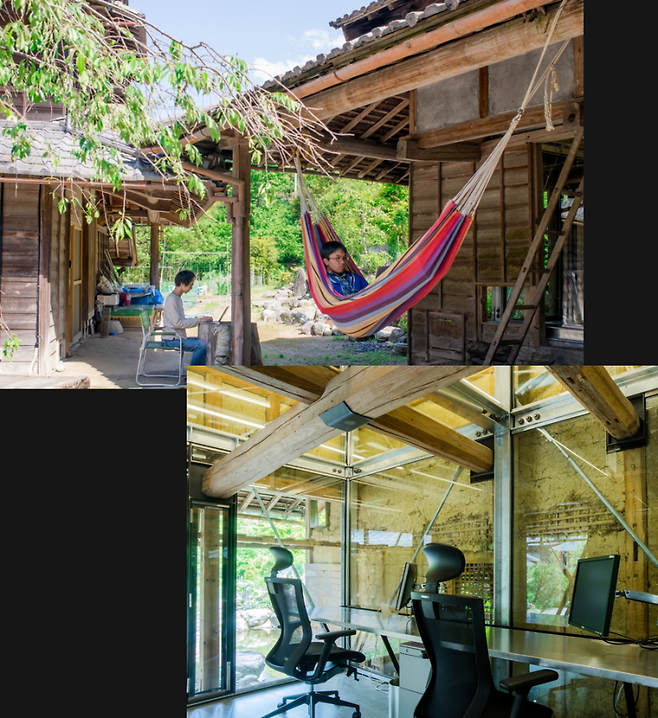
Otsuka Pharmaceutical, one of Tokushima’s flagship companies, invested 30mn dollar in 2024 as a limited partner in a fund managed by AN Venture Partners. The fund aims to foster global biotech companies based on Japanese scientific innovation. AN Venture Partners operates out of Tokyo and San Francisco, focusing on early-stage life sciences startups originating in Japan while targeting later-stage investments globally.
Samurai Incubate, a leading early-stage venture capital firm in Japan, runs “Startup Runway,” a programme designed to support regional startups. The initiative partners with local financial institutions, governments and venture firms to provide mentoring and operational know-how at no cost. It currently operates in seven regions across Japan and is set to expand to nine regions, involving 300 institutions, by this spring.
“Many regions have strong technology, talent and industrial bases, but lack the capital and networks needed to commercialise them,” said Kentaro Sakakibara, chief executive of Samurai Incubate. “Japan has a deep pool of regional manufacturing and deep-tech companies, but relatively few startups. We launched this programme to unlock that potential and create new growth drivers.”
Global Brain, another major Japanese venture capital firm, has also taken a regional approach. In addition to its Tokyo headquarters, it has established a team in Kyoto focused on deep tech, recognising the concentration of engineers and scientists in the Kansai region. The firm is preparing to launch a corporate venture capital fund and has been working with regional telecom operators and banks as limited partners.
“We continue to develop region-specific businesses by forming CVC funds with local stakeholders,” said Jiro Kamakura, general partner at Global Brain.
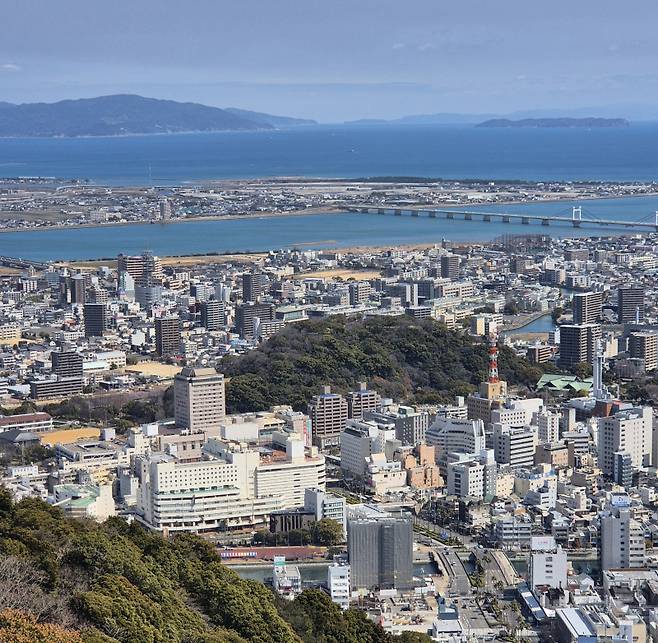
Japanese investors stress that attracting young talent and building sustainable local economies are essential for regional policy success. They point to Sabae, a city in Fukui Prefecture, as a model case.
After the decline of its eyewear industry weakened the local economy and drove young people away, Sabae introduced industry-academia collaboration programmes. The city has conducted around 200 to 250 joint research and technology development projects annually, while incorporating citizen proposals into roughly 100 out of 700 to 800 administrative initiatives.
The results have been tangible. Local companies have developed 14 products with global market-leading positions, along with 51 products and technologies ranked top in Japan.
“Rather than relying solely on capital-region models, regional financial institutions and companies must take a central role,” said a Japan-based venture capital executive. “More than policy design, what matters is sustained commitment and coordination between the public and private sectors.”
박소영 (sozero@edaily.co.kr)
Copyright © 이데일리. 무단전재 및 재배포 금지.
- 코스피·코스닥 하락 출발…삼전·하닉·삼천당 줄줄이 약세
- 외인이 ‘방패’, 국민연금은 힘못써…금융그룹 지배구조 도마 위
- 한동훈 "조국, 트럼프도 안하는 욕을" vs 조국 "강한 자기애, 우습다"
- “비트코인 10만달러 돌파할 것”…모건스탠리 코인 ETF 파장
- “돈가스 4000원, 순댓국 3500원”…돈 아끼는 ‘거지맵’ 등장
- '대패' 후 나서는 홍명보호 "브라질전 통해 위기 극복 실험했다"
- "XX 왜 찍어"...190cm 헤비급도 중2 담배 훈계했다가 '봉변'
- “음료 3잔 가져갔다”…알바생 ‘횡령’ 고소한 점주, 이유는
- 파월 “이란전에도 장기 인플레 기대 안정“…금리 인상 선그어
- "팔아도 남는 게 없어"…포장용기값 급등에 사장님들 '비명'