Should free subway rides for senior citizens be limited? Debate resurfaces amid rising costs
전체 맥락을 이해하기 위해서는 본문 보기를 권장합니다.
"How about restricting one or two hours of free rides during peak hours?" Lee said at a Cabinet meeting Tuesday. "It would not be easy to distinguish, as some elderly people commute at those times, but please look into ways to limit usage for non-essential trips."
"Public transportation systems in major countries are typically maintained with around 50 percent public funding," said Kim Sang-chul of Our Public Transportation Network. "Measures should focus on expanding demand through affordable fares and broader subsidies for vulnerable groups, including the elderly, youth, unemployed and low-income populations."
이 글자크기로 변경됩니다.
(예시) 가장 빠른 뉴스가 있고 다양한 정보, 쌍방향 소통이 숨쉬는 다음뉴스를 만나보세요. 다음뉴스는 국내외 주요이슈와 실시간 속보, 문화생활 및 다양한 분야의 뉴스를 입체적으로 전달하고 있습니다.
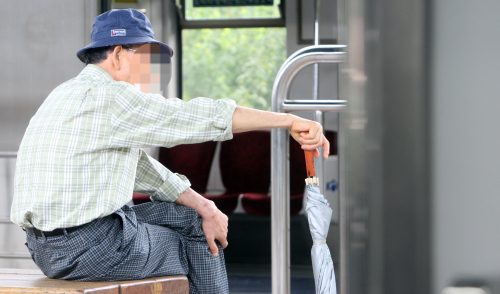
The debate over scaling back free subway rides for South Korea's senior citizens has returned to the policy agenda after President Lee Jae Myung asked ministers to examine limits on the benefit during rush hours.
“How about restricting one or two hours of free rides during peak hours?” Lee said at a Cabinet meeting Tuesday. “It would not be easy to distinguish, as some elderly people commute at those times, but please look into ways to limit usage for non-essential trips.”
The remarks are widely seen as a potential shift in the nationwide free transit program for those aged 65 and older, which has been offered without time limits since 1984. Any change would mark one of the most significant adjustments to the system in decades.
The issue has long been a political flash point, resurfacing during election cycles and drawing attention to mounting deficits at subway operators. It has also fueled tensions between labor, local governments and policymakers over how to fund public transit.
The debate is particularly acute in Seoul, where losses tied to the program are mounting. Seoul Metro reported 383.2 billion won ($256 million) in losses last year. Projections show the figure could reach 988.6 billion won by 2040 as the population ages.
Subway operators argued the system was introduced when those aged 65 and older accounted for about 4 percent of the population, compared with roughly 21 percent today, and say greater central government support is needed.
Data from Seoul Metro show passengers aged 65 and older accounted for 8.3 percent of riders during morning and evening rush hours last year, rising to 9.7 percent in the busiest morning period. Though peak times are not when elderly ridership is highest, officials see time-based limits as a possible first step toward broader changes.
The government is considering adjustments as part of efforts to stabilize public transportation finances, including raising the eligibility age, increasing state support and expanding user contributions.
“(The cost of free fares) should be addressed through a package including raising the eligibility age, central government support, local government efforts, and user contributions,” budget minister nominee Park Hong-keun said during a National Assembly hearing Monday.
Experts said time-based restrictions could offer a compromise between financial sustainability and social welfare, noting similar approaches in other advanced economies.
“There has been a need to balance the financial sustainability of the transportation system with the social value of free fares,” said Jeong Soon-dul, a professor of social welfare at Ewha Womans University.
Some critics warn the move risks portraying senior citizens as a burden at a time when many already face economic hardship. South Korea has one of the highest elderly poverty rates among members of the Organisation for Economic Co-operation and Development, reaching 35.9 percent in 2024.
Civic groups also argued that financial pressures should be addressed through increased public investment rather than reduced benefits, particularly as demographic changes may weigh on ridership over time.
“Public transportation systems in major countries are typically maintained with around 50 percent public funding,” said Kim Sang-chul of Our Public Transportation Network. “Measures should focus on expanding demand through affordable fares and broader subsidies for vulnerable groups, including the elderly, youth, unemployed and low-income populations.”
Copyright © 코리아헤럴드. 무단전재 및 재배포 금지.