From TV phenomenon to culinary boom: Korea's Michelin scene expands
전체 맥락을 이해하기 위해서는 본문 보기를 권장합니다.
Reflecting on the recognition, chef Ahn said, "It is an honor to be back here with fellow chefs and those in the food service industry after our hiatus. My team worked incredibly hard. As I've always said, rather than the number of stars, I am more concerned with our identity, the goals we want to achieve, our restaurant's direction and the overall dining culture. I am truly grateful."
Beyond the top-tier accolades, the guide also highlighted multiple chefs gaining visibility through popular food media. In total, 31 restaurants were awarded one Michelin star, with considerable attention going to chef Son Jong-won, who rose to national popularity through his appearance in Season 2 of "Culinary Class Wars."
이 글자크기로 변경됩니다.
(예시) 가장 빠른 뉴스가 있고 다양한 정보, 쌍방향 소통이 숨쉬는 다음뉴스를 만나보세요. 다음뉴스는 국내외 주요이슈와 실시간 속보, 문화생활 및 다양한 분야의 뉴스를 입체적으로 전달하고 있습니다.
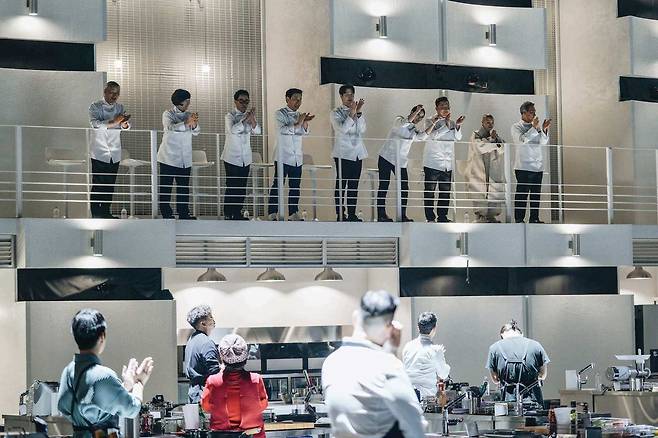
BUSAN — The landscape of South Korean gastronomy has undergone a dynamic shift, evolving from a culture rooted in value-for-money pragmatism to a fine dining powerhouse.
Fine dining has been relegated to the margins for several reasons in the past, including inaccessible pricing and reservations. Many Korean customers also prefer high-volume, immediate-gratification dining over exclusive and methodical, multi-hour tasting menus.
However, the debut of the Netflix phenomenon "Culinary Class Wars" has largely rewritten the script.
Following the show's broadcast, the Korean fine dining sector experienced a gold rush.
According to a sales analysis of 33 fine dining restaurants conducted by the Hankyung Media Group, revenue at Michelin one- to three-star restaurants jumped 23.3 percent year-over-year during the three weeks immediately following the show's broadcast in September 2024. Searches for "fine dining" also surged more than twentyfold during the first month of the show.
What initially appeared to be a short-lived post-show bump has since developed into a sustained trend. Demand has continued into 2026, majorly fueled by the success of the show's second season, "Culinary Class Wars Season 2." Currently, numerous Michelin-starred restaurants remain fully booked and are continuously sought after on social media, reflecting a level of reservation volume and virality rarely seen before the program's release.
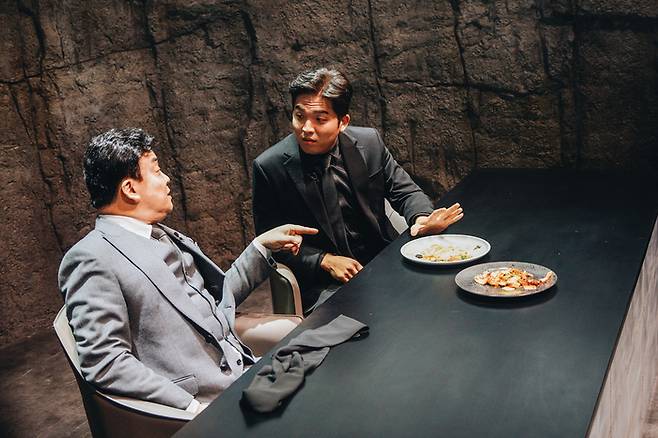
The continued rise in reservations suggests that fine dining has moved beyond its status as a niche luxury and entered the realm of broader public interest.
As curiosity grows, industry and public attention have turned to which restaurants would gain or lose stars in the latest edition of the Michelin Guide, including those run by chefs featured on the Netflix show. The Michelin Guide is a prestigious restaurant ratings system that gives out one to three stars to establishments that demonstrate exceptional cuisine and service.
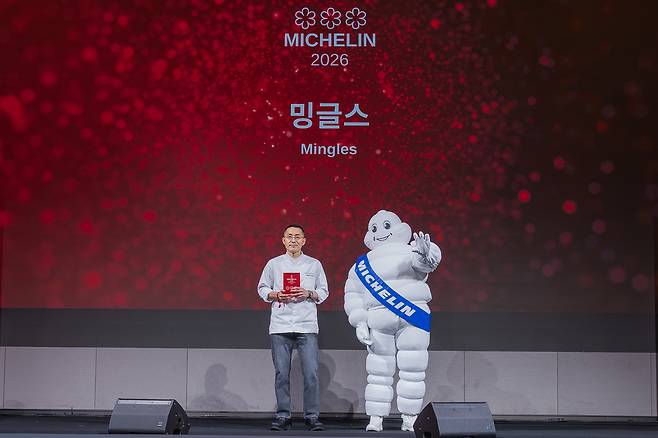
Amid growing interest, the latest Michelin-star selections for Korea were announced on March 5.
This year saw the highest number of new and promoted starred restaurants since the guide’s debut in Korea in 2017. At a ceremony in Busan, 233 restaurants were selected for the latest edition — 178 in Seoul and 55 in Busan.
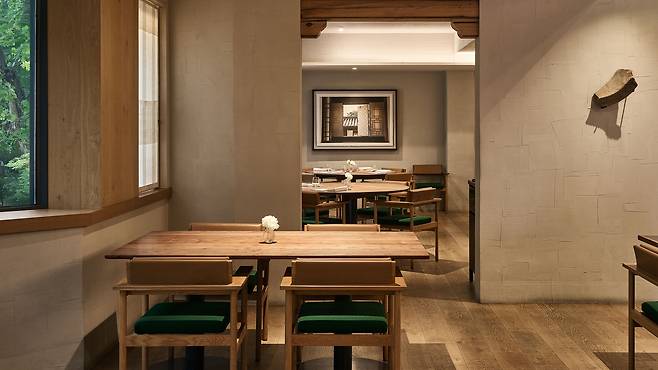
Among the biggest highlights was chef Kang Min-goo's Korean fine dining restaurant Mingles, which set history by retaining its three Michelin stars — the guide's highest rating — for the second consecutive year. The restaurant held two Michelin stars from 2019 through 2024 before being elevated to the three-star status in 2025. With this year's distinction, it remains the only three-star restaurant listed in the guide for Korea for the second consecutive year.
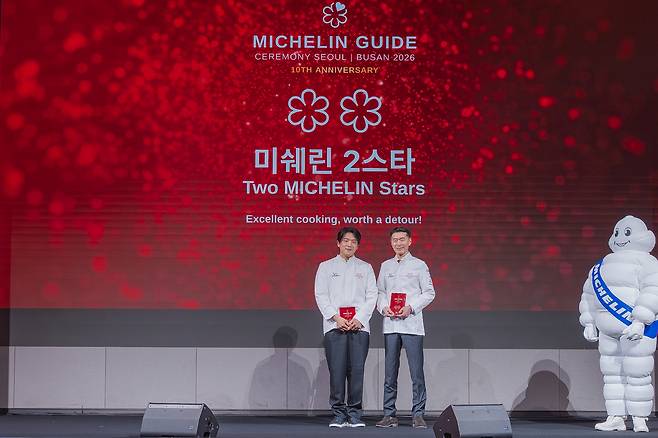
Meanwhile, Mosu, led by chef Ahn Sung-jae, the viral judge of "Culinary Class Wars," returned to the guide with two Michelin stars following its recent reopening.
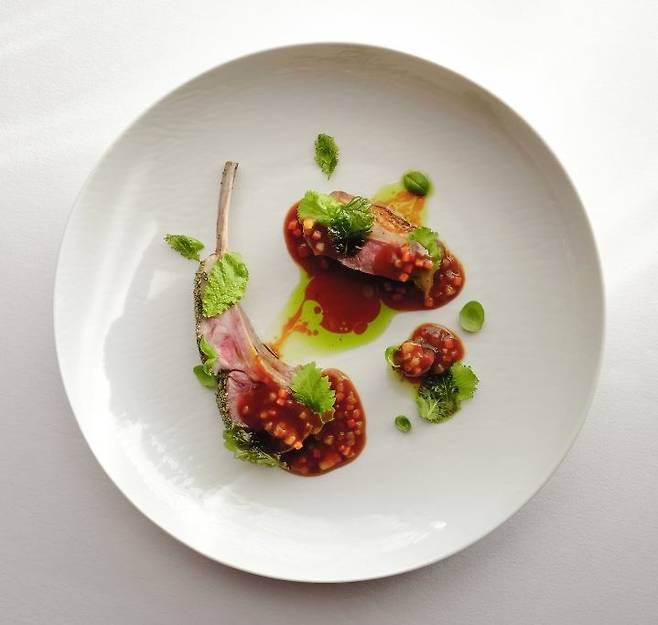
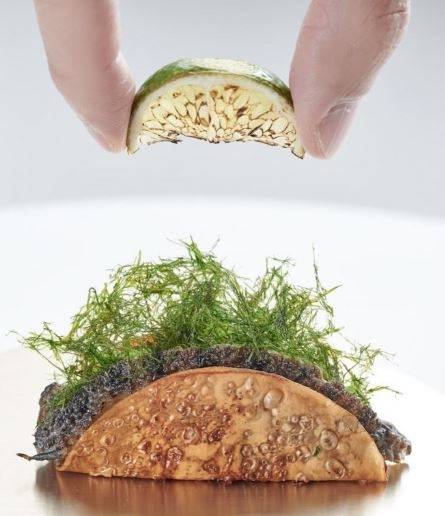
"(Mosu) delivers imagination, precision and balance on each plate. Unpredictable flavors and intriguing textures create constant delight. Signature dishes such as abalone taco, sesame tofu and burdock tarte remain, while the sourdough is delightful and the fish course is elegantly composed," Michelin said.
Mosu’s trajectory has been one of the most closely watched in Korea’s culinary scene, led by a celebrity chef and making a record by retaining its three Michelin stars for two consecutive years. After receiving a one-star rating in the 2019 Michelin Guide, the restaurant climbed to two stars the following year and later achieved the coveted three-star status in both 2023 and 2024. Following that success, chef Ahn temporarily closed the restaurant in 2024 for a rebranding phase.
After a 14-month hiatus, it reopened last March near the Grand Hyatt Seoul in Itaewon, Yongsan-gu. The reopening triggered intense demand, with reservations for the first three months selling out immediately and nearly 9,000 diners signing up for cancellation alerts.
Reflecting on the recognition, chef Ahn said, "It is an honor to be back here with fellow chefs and those in the food service industry after our hiatus. My team worked incredibly hard. As I've always said, rather than the number of stars, I am more concerned with our identity, the goals we want to achieve, our restaurant's direction and the overall dining culture. I am truly grateful."
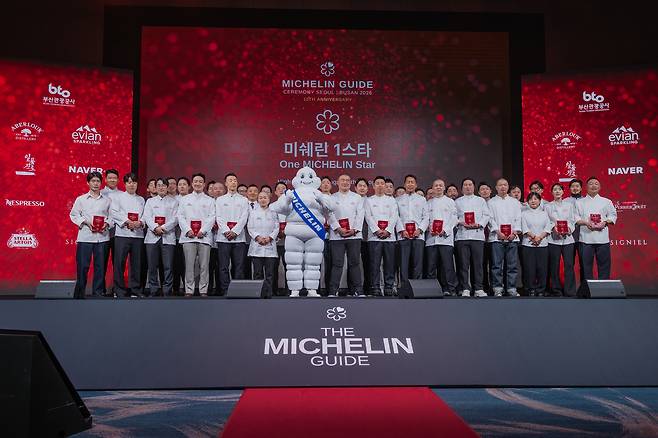
Beyond the top-tier accolades, the guide also highlighted multiple chefs gaining visibility through popular food media. In total, 31 restaurants were awarded one Michelin star, with considerable attention going to chef Son Jong-won, who rose to national popularity through his appearance in Season 2 of "Culinary Class Wars."
At the ceremony, both L'Amant Secret and Eatanic Garden — restaurants led by Son — secured one Michelin star each. After earning his first Michelin star for L'Amant Secret in 2021, Son brought Eatanic Garden to one-star status in 2023. Since then, he has been maintaining stars at both establishments.
The milestone year also coincides with the 10th anniversary of the Michelin Guide in Korea, a period that industry officials say has seen rapid evolution in the country's dining culture.
"As we celebrate ten years of the Michelin Guide in Korea, what stands out most is the continuity and maturity of traditional Korean cooking, which continues to embody pride and craftsmanship through focused specialization that reveals extraordinary mastery behind apparent simplicity," said Gwendal Poullennec, International Director of the Michelin Guide.
Officials also pointed to steady numerical growth over the past decade as evidence of the sector's maturation.
"The number of Michelin-starred restaurants in Korea has expanded from 24 to 40 by 2025, marking an approximately 66 percent increase (over 10 years). Notably, the number of two-star restaurants tripled, growing from three to nine. The rise in two-star establishments ... demonstrates that Seoul is evolving beyond a simple tourist city into a premier destination for gastronomic experiences," said a Michelin Guide official.
Copyright © 코리아헤럴드. 무단전재 및 재배포 금지.