Galaxy Corp.’s IPO ambitions: Breakout success or hype?
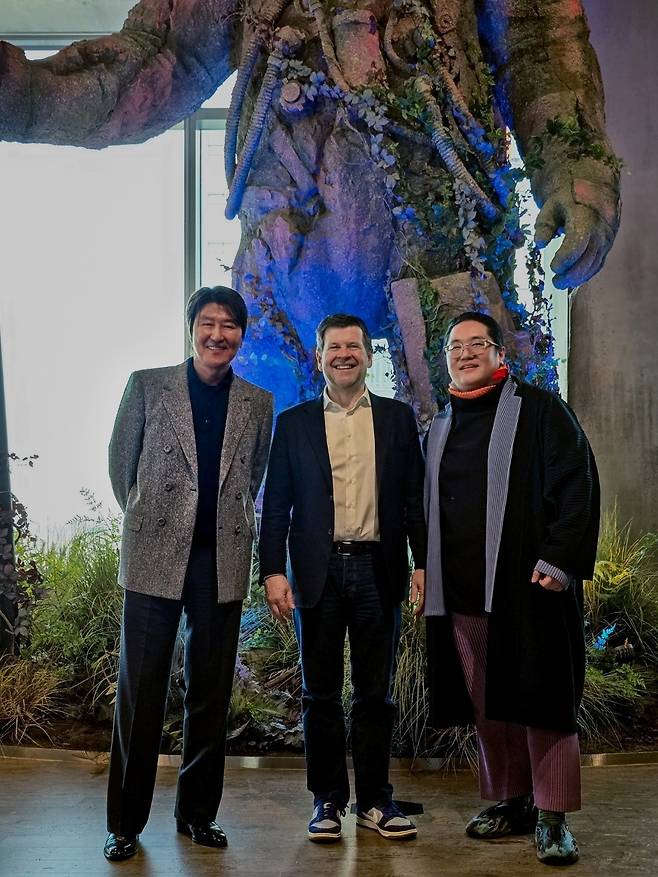
Bob McCooey, vice chairman and head of global capital markets at Nasdaq, visited Galaxy Corp.’s headquarters in Yeouido, Seoul, Thursday to review the company’s growth strategy and assess the possibility of a US stock market listing.
The visit — unusual for a senior figure from a global capital market — has raised speculation that the Korean entertainment-tech firm behind K-pop icon G-Dragon could be preparing a US debut. Yet the move has also prompted skepticism within the industry over whether Galaxy Corp.’s core strategy — combining intellectual property, artificial intelligence and robotics into an “enter-tech” model — is viable.
According to the company, McCooey showed particular interest in Galaxy Corp.’s AI-based K-pop robot project and its virtual IP strategy. A centerpiece of that vision is “The Day After Tomorrow” project, which aims to create AI-powered digital twins by training AI on a person’s appearance, voice, personality and memory data. The initiative envisions a digital ecosystem where artists could continue interacting with fans or releasing new content even after death.
Galaxy Corp. said such initiatives align with the factors Nasdaq typically evaluates, including technological scalability and sustainable growth models.
The company has positioned itself as an “enter-tech” firm rather than a conventional entertainment agency, emphasizing a structure that integrates IP, technology platforms and commercial expansion around so-called “super IP.” By doing so, it claims it can reduce reliance on individual content projects while creating a more scalable technology-driven business.
Industry insiders, however, point out that Galaxy Corporation’s current roster of major IPs is relatively limited and centered largely on G-Dragon. A significant portion of its revenue is reportedly generated from G-Dragon’s world tour and offline events — a structure critics say resembles that of a traditional K-pop agency rather than a technology-driven platform company.
Before recruiting G-Dragon, Galaxy Corp. recorded annual revenue of approximately 41.6 billion won ($28.2 million) in 2023. Following his signing, the company reported 126 billion won in revenue in the first half of 2025. Market estimates suggest its annual revenue could reach around 300 billion won this year, marking the company’s strongest performance since its founding and enabling it to return to profitability.
“Much of Galaxy Corporation’s revenue currently comes from G-Dragon’s concerts and offline events,” an industry source said Thursday. “If that’s the case, how different is it from a typical K-pop agency?”
“Rumors have also circulated within the industry that G-Dragon has expressed dissatisfaction with the company, and he wishes to leave the company,” the source added.
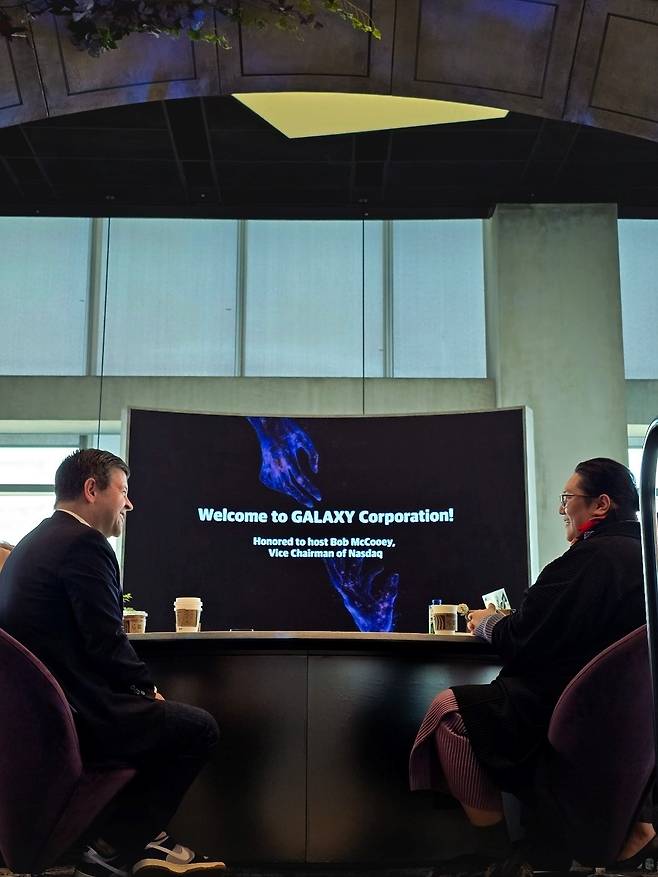
Galaxy Corp.’s strong emphasis on AI may also reflect a strategic attempt to position itself as a software and platform company capable of generating revenue around the clock without relying solely on human artists.
Technology firms typically command far higher valuation multiples than conventional entertainment agencies.
In theory, AI-powered entertainment — including virtual groups, AI-assisted music production and metaverse content — could allow companies to distribute products simultaneously across global markets without the physical constraints faced by human performers.
Yet Galaxy Corp. has yet to demonstrate that capability in practice.
Projects introduced last year — including an AI initiative that symbolically transmitted G-Dragon’s music into space and his AI-powered music video collaboration with Microsoft — remain largely experimental and have not yet generated meaningful revenue.
The company has also attempted to expand into virtual idols, launching a “2025 Global Virtual AI Artist Audition” in the second half of 2025 to debut a virtual act in the near future.
However, Plave remains the only virtual idol group in Korea widely regarded as commercially successful, while Galaxy Corp. itself has no track record in discovering or developing idol groups.
The company’s proposed K-pop robot idol project may take even longer to materialize. In an interview with a US media outlet in December, Galaxy Corporation CEO Choi Yong-ho predicted the emergence of “robot idols” within five years, suggesting they could eventually coexist with human performers.
That same month, a humanoid robot dressed in G-Dragon-inspired attire performed choreography to the singer’s song “Power” during the ComeUp 2025 startup conference in Seoul.
While the demonstration attracted significant media attention, questions remain about whether K-pop fans would embrace robotic performers or whether such concepts could realistically coexist with traditional idols.
Ultimately, industry insiders say the success of any entertainment company depends on building a strong IP portfolio.
“To go public as an entertainment company, the most important asset is IP,” an industry official said. “And not just one or two stars — it requires a diverse portfolio of major names.”
The official added that Galaxy Corp.’s enter-tech narrative resembles, in part, the technology-driven expansion strategy pursued by Hybe. Whether Galaxy Corp. can execute such ambitions, however, remains uncertain.
“For now, many of the projects sound impressive but lack tangible results,” the official said. “It risks looking like a shiny idea without real substance.”
Copyright © 코리아헤럴드. 무단전재 및 재배포 금지.