Korean skin care slaps — literally
전체 맥락을 이해하기 위해서는 본문 보기를 권장합니다.
"It's almost as if the products are being stacked one on top of another. Absorption really matters, so I usually pat the products in as if I'm massaging the skin."
"Also, slapping on toner or lotion while making a 'chap chap' sound can make the product seem easy to apply. Thicker creams are especially well-suited for ASMR content when they are patted onto the skin."
이 글자크기로 변경됩니다.
(예시) 가장 빠른 뉴스가 있고 다양한 정보, 쌍방향 소통이 숨쉬는 다음뉴스를 만나보세요. 다음뉴스는 국내외 주요이슈와 실시간 속보, 문화생활 및 다양한 분야의 뉴스를 입체적으로 전달하고 있습니다.
There is one unwritten rule for anyone hoping to debut as a beauty influencer in Korea: Slap your face — rhythmically and with flair.
A quick scroll through YouTube, TikTok and other social media channels showcasing Korean cosmetics reveals a familiar scene of creators vigorously patting toner, lotion or foundation onto their faces in a slapping motion, using their hands or makeup puffs. The same exaggerated tapping ritual is also a staple of TV home shopping channels, where hosts repeatedly slap products onto their faces.
This technique has even inspired its own onomatopoeia, “chap chap.” Originally a Korean adjective describing things neatly settled in place or a calm state of mind, the term now appears in online beauty content to mimic the sound of patting cosmetics onto the skin.
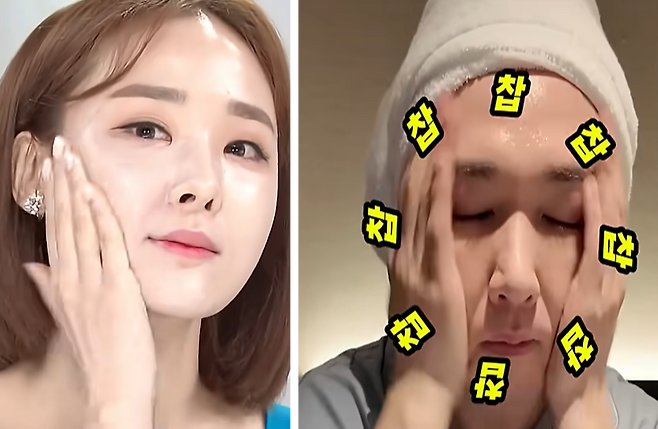
Local beauty experts say the phenomenon is closely tied to South Korea’s multistep skin care and makeup routines, where speed and absorption are considered essential.
With products layered sequentially — from toner and essence to primer and foundation — each step is expected to settle before the next begins. If an earlier layer fails to absorb properly, it can affect how subsequent products apply, sometimes leading to pilling or uneven texture.
“In Korea, even toners come in multiple formulas, and there is an incredible range of products with different ingredients and textures, including serums, essences and moisturizers," Choi, 37, who runs a skin care salon, Hee Aesthetic, near Soongsil University in Dongjak-gu, Seoul, told The Korea Herald.
“It's almost as if the products are being stacked one on top of another. Absorption really matters, so I usually pat the products in as if I’m massaging the skin."
For some digital creators, the appeal is more than skin deep.
Beyond its supposed benefits for faster and better absorption, the technique’s strong visual and audible impact helps capture viewers’ attention in video content, said Kim, a freelance presenter in Incheon who promotes cosmetic products through live broadcasts on Instagram.
“People want to see a dramatic before-and-after effect. When products are applied with a bit more force, they seem to absorb faster. With foundation, for example, pores and blemishes appear more fully covered, which helps keep viewers focused on the video,” she said.
"Also, slapping on toner or lotion while making a ‘chap chap’ sound can make the product seem easy to apply. Thicker creams are especially well-suited for ASMR content when they are patted onto the skin."
Another beauty creator, Kim Hye Jeong, who also works as a home shopping host, has even developed her own patting techniques tailored to different products.
“For watery products like toner, I pat quickly so it doesn’t run. With lipstick, I gently tap with my finger to control the amount and create a more natural look. For blush, I pat it on as if I’m blending it out. It definitely feels like the skin care or makeup turns out better when I tap rather than just rub.”
“These days, ‘chap chap’ has basically become part of beauty lingo. I find myself using it a lot during broadcasts.”
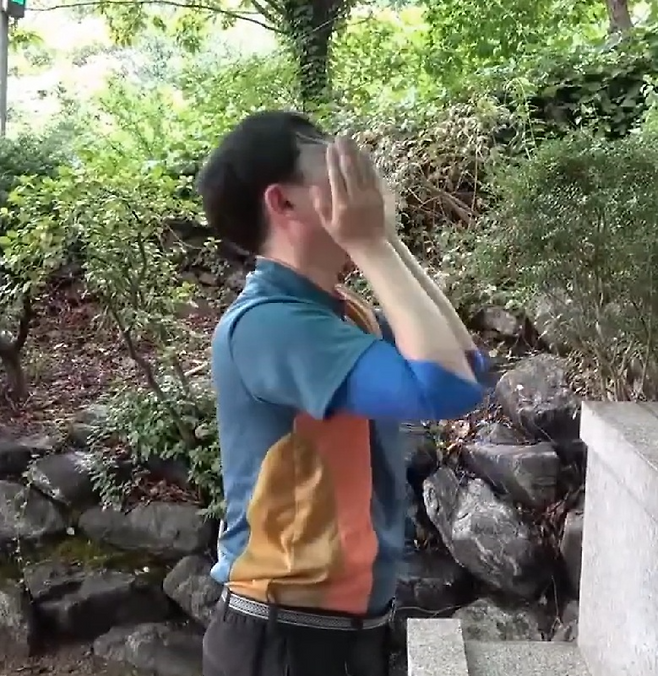
For those unfamiliar with K-beauty, the “chap chap” motion should not be confused with the so-called “ajeossi” slaps, a memefied habit of some middle-aged men who apply skin care with a few loud, forceful smacks to the face.
Their exaggerated face-slapping while washing up or slapping on lotion has become an online meme in recent years.
Still, the two gestures share a similar motivation: a preference for speed and immediate results.
“Korean men learn to shower quickly during their military service, and Koreans in general are used to doing things quickly, a habit often described as the ‘ppalli ppalli’ culture. Maybe that’s why a culture of roughly applying lotion developed,” said Yang Hong-geun, a 64-year-old resident in Seoul.
“When I wash my face and apply lotion that way, I feel refreshed, and my skin feels more hydrated,” he said.
Regardless of the reason, the belief that applying products with force must be good for the skin is widely shared among Koreans across generations.
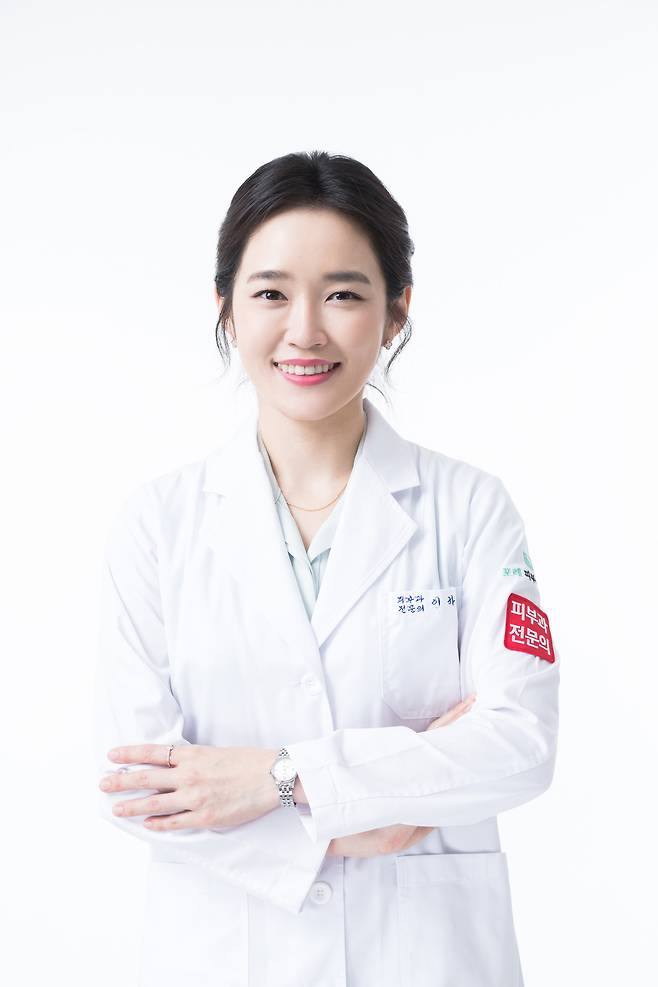
But Lee Ha-eun, a dermatologist at Foret Dermatology in Gangnam-gu, Seoul, told The Korea Herald that the motion plays only a supporting role when it comes to absorption.
"The skin barrier does not open easily just because the skin is tapped or slapped, so this motion does not actually help ingredients sink deeper into the skin," she said.
"However, patting is not completely pointless. It helps spread the product evenly and press it closer to the skin, reducing small pockets of air between the skin and the product. In other words, patting helps the product sit better on the skin, rather than helping it absorb better."
Lee, who has treated both Korean and foreign patients, further explained that in the world of skin care and beauty, Koreans tend to be more willing to tolerate discomfort if it promises visible results.
"A willingness to tolerate a certain degree of discomfort for better outcomes is fairly common among Korean women, who show strong interest in skincare and cosmetic procedures," she said.
Among the dermatological procedures that remain consistently popular despite being known for their intense pain are anti-aging laser treatments such as Rejuran and InMode.
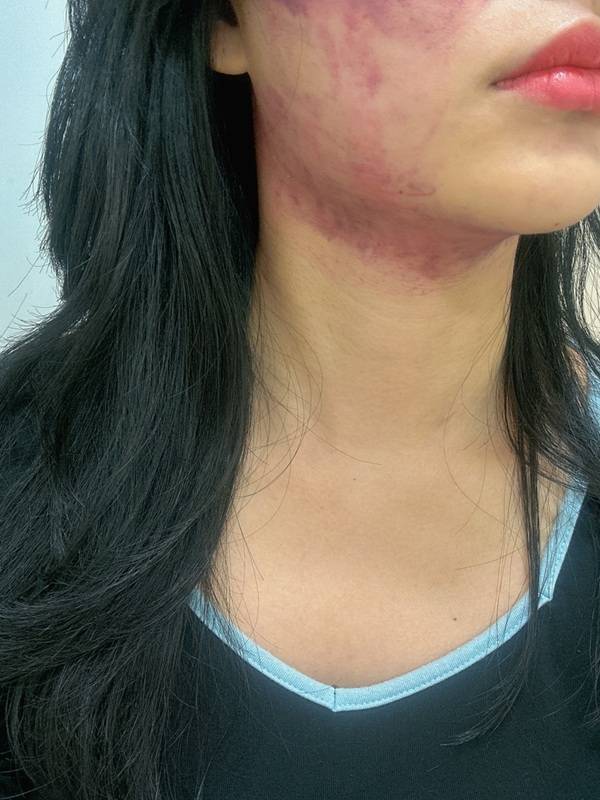
These often leave patients with severe redness and visible marks immediately afterward. While recovery varies from person to person, the aftereffects typically last anywhere from two days to a week.
The pain tolerance extends to nonclinical treatments as well.
Korean facial massage, known as "kyungrak," which involves applying intense pressure along the jawline, cheekbones and brow bones, has become almost a pre-wedding ritual among young brides and grooms seeking a slimmer looking face.
Beauty comes with pain even at home.
Skin care products containing spicules, microscopic needle-like structures extracted from marine sponges, have sparked buzz among beauty aficionados in recent years, as they are thought to improve absorption, aid skin regeneration and refine overall texture.
Lee attributed Koreans’ embrace of painful beauty treatments to a broader social mindset that treats endurance as a virtue.
“In a beauty powerhouse like Korea, ‘no pain, no gain’ applies to skin care as well. At our clinic, many patients tend to put up with pain rather than express it, even when procedures are uncomfortable," she said.
"With so many new treatments emerging each year and dermatological procedures becoming so common, people's psychological hurdle toward pain appears to have gradually lowered.”
Copyright © 코리아헤럴드. 무단전재 및 재배포 금지.