How 'The Art of Sarah' recalls real-life luxury fraud even 'Squid Game' Lee Jung-jae fell for

Netflix Korea's mystery thriller "The Art of Sarah" has swiftly emerged as a global conversation starter, topping Netflix’s worldwide TV rankings for non-English series.
As the show's buzz builds, it has reignited interest in an infamous, real-life fraud case from Korea a decade ago that bears striking similarities to its central premise: counterfeit luxury goods falsely marketed as elite, European-made products, which reaped astronomical profits.
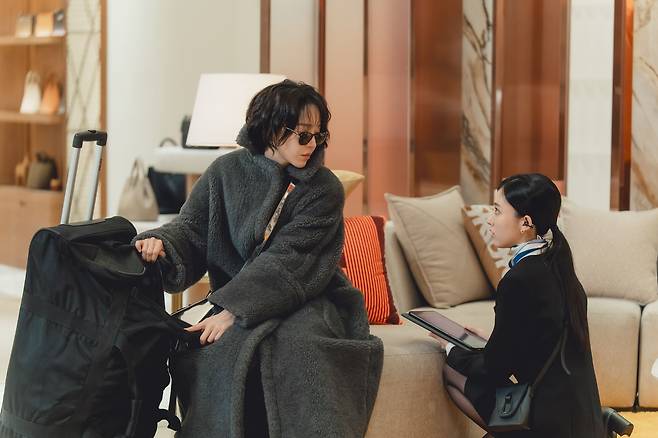
"The Art of Sarah" centers on Sarah Kim (Shin Hye-sun), a master con artist who operates under a series of aliases while building her handbag label, Boudoir, into what appears to be the pinnacle of the luxury world.
Marketed as an ultraexclusive brand reserved for VIP clients and European royalty, Boudoir is later revealed to be anything but. In the series, the bags are cheaply produced in Korea using low-cost materials, while false documentation is used to support claims of European craftsmanship. As detectives close in on Sarah's scheme, the series unfolds as both a cat-and-mouse thriller and a character study of a woman driven by ambition and a longing for wealth and status.
Although the series states that its characters and events are fictional, its storyline inevitably recalls the notorious real-life scandal from mid-2000s Korea, pushing it back into the public discourse alongside the show’s rising success.
Known as the "Vincent & Co." case, the 2006 incident involved a watch brand that seemingly emerged overnight, claiming a century-long Swiss heritage and an elite clientele that allegedly included members of the British royal family. The brand gained credibility after distributing its watches as promotional gifts to celebrities, before officially launching a showroom in Seoul's upscale Cheongdam-dong. The opening event attracted many of the era's biggest stars, including Lee Jung-jae ("Squid Game") and Choi Ji-woo ("Winter Sonata"), along with top fashion editors and stylists.
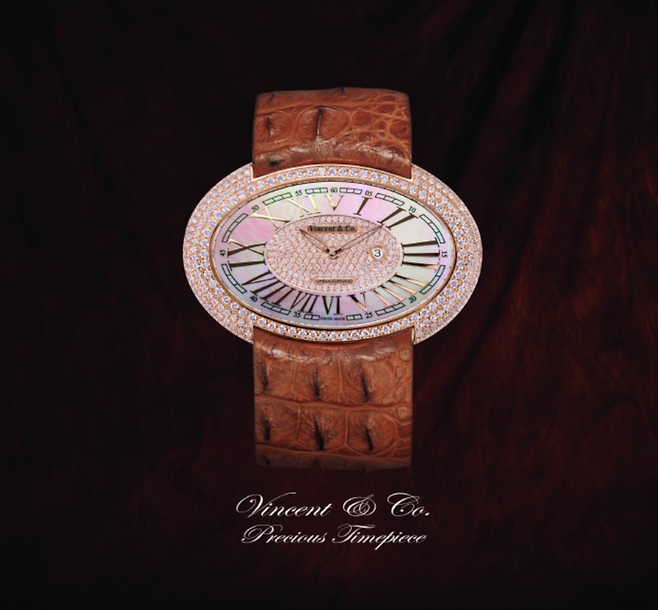
The buzz translated into brisk sales. Individual watches were said to retail for as much as 100 million won ($69,616), with high-profile figures across entertainment and even politics soon seen sporting them at public events. At its peak, the brand reportedly sold products worth 446 million won and collected approximately 1.57 billion won through distributorship fees and related guarantees, according to police reports.
The facade collapsed just months later, after complaints were filed with police over the watches' questionable quality and construction. Investigators ultimately concluded that the timepieces were assembled domestically using parts imported from Hong Kong and China. They were then marketed with false claims that they were fully Swiss-made or limited editions commissioned by European royal families. To bolster their narrative, the Vincent & Co. operators were revealed to have transported the watches to Switzerland and reimported them to obtain authentic import documentation, a tactic mirrored in "The Art of Sarah" when Sarah fabricates proof of European production for her Boudoir bags.
The mastermind behind the Vincent & Co. scheme was eventually sentenced to four years in prison. In its ruling, the court cited the sophistication of the fraud, the deliberate deception of consumers and the lack of meaningful restitution to victims as grounds for the sentence.

That real-world reckoning now forms a didactic echo in "The Art of Sarah," which continues to resonate with global audiences for its portrayal of human vanity and the shared allure of escaping mediocrity for a "different" life.
Riding a wave of strong reviews, the series remains on a hot streak, currently ranking No. 1 in multiple territories including Korea, Indonesia, the Philippines, Thailand, Vietnam and Malaysia, while also placing in the top 10 across 38 countries, among them Japan, Singapore, Hong Kong, Colombia and Kenya.
Copyright © 코리아헤럴드. 무단전재 및 재배포 금지.