Busan junior colleges tapped for foreign talent program
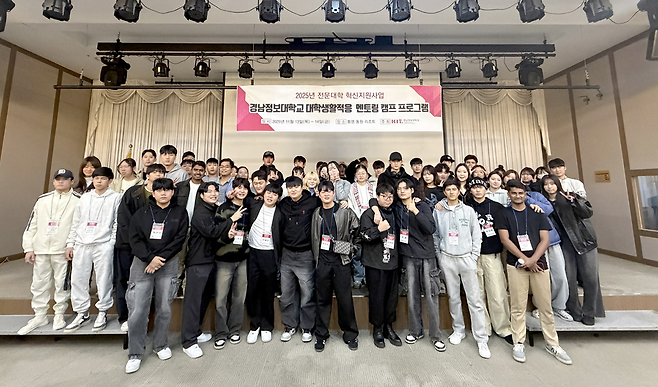
Busan Metropolitan City said Thursday that three local junior colleges had been selected for a Justice Ministry pilot to foster specialists, with foreign students being eligible for improved visa access.
The mechanical engineering departments at Kyungnam College of Information and Technology, Dong-Eui Institute of Technology, and the automotive engineering department at Busan Institute of Science and Technology, were selected for the program encompassing 16 university departments across the nation. The authorities said the selected institutions’ specialized education capacity as the key factor.
Foreign students enrolling in the designated departments will receive expanded visa incentives.
Students who demonstrate Korean language proficiency equivalent to a Level 3 or higher on the Test of Proficiency in Korean will be exempt from financial requirements usually required for a D-2 student visa.
During their studies, the maximum permitted hours for part-time employment will also be increased from 30 to 35 hours per week.
Graduates will also be eligible for employment and residency benefits. Those who complete the program, meet Korean language requirements and secure jobs related to their fields of study may apply for the K-CORE (E-7-M) visa, designated for key regional industry personnel.
K-CORE visa holders who work for more than five years or remain employed for at least three years at the same company in designated population-decline areas can the apply for an F-2 long-term residency visa.
The initiative comes as South Korea faces a rapidly shrinking labor force.
According to data released Friday by the Korea Employment Information Service, the country is projected to record an average annual employment growth rate of zero percent between 2024 and 2034. The labor force is expected to decline sharply, with a decrease of 210,000 people forecast between 2029 and 2034, driven by a low birth rate and population aging.
Meanwhile, the Lee Jae-myung administration has increased the quota for seasonal workers in rural communities by 13,000 and expanded programs aimed at attracting skilled foreign labor.
The number of foreign workers rose steadily from 406,669 in 2021 to 594,047 in 2025, according to Justice Ministry data.
Busan Mayor Park Heong-joon said the selection marks “an important turning point for local universities to directly nurture customized global talent aligned with the needs of regional industries.”
Copyright © 코리아헤럴드. 무단전재 및 재배포 금지.