The Problem is not Jong Tae-Se but the National Security Law
Why Are People Showing Interest in Jong Tae-se's Nationality?
Many people must have snorted at the news that conservative commentator Byeon [Hee-jae] accused soccer player Jong Tae-se of violating Korea's National Security Law. There had been concerns that Jong, a Japanese-born North Korean soccer player, would face accusations of this kind. As many expect, the accusation will lead to nothing, but it well shows Korea's National Security Law can still be used as a tool to harass Korean Japanese.
|
▲ Jong Tae-se, a third generation Korean-Japanese and member of the national soccer team of North Korea. ⓒThe official website of Suwon Samsung Bluewings |
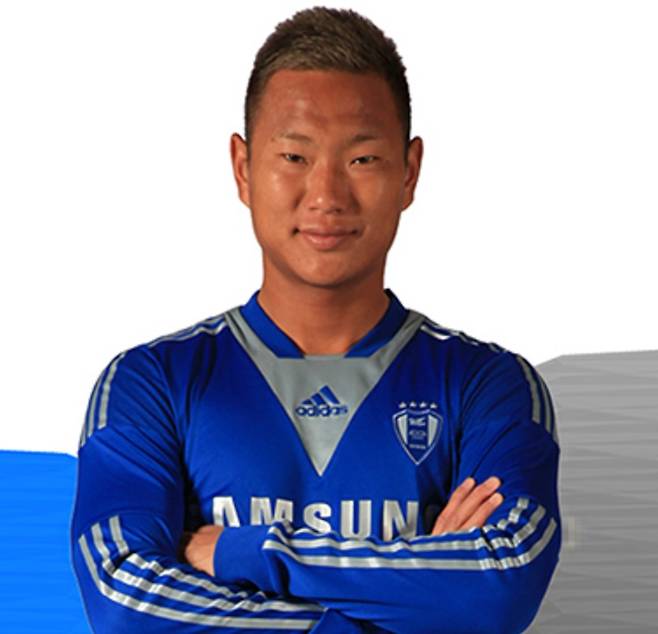
As is well known, Jong Tae-se is a third generation Korean Japanese born to a second generation South Korean Japanese father and a second generation North Korean Japanese mother. In 2007, he was selected as a member of the national soccer team of North Korea. The day after the North and South Korean soccer teams played against each other in the first round of the 2010 World Cup in South Africa, South Korean newspapers ran articles saying Jong Tae-se's nationality was South Korean. These articles led to numerous other articles containing speculation and inaccuracies about him, with the titles like this: "Jong Tae-se's mother is North Korean" and "Jong Tae-se has changed his nationality from South to North Korean.” Things have not much changed even now.
After all, the reason behind people's interest in Jong's nationality lies in the question, "How dare a person with South Korean nationality play as a member of the North Korean team?" Though different in the degree of people's interest, many similar questions, such as the followings, are raised with regard to Korean Japanese:
"How dare a person from South Korea choose to become a member of Chongryon, the pro-Pyongyang group in Japan?"
How dare a person with South Korean nationality attend a pro-North Korean school?
All of these are questions that upset the Korean Japanese who are concerned.
Korean Japanese leading lives on the borders of three countries
What does “South Korean nationality” mean for Korean Japanese? People in general do not have to clarify their nationality in daily life, but Korean Japanese inevitably go through a nationality problem while growing up. As Korean Japanese lead lives that range over North and South Korea and Japan, it is often the case that they have nationalities different from those of their families. I, therefore, would like to point out that though clarifying one's nationality is simple for people whose systematic positions are stable, it is a complicated matter for Korean Japanese.
When people say, "Jong Tae-se has South Korean nationality," it means he is registered as a South Korean in Japan's foreigner registration documents. That the nationalities of Korean Japanese are defined by Japan's administrative work is strange, when you think about it. Usually, one's nationality is defined by the nationality law of his or her nation, and confirmed officially by him or her being issued a passport. That is, a person is regarded as a South Korean when the person's nationality has been defined by the Korean Nationality Act and the person has been issued a passport by the South Korean government.
Jong's first passport, however, has been issued by the Democratic People's Republic of Korea. As he had neither applied to be registered as a citizen of South Korea nor gone through the procedure to get a passport from the South Korean government, he was able to become a member of the North Korean national team (for more information, please consult Our Players We Hadn't Recognized [Written in Japanese by Sin Mu-gwang, translated to Korean by Lee Myeong-ok, What Book Publishing, 2010]
In an interview he once had with a South Koran media outlet, Jong said he felt "a step closer to his dream" when he was issued a passport of the Democratic People's Republic of Korea in 2007. Given that he completed his 16 years of education from elementary school to university in Chongryon-supported institutions, it is natural that he applied for a North Korean passport.
It is also natural that he chose to play in South Korea's professional football league, rather than in North Korea, because it is far more likely to expand his potential as a soccer player. One of South Korea's major conglomerates recruited him, and Korean citizens welcomed him. I believe Jong is in South Korea with a temporary passport issued by South Korea, not an ordinary one. If he has been issued an ordinary Korean passport, it is because the South Korean government's decision to invite him to be a citizen.
Some people seem to think the South Korean government has given Jong undue privileges. For them, I recommend that they should study the complicated modern and contemporary history of the Korean peninsula and Japan. Jong has been open about his North Korean nationality and complicated identity. Accusing him of violating the National Security Law is a disgraceful act showing how unfair the law is.
No more suffering for Korean Japanese by the division of the Korean Peninsula
Some still say that it is not acceptable for Korean Japanese to praise Kim Jong-il, though they acknowledge what difficult lives they have led. So, I watched the video of his interview that had become a controversy. I found nothing that I think may violate the National Security Law of South Korea. Some argue that part of the remarks he made as a member of the North Korean national soccer team and as a student attending a pro-North Korean school violate Article 7 of the National Security Law. But this only shows that this nation has a long way to go to achieve democracy and social tolerance.
Furthermore, during the former dictatorship governments, many Koreans living abroad whose identities were not clear fell victim to the confrontation between the two Koreas. Currently, lots of graduates from pro-North Korean schools are living in South Korea. If Jong is found guilty of violating the National Security Law, they are also potential violators of the law.
After all is said and done, this incident will inevitably lead to the raising of questions regarding the uncomfortable relationship formed earlier between the South Korean government and Korean Japanese. Why did most Korean Japanese from South Korea end up attending pro-Pyongyang schools run by Chongryon? Why did Korean Japanese fail to build trust with South Korean society for a long time in the past? Who is responsible for this? Before boasting of the economic value of overseas Koreans, calling them the nation's assets, South Korea should look into the gloomy modern history of the peninsula from the perspective of Koreans living abroad.
In fact, wise soccer fans must be watching Jong with more open-mindedness even without having been told of the complicated history of Korea's modern times. Jong will also do his best as a soccer player and focus on matches as he has always done. Furthermore, given that Samsung, the company that has recruited Jong, is so powerful that the nation is sometimes called “the Republic of Samsung,” the controversy over Jong's nationality is expected to expand no further.
If there are people who want to make use of this absurd accusation involving Jong, they should focus more on the irrationality of the law than on Jong himself. It is time for the nation to give a serious thought to the laws and systems that may serve as another 38th parallel dividing Koreans living abroad and at home.
The author Jo Kyeong-hui is a third generation North Korean Japanese who has been living in South Korea for the last eight years. She is currently working as a research professor at the Institute for East Asian Studies at Sungkonghoe University. [Translated by Kang Eun-sil]
*Original article: http://ildaro.com/6383 Published: June 30, 2013
◆ To see more English-language articles from Ilda, visit our English blog(https://ildaro.blogspot.com).
Copyright © ildaro.com