Ryoo Seung-wan's spy thriller gets louder, not sharper, in 'Humint'
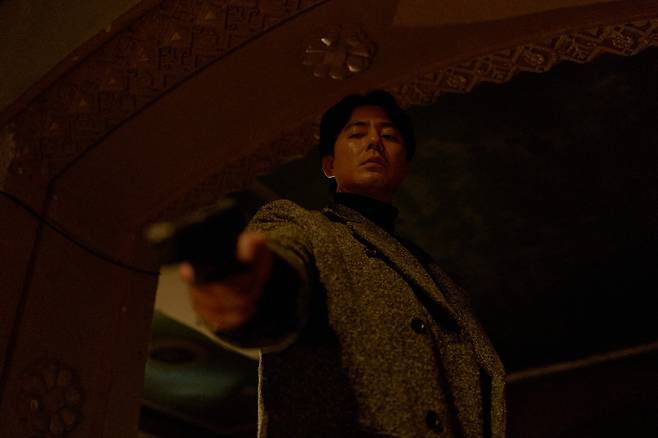
Few directors in Korea can reliably put butts in seats the way Ryoo Seung-wan can. The man built his career on a particular brand of kinetic mayhem — gritty bare-knuckle brawls, pulpy genre instincts, and just enough political edge to keep the adrenaline running hot.
His "Veteran" cop saga remains his commercial peak with 13.4 million admissions for the 2015 original and another 7.5 million for the 2024 sequel. Even the lighter fare, like the crowd-pleasing smuggling romp "Smugglers," tends to over-deliver at the box office.
Now he's back with a crackling blockbuster timed for this year's Lunar New Year holidays: "Humint," a neo-cold-war espionage thriller spiked with a hefty dose of heartache, bankrolled with a 23.5 billion won ($16 million) budget.
It is the largest in scale and star power among the three homegrown titles vying for the holiday slate alongside the historical drama "The King's Warden" and family tearjerker "Number One." All eyes are on whether Ryoo can once again jolt a domestic box office stuck on life support.
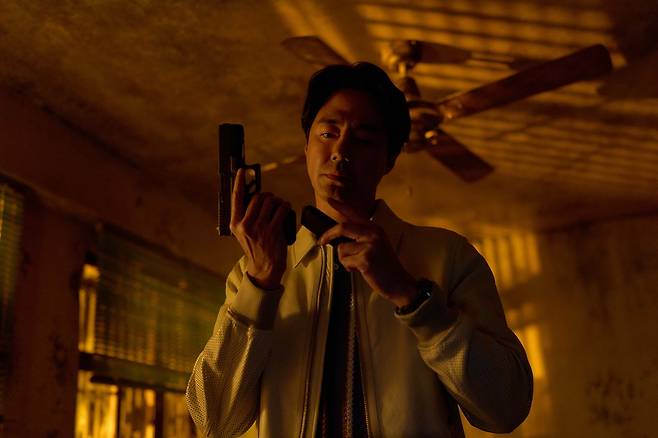
The cast alone is half the pitch: perennial K-drama heartthrob Zo In-sung, now on his third collaboration with Ryoo after "Escape from Mogadishu" and "Smugglers"; Park Jung-min, the most viral star in the country since his antics at last year's Blue Dragon Awards made him an overnight meme; and Shin Se-kyung, the 36-year-old who's spent the better part of the last few years posting lifestyle vlogs on YouTube, now making her first serious big-screen appearance in over ten years.
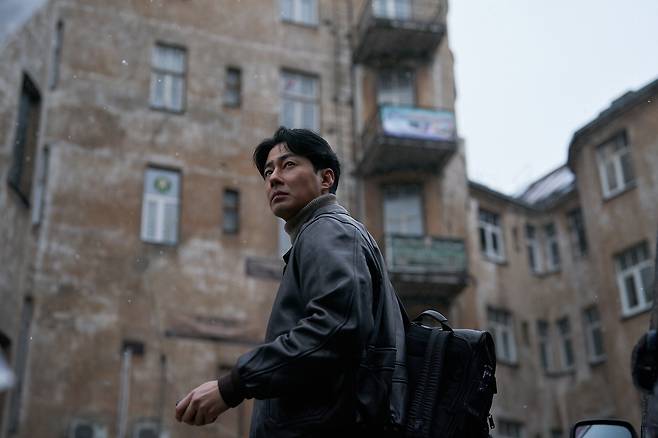
The film throws us into the ice-cold gray of Vladivostok, Russia (shot on location in Riga, Latvia), for a high-stakes collision between intelligence operatives from North and South Korea. Zo plays Officer Cho, a stone-faced National Intelligence Service agent who's quicker with his fists than his words, tasked with turning North Korean workers deployed overseas into intelligence sources. When an informant's death exposes an international criminal syndicate, he's drawn to the far eastern port city, where a sizable community of North Korean migrant workers toils to funnel foreign currency back to the regime.
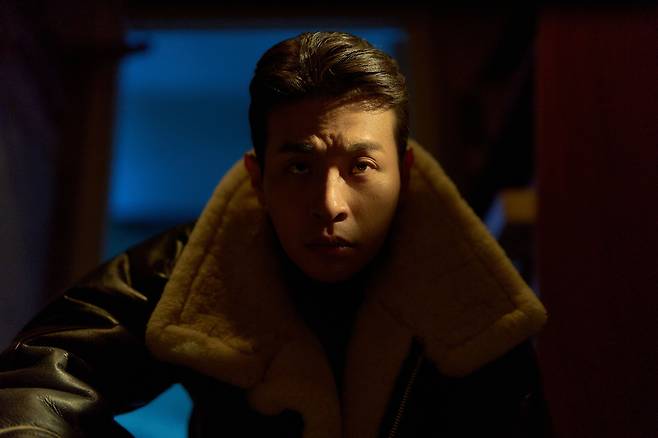
The North Koreans, meanwhile, have their own dog in the fight: Park Geon (Park Jung-min), a dead-eyed, wound-tight State Security operative sent to look into reports of workers going missing. He runs headlong into Chi-seong (Park Hae-joon), the smooth-talking North Korean consul general whose every reassurance reeks of menace, and who seems deeply invested in making sure Park Geon doesn't dig too deep.
Both sides find their paths converging on Seon-hwa (Shin Se-kyung), a server at a state-run North Korean restaurant. She is at once Cho's intelligence asset, whom he's angling to help defect, and Park Geon's former lover, separated by forces bigger than either of them. Cue the gunfights, the double-crosses, the car chases, and two men hurtling toward the same woman for very different reasons.
"I've been making films for quite a while now, but I can't remember the last time I was this nervous," Ryoo told reporters at Wednesday's press conference at CGV Yongsan in central Seoul. "I poured everything I had into making something audiences would walk out of thinking, 'That was pretty cool.'"
The actors went out of their way to sell the realism. Zo revealed that the cast had visited the National Intelligence Service for firearms training. "We learned the grip they currently use, how to shoot one-handed, how to move and fire," he said. Park Jung-min described obsessing over the finer details — where your eyes go during perimeter sweeps, how to drop a magazine — and practicing with an airsoft gun to pass as someone who'd handled weapons his whole life.

The film also carries an Easter egg tying it to Ryoo's 2013 "The Berlin File." Early on, Park Hae-joon's consul general alludes to having dealt with Pyo Jong-seong, the North Korean agent played by Ha Jung-woo, who, at the end of "Berlin," boards a train bound for Vladivostok.
"It's a cheap trick," Ryoo said, half-joking. "For people who remember 'Berlin,' it clicks right away. For those who haven't seen it, they'll go, 'What the hell is Berlin?' and maybe look it up. Sneaky two-for-one."
That winking self-awareness, though, doesn't quite carry over to the film itself. "Humint" is a serviceable action flick pumped full of acrobatic fight scenes, reverse-engineered for the holiday crowd looking to switch their brains off — a roided-up variant of the spy thriller built for maximum spectacle and melodrama.
It has little to do with the methodical, slow-coiling brain games of proper espionage cinema, and even less with the moral tightrope that has defined the romantic spy thriller since Hitchcock's "Notorious" — that dizzying paradox of intimacy weaponized, devotion as betrayal. Here, every provocative element is front-loaded in a breakneck rush — sex slavery, forced drugging, violence tipped well past the point of gratuity — making sure the dopamine hits before you've had a chance to settle in.
At one point in the opening sequence, the film even pivots into a medical drama of sorts, complete with frantic CPR, flatline monitors, and the whole beeping-machines-and-barked-orders routine. It could be called espionage done Korean-style: Nobody has time for slow-burn suspense and careful layering when you can wreck everything from the jump (ppali ppali!).
Though the film initially presents itself as an inter-Korean affair, it's actually the North Koreans who run the show. The doomed romance between Park Geon and Seon-hwa starts as a subplot but gradually co-opts the entire film until everything else feels like filler. You might forget what Zo's character is even up to. His motivations, stemming from a sense of responsibility toward his informants, aren't nearly enough to justify the suicidal heroics he pulls throughout the film (The actor's at times bizarrely wooden line readings don't help matters, either).
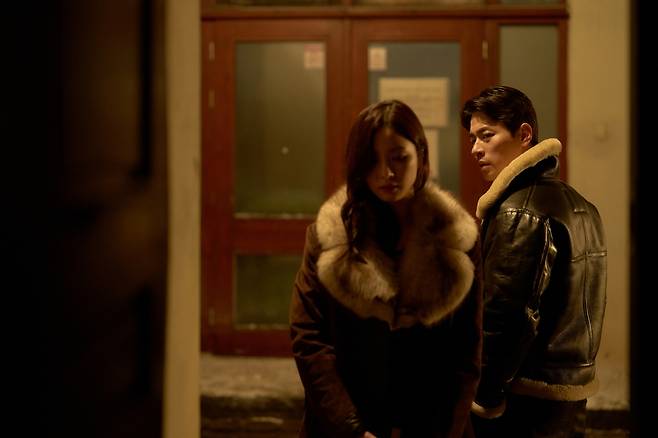
What we're left with is essentially good North Koreans versus bad North Koreans — the latter masterminded by Park Hae-joon's oily consul general, the kind of antagonist that does exactly what you think he's going to do. Throw in the Russians, whose involvement in the conspiracy seems lifted straight from a Liam Neeson movie, and off go the two agents, one driven madly by love and the other because the script needs him to.
So the film barrels forward through an exhausting procession of shootings, beatings, car chases, and then more shootings and more beatings, all to answer the rather banal question at its core: What won't a man do for a woman?
There's little interest in actually building suspense toward the climax, and the scraps of tension it does manage to conjure get torched in the final stretches, which pile on so much carnage and sentiment it all turns to noise.
In a way, it's the playbook Ryoo has run his entire career, the kind of smash-and-grab gambit that sweeps you along on one adrenaline spike after another before you realize there's not much to it when the dust settles. The references come thick and fast: the B-movie swagger of his own early cult work refracted through undercranked frenetic energy straight out of "Mad Max: Fury Road"; the suffocating self-seriousness and blood-oath melodrama of John Woo's classics; the balletic, physics-defying gunplay of "John Wick."
There's even a riff on auteur Kim Ki-young's 1971 classic "Woman of Fire" in a messy apartment brawl where Park Geon grabs a South Korean agent by the hair at a staircase, the two of them dangling together before tumbling down.
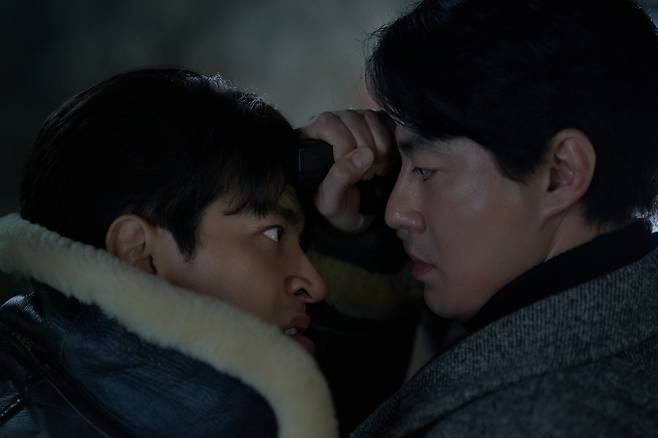
Ryoo still knows his way around what he does best with the visceral crunch of close-quarters combat, characters who are terrifyingly inventive in their violence and set pieces with genuine snap. But this time, the spectacle jumps the shark even by his own standards. He clearly has no real handle on the heavier material — the trafficking, slavery, the whole lurid circus — and trots it out for shock value before moving on, making the film feel sillier the more serious it tries to be.
Even his trademark action starts running on fumes toward the end, particularly in the fateful final gunfight at a car-packed parking lot, which feels strangely claustrophobic and rote for a film that spent the last hour and a half promising something bigger.
None of this, to be fair, falls on the actors, who generally acquit themselves well within the confines of a limited script. Convincing as ever is Park Jung-min, playing the clenched, almost feral operative whose single-minded devotion to his lover is what keeps the film's emotional engine running. The actor has played men committed to causes bigger than themselves before ("Dongju" and "Harbin"), but never anything as relentlessly somber as a man so consumed by purpose he's practically carved from stone.
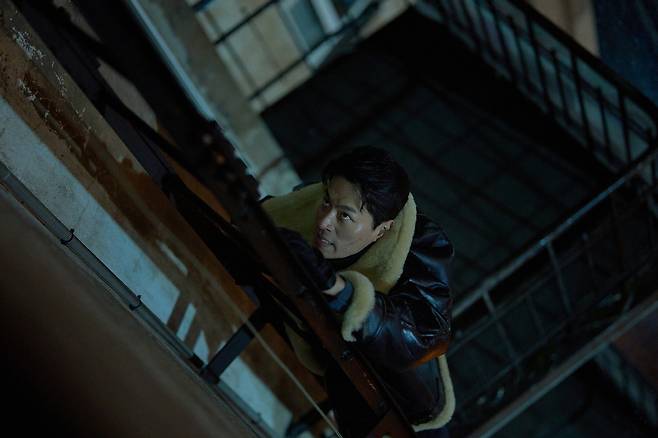
One might think this isn't exactly a role that plays to his strengths; the character is too uptight and depressing to leave room for the naturalistic, lived-in quality that defines Park's best work. Still, he fights hard to breathe life into what is otherwise a fairly inert creation, and you can feel it in every scene.
Shin Se-kyung's turn as the informant stuck in an impossible spot may be the bigger surprise. Measured yet resolute, her gradual transformation from someone swept along by circumstance to being in control of her own fate makes for one of the film's stronger through lines.

Together, their performances keep afloat proceedings that grow more ludicrous by the minute, though by the time the final act drags itself to a close they're bailing water out of a boat that's already going under.
Ryoo's pitch was simple. "We got the best people in the Korean film business together and pushed ourselves to the limit," he said. "It's the kind of film that only works on the big screen."
"Humint" hits Korean theaters Wednesday.
Copyright © 코리아헤럴드. 무단전재 및 재배포 금지.