MMCA secures record budget, while acquisition funds decline
전체 맥락을 이해하기 위해서는 본문 보기를 권장합니다.
"The government wants to expand regional access to culture, so we were encouraged to tour our significant exhibitions nationwide," an official from the museum told The Korea Herald on Tuesday. "A total of 5 billion won was allocated for the project."
"Damien Hirst has consistently explored and dismantled how capital mobilizes desire and becomes institutionalized, and revisiting this dimension is part of what museums are meant to do," Kim said. "This exhibition will play an important role in reexamining contemporary art history."
이 글자크기로 변경됩니다.
(예시) 가장 빠른 뉴스가 있고 다양한 정보, 쌍방향 소통이 숨쉬는 다음뉴스를 만나보세요. 다음뉴스는 국내외 주요이슈와 실시간 속보, 문화생활 및 다양한 분야의 뉴스를 입체적으로 전달하고 있습니다.
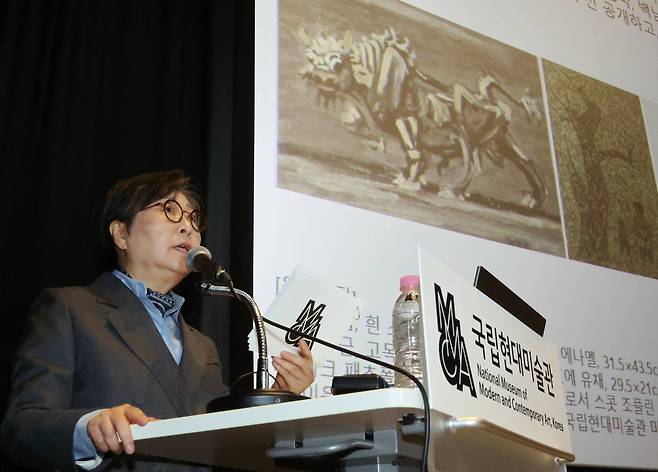
The National Museum of Modern and Contemporary Art, Korea secured its largest budget this year, in line with a record surge in exhibition visitors.
The state museum’s budget allocation has increased by nearly 23 percent this year from 2025's 69.1 billion won to 84.8 billion won ($47.8 million to $58.7 million). The increase is largely due to a new initiative to expand the museum’s exhibitions to regional museums, such as for Korean modern artist Lee Jung-seop.
“The government wants to expand regional access to culture, so we were encouraged to tour our significant exhibitions nationwide,” an official from the museum told The Korea Herald on Tuesday. “A total of 5 billion won was allocated for the project.”
The budget to secure works of art, however, fell from 4.7 billion won last year to 4 billion won this year, continuing a gradual downward trend over the years.
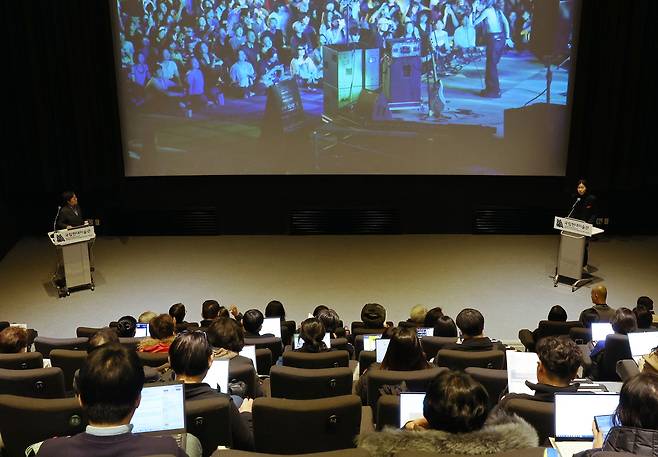
Visitors for paid exhibitions hit a new high last year, attracting 3.46 million people; the Ron Mueck exhibition alone saw more than 500,000 people, according to the museum.
Director Kim Sung-hee said she expects more exhibitions to attract high numbers this year.
“The exhibition expected to draw the biggest crowds this year is Suh Do-ho’s solo exhibition. Opening in late August, it is likely to benefit from an influx of global art people visiting Seoul for Frieze in early September, while the Damien Hirst exhibition is also expected to attract strong interest,” Kim told reporters.
Suh, as an internationally renowned installation artist, has explored themes of home, migration, memory and the relationship between the individual and collective through translucent fabric replicas of architectural spaces.
“The exhibition will mark the first kind of retrospective exhibition of the artist in Korea, as we believe his work has gained sufficient depth and layers, entering his 60s,” the director said.
Responding to skepticism over British artist Damien Hirst’s first large-scale exhibition in Korea, including concerns about his association with commercial spectacle and controversy, the director said a national museum has a responsibility to broaden access to global contemporary art domestically.
“Damien Hirst has consistently explored and dismantled how capital mobilizes desire and becomes institutionalized, and revisiting this dimension is part of what museums are meant to do,” Kim said. “This exhibition will play an important role in reexamining contemporary art history.”
Around 3 billion won from the museum's budget will be invested in the exhibition, with more than half of the budget expected to be recovered through admissions, benefiting the museum and government, according to the museum.
Since 2023, the National Museum of Modern and Contemporary Art has charged admission for all exhibitions. For shows requiring particularly large-scale budgets, ticket prices have been set at 5,000 won instead of the standard 2,000 won.
Copyright © 코리아헤럴드. 무단전재 및 재배포 금지.