New year brings host of new rules
The new year will usher in a wide range of changes for people living and arriving in South Korea, affeceting everything from their wallets to their screens.
The minimum wage for 2026 will rise to 10,320 won an hour, a 2.9 percent increase from 2025. Starting in March, the use of smartphones and other digital devices during class hours will also be restricted.
From transportation safety and child care benefits to the government’s cautious approach to AI regulation and expanded foreign labor programs, here are some of the key policy changes selected by The Korea Herald.
Tougher rules for drug-impaired driving
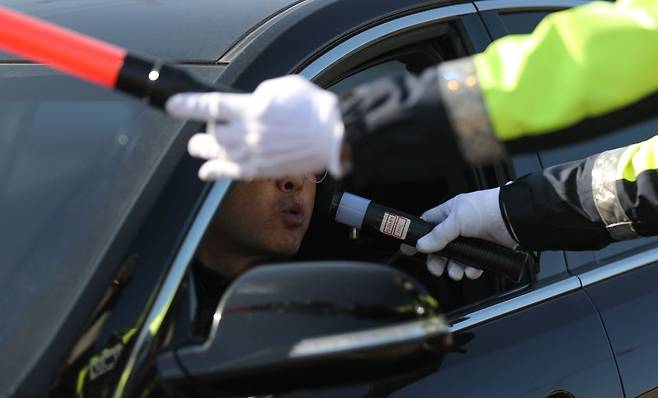
As cases of drug-impaired driving continue to rise, the government has introduced penalties for refusing to undergo a drug test. Drivers who refuse testing may face up to five years in prison or fines of up to 20 million won ($13,800).
Those found to have been driving under the influence of an illegal substance now face harsher penalties, with the maximum prison sentence increasing from three to five years, and maximum fines rising from 10 million won to 20 million won.
Drivers who have been convicted of drunk driving two or more times within the past five years are required to install an alcohol ignition interlock device, or car breathalyzer, when they reapply for a driver’s license after a two-year disqualification period.
The device prevents the vehicle from starting if alcohol is detected. Installation costs about 3 million won, and the device can also be rented.
Drivers who operate a vehicle without installing the required preventive device may face up to one year in prison or a fine of up to 3 million won. Their driver’s license may also be revoked.
If a driver is caught operating a vehicle after evading alcohol detection by having another person provide a breath sample on their behalf, the penalty increases to up to three years in prison, or a fine of up to 30 million won.
Expanded child care benefits
To ease the burden of child care, monthly subsidies of 100,000 won, currently provided to children under age 8, are extended to children under age 9.
Children living in nonmetropolitan regions and population-declining areas can receive additional monthly payments ranging from 5,000 won to 30,000 won.
The monthly salary cap for paid maternity leave for working mothers has also risen to 2.2 million won, with the benefit period extended for an additional three months.
To address gaps in child care, nighttime care hours at some child care centers will be extended.
Starting Jan. 5, a total of 360 child care centers, including community child care centers and “Together Care” centers, will participate in nighttime care programs. Of these, 326 centers will operate until 10 p.m., while 34 will remain open until midnight.
Government support for meals and snacks for infants and young children attending day care centers will be increased to 600 won per day for infants and 1,160 won per day for preschoolers.
The government will provide monthly child care subsidies of 100,000 won to foreign children aged 3 to 5 who attend day care centers.
First country to implement an AI law
South Korea will become the first country to implement a comprehensive artificial intelligence law when the Framework Act on the Development of Artificial Intelligence takes effect on Jan. 22.
While South Korea is the second jurisdiction after the European Union to enact an AI law, the EU plans to enforce most high-risk AI regulations starting in August 2026, placing South Korea ahead in implementation.
Earlier, the government unveiled an enforcement decree that includes requirements for watermarking AI-generated content; defining AI systems that could affect human life, safety and basic rights; appointing local agents for overseas AI operators and imposing fines of up to 30 million won for violations.
The government said it would narrow the scope of regulations and ensure maximum autonomy for businesses, reflecting industry concerns that excessive regulation could stifle the AI sector.
Even after the law takes effect, the government plans to allow a regulatory grace period of at least one year.
Lee Jin-soo, director of AI Policy Planning, said the government did not intend to become the world’s first country to enforce such regulations, adding that it was open to extending the grace period in line with regulatory trends in the European Union and other overseas jurisdictions.
Recruitment of foreign workers
The government has set the target number of nonprofessional foreign workers for 2026 at about 191,000, slightly down from 207,000 in 2025, with a shift to more short-term arrangements.
These workers enter the country under the E-9 employment permit visa, the E-8 seasonal worker visa and the E-10 seafarer employment visa.
The quota for E-9 workers has been set at 80,000, about 50,000 fewer than 2025, reflecting economic forecasts and labor market conditions.
The E-8 quota rose to 109,000, up 13,000 from last year, to address labor shortages in rural areas caused by an aging workforce and population decline.
Of those 109,000, 94,100 workers will be assigned to about 28,000 farming and fishing workplaces across 142 local governments nationwide. Of these, 87,375 will be allocated to the agricultural sector, based on employers, and 6,725 to the fisheries sector.
To help outstanding foreign workers grow and settle in Korea, the government plans to enable their transition from non-skilled to semi-skilled and then to skilled workers through on-the-job experience and vocational training.
It will also allow long-term employment and residence without requiring workers to leave and reenter the country.
Copyright © 코리아헤럴드. 무단전재 및 재배포 금지.