Seoul takes first step to open access to North Korean materials
이 글자크기로 변경됩니다.
(예시) 가장 빠른 뉴스가 있고 다양한 정보, 쌍방향 소통이 숨쉬는 다음뉴스를 만나보세요. 다음뉴스는 국내외 주요이슈와 실시간 속보, 문화생활 및 다양한 분야의 뉴스를 입체적으로 전달하고 있습니다.
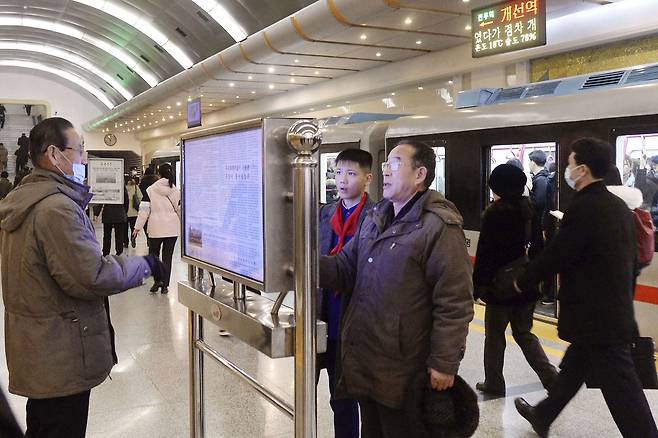
The Lee Jae Myung administration is preparing to take a first step toward easing long-standing restrictions that have kept North Korean publications entirely out of public reach in South Korea.
Six ministries and government agencies responsible for handling “special materials” met Friday afternoon to discuss the shift.
They agreed on measures that would partially open access to the print edition of Rodong Sinmun — the official newspaper of North Korea’s ruling Workers’ Party and its most widely circulated daily.
At the interagency meeting, “the supervisory authorities confirmed a shared understanding on the agenda to reclassify the Rodong Sinmun from special materials to general materials,” the Ministry of Unification said Friday.
The meeting was attended by officials from the Unification Ministry, the National Intelligence Service, the Ministry of Culture, Sports and Tourism, the Ministry of Science and ICT, the Education Ministry, and the Korea Media and Communications Commission.
“Based on the outcome of today’s consultative review, the formal measures to reclassify the Rodong Sinmun as general materials will be implemented early next week through the necessary administrative procedures, including the issuance of official notices to supervisory authorities and relevant handling agencies,” the Unification Ministry said.
North Korean materials are currently regulated under guidelines introduced by the National Intelligence Service in 1970 in line with Article 7 of the National Security Act. The act divides such content into “special materials” and “general materials” based on whether they are deemed to praise North Korea or undermine South Korea’s liberal democratic order.
The measures expected next week would specifically allow the public to view the newspaper in print without the current restrictions.
For now, access to North Korean media via the internet remains blocked. Ordinary citizens can view North Korean materials only at designated facilities — such as the National Library of Korea’s North Korean Materials Center or the National Assembly Library — and only after clearly stating their identity and research purpose.
However, the forthcoming measures would not lift the ban on Rodong Sinmun’s website.
The South Korean government blocks Rodong Sinmun and some 60 other North Korean websites under the Act on Promotion of Information and Communications Network Utilization and Information Protection.
Under the act, information deemed to involve activities prohibited by the National Security Act may be blocked following a review by the Korea Communications Standards Commission.
Any move to allow public access to North Korean websites would require a separate legal and regulatory process under the act, including review by the Korea Communications Standards Commission.
The measures followed remarks by President Lee Jae Myung, who raised the need to open access to North Korean media during the Unification Ministry’s briefing on next year’s policy plans on Dec. 19. Lee questioned the rationale for restricting public access when reporters can view Rodong Sinmun and publish reports based on it.
“Is the reason we block the public from reading North Korea’s Rodong Sinmun the fear that people might fall for propaganda and become communists? Is that really a plausible concern?” Lee said. “Aren’t we treating citizens not as autonomous actors, but as people who would inevitably fall for propaganda and agitation?”
The Unification Ministry has signaled plans to broaden public access to North Korean materials.
“We are reviewing ways to make North Korean materials more accessible to the public,” Chang Yoon-jeong, deputy spokesperson of the Unification Ministry, said during Friday’s press briefing.
Copyright © 코리아헤럴드. 무단전재 및 재배포 금지.