K-beauty goes hardware: Tech revolution more than skin-deep
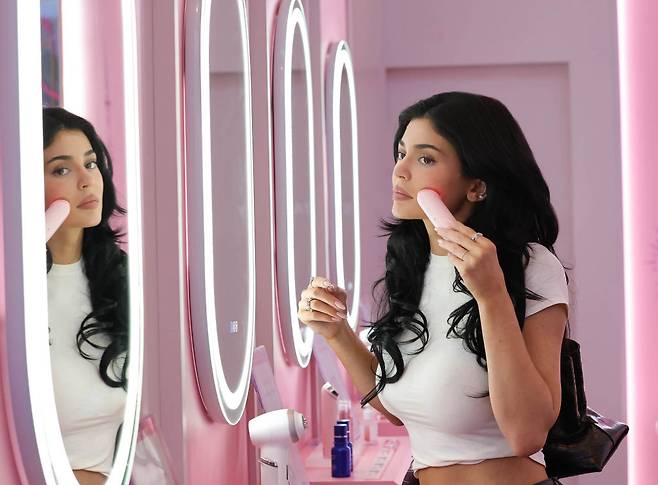
Korean beauty devices have been shifting gears, easing their way into global skin care routines and learning, along the way, to do more.
Korea’s exports of at-home beauty devices hit a record $212.2 million in 2024, nearly doubling from the year prior. Momentum continued into 2025, with exports jumping 42 percent on-year in the first half.
Analysts at KPMG Korea trace the trend to the meeting point of proactive aging care and new technologies that deliver effective results. The beauty device market is projected to surge from $14 billion in 2022 to $89.8 billion by 2030, according to local accounting firm Samil PwC.
At the forefront of Korea’s beauty tech surge is APR, whose Medicube AGE-R line has become a breakout success in the global beauty device market.
Since debuting its beauty device products in 2021, APR has sold over 5 million devices worldwide, with 2 million units sold in just the first nine months of this year alone. The device segment recorded 103.1 billion won ($69,700) in third-quarter revenue, up 39 percent on-year, contributing to total revenue of 385.9 billion won.
Industry analysts view APR’s integrated ecosystem, combining devices, skin care and mobile applications, as central to its evolution into a next-generation platform, particularly in global markets. Overseas markets generated more than 80 percent of total revenue in the third quarter, exceeding 300 billion won, while the US accounted for 39 percent of sales.
The strategy proved effective in Japan, where the company built a loyal following amid strong competition from established names such as Panasonic Beauty and Ya-Man.
“One way we stand out is by combining skin care and devices to make effective at-home routines more convenient,” a company official said. “We also offer high-performance devices at more accessible price points.”
APR’s fully integrated value chain, encompassing everything from product planning and research and development to manufacturing and distribution, has also been instrumental in enabling the company to adapt quickly to evolving market dynamics.
The company plans to debut a new lineup of modular skin care devices at CES 2026, featuring interchangeable heads that combine multiple functions in one system.
Rising demand for beauty devices has intensified competition across related industries, from cosmetics to pharmaceuticals.
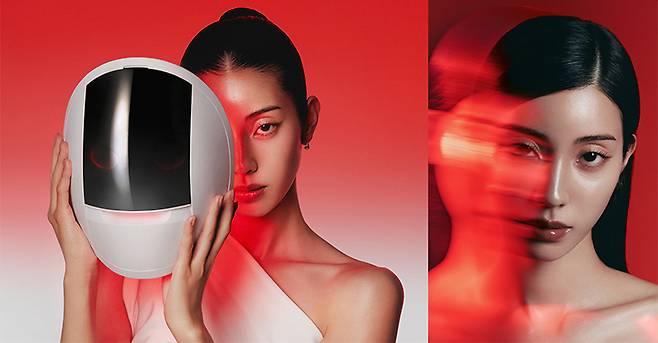
Amorepacific, for instance, is doubling down on its makeON device line, launching a micro-LED mask in November that the company says increases elastin production in the skin's deeper layers.
LG Household & Health Care is leveraging its electronics expertise under the beauty device brand LG Pra.L, while Kolmar Korea earned a CES 2026 Innovation Award in digital health for its scar-treatment device.
Smaller but influential players such as d’Alba Global are also edging into beauty devices.
“We have only just begun selling our first device in the US and Japan," an official from d’Alba Global said, adding that the company seeks to broaden its beauty device lineup and sales network.
"Although we are still in the early stages of our beauty device business, we plan to launch an upgraded energy-based lifting device by next summer," the official added.
With deep roots in dermatology and regenerative medicine, pharmaceutical and biotech companies benefit by applying their strengths to high-performance beauty devices.
PharmaResearch, a local biopharmaceutical company, saw sales of its Rejulift device lineup climb to 14.3 billion won in 2025, up 40 percent on-year, whereas Classys, known for clinical skin-treatment machines, generated 4.5 billion won in at-home device and cosmetics sales, compared with 2.4 billion won the previous year.
As beauty devices become smarter and more connected, industry insiders anticipate a deeper convergence of beauty, artificial intelligence and data, with consumer skin data enabling more personalized cosmetics and AI-driven recommendations.
"Competition in K-beauty is no longer just about cosmetics, but about who has the best algorithm," one industry insider noted.
Copyright © 코리아헤럴드. 무단전재 및 재배포 금지.